After burning out in New York's most prestigious kitchens, I discovered that mastering the perfect sauce was nothing compared to what street food vendors in Bangkok taught me about mastering life itself.
You know that moment when you're standing in a high-end kitchen at 2 AM, exhausted, your chef whites soaked through with sweat, and you suddenly think: "Is this really it?"
Maybe you don't, but that was me, over a decade into what I thought was my dream career. I'd worked my way up in some of New York's most prestigious restaurants. My knife skills were impeccable. I could tell you the exact temperature to sous vide a piece of halibut. I knew which wine would pair perfectly with every dish on our tasting menu.
But I had no idea what I actually wanted from life.
So I did something that made absolutely no sense to anyone around me. I quit. Packed up my apartment, stored what little I owned, and bought a one-way ticket to Bangkok. No job lined up. No real plan. Just a vague idea that I needed to figure some things out.
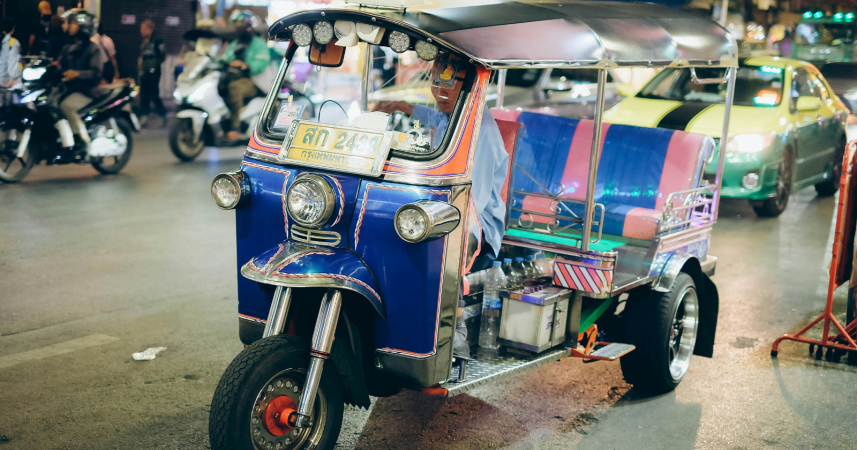
Those three years in Thailand's chaotic, beautiful capital changed everything. Not in the dramatic, Instagram-worthy way you might expect. But in small, profound shifts that only became clear looking back.
The art of slowing down when everyone else is rushing
In fine dining, speed is everything. Every second counts. You're constantly racing against the clock, trying to get that perfect sear while coordinating with five other stations. The adrenaline becomes addictive.
Bangkok operates on a different frequency entirely. Sure, the traffic is insane and the city never sleeps. But there's this underlying current of "sabai" - a Thai concept that roughly translates to comfort and contentment. It's not about being lazy. It's about recognizing that not everything needs to be urgent.
I remember my first week there, sitting at a street food stall, waiting what felt like forever for my pad thai. Back in New York, I would've been checking my watch every thirty seconds. But watching the vendor methodically prepare each ingredient, chatting with regulars, occasionally pausing to laugh at something on his phone - it hit me.
This guy wasn't stressed about turning tables or hitting ticket times. He was just making good food and enjoying his day.
It took me months to really internalize this lesson. To stop treating every email like a kitchen fire that needed immediate attention. To realize that most "urgent" things aren't actually that urgent at all.
Finding purpose beyond the perfect plate
Here's something they don't tell you about working in high-end restaurants: after a while, the pursuit of perfection becomes its own prison.
You obsess over the tiniest details. The exact angle of a garnish. The precise temperature of a sauce. And for what? So someone who spent $500 on dinner can post a photo on social media before demolishing your masterpiece in three minutes?
In Bangkok, I started volunteering in the local community. Nothing fancy. Just helping locals with various activities. But watching someone's face light up when they achieved something meaningful? That hit different than any five-star review ever did.
The weird part? This shift in perspective actually made me appreciate food more. When you're not obsessing over perfection, you can actually taste things again. Enjoy them. Share them with people who matter.
Learning that career success doesn't equal life success
By every traditional metric, I'd been successful in fine dining. Good salary. Respected position. Clear path to advancement.
But success in that world meant sacrificing everything else. Fourteen-hour days were standard. Weekends didn't exist. Relationships crumbled because you were never available. Your body broke down from the constant physical demands.
In Bangkok, I met expats from every imaginable background. Tech workers who'd gone remote. Teachers. Artists. Digital nomads running businesses from coffee shops.
And here's what shocked me: most of them were making less money than I had been, but they seemed genuinely happier.
They had time for Muay Thai classes at lunch. They could take random Wednesday afternoons off to explore a new neighborhood. They actually knew their neighbors.
One guy I met had left a VP position at a major bank to teach yoga and run a small import business. When I asked if he missed the corporate world, he just laughed. "I miss the money sometimes," he said. "But I don't miss the person I was when I was making it."
The power of being uncomfortable (in the right ways)
Working in fine dining, I was uncomfortable all the time. Burns, cuts, screaming chefs, impossible deadlines. But it was a familiar discomfort. I knew exactly what was expected of me.
Bangkok threw me into entirely new territory. Language barriers. Cultural misunderstandings. Navigating a city where I couldn't even read the street signs. Getting spectacularly lost trying to find an apartment. Accidentally ordering chicken feet because I pointed at the wrong thing on a menu.
But this discomfort was different. It was growth discomfort, not grinding discomfort.
Every small victory - successfully ordering in Thai, figuring out the bus system, making my first local friend - built a different kind of confidence. Not the sharp-edged confidence of executing a perfect service, but something quieter and more sustainable.
Why walking away was the best decision I ever made
Finally, here's what those three years really taught me: the life you think you want and the life that actually makes you happy are often two completely different things.
I thought I wanted recognition, prestige, the rush of a busy service. Turns out what I actually wanted was autonomy, connection, and time to explore interests beyond food. I wanted to read books that weren't cookbooks. To exercise when my body felt good, not just squeeze in gym sessions at 5 AM before prep.
Today, I write about food (among other things), but on my own terms. No more sixteen-hour days. No more sacrificing everything for someone else's vision of perfection.
Sometimes I miss the camaraderie of a kitchen crew. The satisfaction of nailing a difficult dish. Even the weird pride that comes from surviving a brutal service.
But I don't miss the person I was becoming in that world. Stressed, isolated, defining my entire worth by my ability to execute someone else's menu.
Final thoughts
Bangkok didn't give me all the answers. Hell, it probably gave me more questions. But it gave me something more valuable: permission to want something different.
You don't need to quit your job and move to Southeast Asia to figure out what you want from life. But you do need to step back far enough to see the whole picture, not just the next service, the next deadline, the next rung on whatever ladder you're climbing.
Sometimes the most successful thing you can do is admit that your definition of success needs updating.
These days, when I cook, it's for friends. We eat slowly. We talk about things that matter. Nobody photographs the food. And you know what? It tastes better than anything I ever made in those high-end kitchens.
That's the real lesson Bangkok taught me: life isn't about achieving perfection. It's about finding your own version of "sabai" - that sweet spot where effort meets ease, where ambition meets contentment.
It just took me 10,000 miles and three years to figure that out.
What’s Your Plant-Powered Archetype?
Ever wonder what your everyday habits say about your deeper purpose—and how they ripple out to impact the planet?
This 90-second quiz reveals the plant-powered role you’re here to play, and the tiny shift that makes it even more powerful.
12 fun questions. Instant results. Surprisingly accurate.