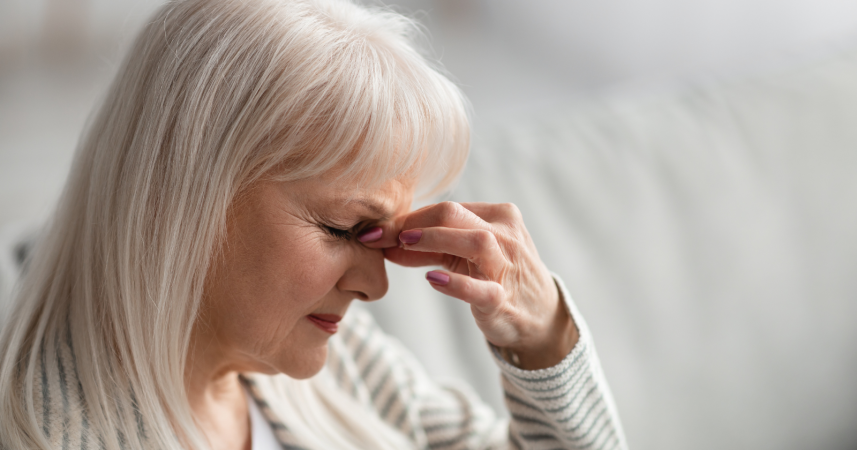
Behind decades of praise for her unshakeable strength, she discovered a devastating truth: the armor she'd worn to protect everyone else had slowly suffocated the person trapped inside it.
Sometimes strength isn't chosen; it's thrust upon you like an inheritance from a relative you never met. Mine arrived when my first husband left me with two toddlers at 28. There was no dramatic moment of decision, no heroic choice to be strong. One day I was a young mother with a partner, the next I was everything to two small humans who needed lunch packed and stories read and someone to check for monsters under the bed.
The world loves a strong woman story. People praised my resilience as I juggled teaching high school English with raising kids alone. What they didn't see was how I'd trained myself not to cry until after 10 PM, when the children were definitely asleep. Or how I'd stand in the grocery store calculating whether we could afford both milk and the good cereal this week, always choosing their needs over mine.
But here's what nobody tells you about being the strong one: it becomes addictive. There's a high that comes from being needed, from being the person everyone turns to. It feeds something deep inside, maybe that part of us that equates our worth with our usefulness. I became hooked on being indispensable, on never letting anyone see me stumble.
When strength becomes a prison
By my forties, I'd perfected the art of needing nothing from anyone. When breast cancer scares knocked on my door at 52, I drove myself to every appointment, told no one until the tests came back clear. When asked why I hadn't reached out, I said I didn't want to worry anyone. The truth? I didn't know how to be vulnerable anymore. The strong one doesn't get cancer scares. The strong one doesn't need someone to hold her hand in the waiting room.
Psychology Today recently published a post suggesting that always being the strong one can lead "burnout, anxiety, and emotional suppression."Reading that felt like looking in a mirror for the first time in decades.
The prison bars of strength are made of other people's expectations and our own fear. What if I ask for help and people realize I'm not who they thought I was? What if they see me as weak, as less than, as ordinary? So we keep performing strength long after we've run out of it, like actors in a play that should have closed years ago.
The collateral damage we don't count
My son was young when he became "the man of the house." Those words came out of my mouth so easily, meant to make him feel important, special. What they really did was steal his childhood. He learned to anticipate needs before anyone voiced them, to fix things before they fully broke, to be the strong one in training.
Now I watch him well into adulthood, unable to take a sick day, unable to admit when his marriage is struggling, unable to ask his own children for patience when he's overwhelmed. The apple didn't fall far from the tree; it grew into the same gnarled shape, bent from carrying too much weight too young.
My daughter took a different lesson from my strength. She learned to be small, to never add to the burden. Even now, she apologizes for calling during work hours, for needing a recipe, for existing in any way that might require something from me. When she hid her postpartum depression for months, I saw myself reflected in her forced smile, and it broke something inside me that I'm still trying to repair.
Learning to fall apart
Have you ever forgotten how to do something as basic as accepting help? After my second husband died from Parkinson's at 68, a neighbor brought over a casserole. I stood at my door, holding this warm dish, and couldn't remember the words. Thank you stuck in my throat. I nearly handed it back, insisting I was fine, I'd already eaten, I had plenty of food. It took every ounce of will to simply nod and close the door.
That casserole sat in my refrigerator for three days before I could eat it. Each bite felt like an admission of failure. The strong one doesn't need casseroles. The strong one makes casseroles for others.
The breakdown, when it came, was quiet. No dramatic collapse, no public scene. I simply stopped getting out of bed one morning, then the next, then the next. For six months after his death, I moved through my house like a ghost, finally too exhausted to maintain the facade. My body had been running on adrenaline and determination for so long that when I finally had permission to rest, I couldn't remember how to start again.
The conversation that changed everything
My granddaughter saved me without knowing it. One day, she came to me with anxiety that reminded me of my own at her age, though I'd never called it that. "Grandma, do you ever feel like you're drowning but you can't tell anyone because they're all counting on you to be the lifeguard?"
The old me would have given advice about pushing through, about finding inner strength. But looking at her young face, I saw three generations of women taught to bear unbearable loads with a smile. So I told her the truth about the bathroom floor crying sessions, about missing her son's college graduation because I couldn't afford the plane ticket, about being so strong that I'd forgotten how to be human.
"Maybe," she said after listening to it all, "being strong means knowing when not to be."
Out of the mouths of babes, as they say.
Final thoughts
These days, I practice weakness like it's a new language I'm learning. "I need help" still feels foreign on my tongue, but I'm getting better at it. The widow's support group I joined doesn't praise my strength; they praise my honesty when I admit I ate cereal for dinner three nights straight because cooking for one feels pointless.
Being the strong one nearly killed me—not dramatically, but slowly, by erosion. It took away my ability to connect authentically, to model healthy vulnerability for my children, to experience the profound gift of being held when you're falling apart. If you're reading this and recognizing yourself, know that it's never too late to put down the weight you've been carrying. The world won't end if you're human for a while. In fact, it might just begin.