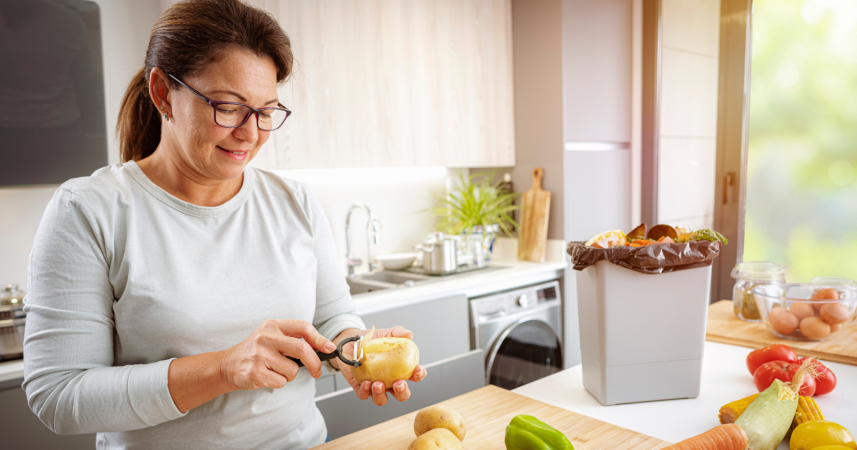
The muscle memory of love doesn't fade just because the table settings have changed. It just needs time to find new expressions, smaller pots but not smaller care, single portions but not singular joy.

Add VegOut to your Google News feed. 
Last night, I stood in my kitchen holding a stockpot that could easily feed eight people. My hand had reached for it automatically while preparing to make pasta for one. The weight of it surprised me, this pot that once held Sunday dinners and birthday celebrations, now far too ambitious for my solo evening meal. I put it back and grabbed the small saucepan instead, the one I bought six months ago that still feels foreign in my hands.
The truth about cooking for one after decades of cooking for two, or three, or sometimes a whole houseful, isn't what you'd expect. Yes, there's loneliness. But that's not the part that catches you off guard at 70, standing in a kitchen that remembers fuller times. It's the way your body betrays you with its memories, reaching for the wrong tools, buying too many groceries, setting the table for two before catching yourself.
When your hands remember what your heart is trying to forget
Every cook develops a rhythm over the years. You know exactly how much olive oil to pour without measuring, how many handfuls of rice will feed your family, which cutting board is for vegetables and which is for meat. These aren't conscious decisions anymore; they're carved into your muscles like grooves in an old record.
After my husband passed, I thought the hardest part would be the empty chair at dinner. And it was hard, terribly so. But what I wasn't prepared for was how my hands would continue their old dance. They'd grab two plates from the cabinet. They'd portion out enough salad for two. They'd reach for his favorite mug when making evening tea.
Have you ever tried to reprogram decades of habit? It's like trying to write with your non-dominant hand. Everything feels clumsy and wrong. The small skillet looks toy-like compared to the cast iron pan that's been seasoned by forty years of family meals. The single chicken breast in the pan seems to mock the very purpose of cooking.
The strange economics of eating alone
Nobody talks about how impractical grocery shopping becomes when you're cooking for one. The smallest package is still too much for a single meal. Fresh herbs wilt before you can use them all. That beautiful butternut squash? You'll be eating it for a week straight unless you want to waste half.
I've become something of a soup wizard out of necessity. Every Monday, I gather whatever's looking tired in the crisper drawer, and transform them into something new. It's become a ritual that brings a small sense of accomplishment. Nothing wasted, everything given purpose, even if that purpose is just feeding one person.
But there's a particular sadness in batch cooking for yourself. Freezing portions in single servings feels like admitting to a future of solitary meals. Those neat little containers stacked in my freezer are practical, yes, but they're also monuments to my changed circumstances.
The unexpected weight of simple tasks
The poet Mary Oliver once wrote, "Someone I loved once gave me a box full of darkness. It took me years to understand that this too, was a gift." I think in a way cooking alone has been my box of darkness, and I'm still learning to see the gift in it.
Some days, the gift reveals itself in small freedoms. I can eat cereal for dinner without apology. I can spend an entire Sunday afternoon making elaborate pasta from scratch just because I want to, not because anyone's expecting it. If I want to eat the same veggie stir-fry four nights in a row, nobody's there to complain about the repetition.
But other days, the simple act of feeding myself feels monumentally difficult. When my knee problems flared up last winter, even standing long enough to scramble eggs became a challenge. Learning to ask neighbors for help with grocery runs wounded my pride in ways I didn't expect. Independence at 70 looks different than it did at 40, and accepting that has been its own journey.
Growing around grief instead of shrinking from it
In a previous post, I wrote about how grief doesn't actually get smaller with time. Instead, we grow larger around it, developing new parts of ourselves that can hold joy alongside sorrow. The kitchen has become my classroom for this lesson.
I've discovered that cooking for one doesn't have to mean cooking without love. The care I once poured into family meals hasn't disappeared; it's just changed shape. Now I set a proper place for myself, use the good dishes, light a candle. These aren't acts of denial or pretense. They're declarations that my life, even in its solitude, deserves beauty and attention.
Sometimes I invite a friend over, and my hands remember their old choreography perfectly. The muscle memory that betrays me during solo meals becomes a gift when there's someone else to feed. I reach for the bigger pot with purpose, not habit, and for those evenings, my kitchen feels properly used again.
Final thoughts
If you're learning to cook for one after years of cooking for more, be patient with your hands. They're grieving too, in their own way. Let them reach for the wrong pot sometimes. Don't rush to retrain them. The day will come when you'll grab the small saucepan without thinking, and that will be its own kind of sadness and victory rolled into one.
The muscle memory of love doesn't fade just because the table settings have changed. It just needs time to find new expressions, smaller pots but not smaller care, single portions but not singular joy. We're all just trying to feed ourselves, in every sense of the phrase, one meal at a time.
If You Were a Healing Herb, Which Would You Be?
Each herb holds a unique kind of magic — soothing, awakening, grounding, or clarifying.
This 9-question quiz reveals the healing plant that mirrors your energy right now and what it says about your natural rhythm.
✨ Instant results. Deeply insightful.
Marlene Martin
Marlene is a retired high school English teacher and longtime writer who draws on decades of lived experience to explore personal development, relationships, resilience, and finding purpose in life’s second act. When she’s not at her laptop, she’s usually in the garden at dawn, baking Sunday bread, taking watercolor classes, playing piano, or volunteering at a local women’s shelter teaching life skills.
More Articles by Marlene