After 35 years of running on other people's needs, I discovered that when nobody needs you anymore, you're left staring at the terrifying question of whether you exist at all without being useful to someone.
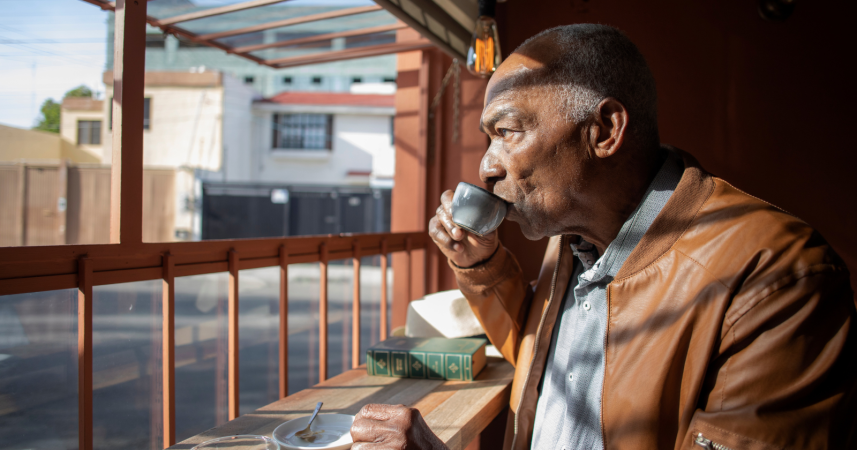
The morning it hit me, I was standing at my kitchen counter at 6 AM, drinking espresso the way I have for decades—standing up, quickly, like there was somewhere urgent I needed to be.
Except there wasn't. Not anymore.
My wife was still sleeping upstairs. The consulting work I do for a couple of neighborhood restaurants wasn't until Monday. My granddaughter wouldn't need picking up from anywhere for days. The community food bank where I volunteer didn't need me until Saturday.
For the first time in my adult life, nobody needed anything from me that day. And instead of feeling free, I felt completely hollow.
When your whole identity is built on being needed
I spent 35 years in the restaurant business. Started washing dishes at sixteen in my uncle's diner in Hamilton, worked every station, managed floors, and finally opened my own place at forty. For eighteen years, that restaurant was my identity. Every day brought a crisis that needed solving. A cook didn't show up. The freezer died overnight. A review could make or break us. A regular's birthday needed remembering. I thrived on being needed. The more chaotic things got, the more alive I felt.
When I sold the restaurant four years ago, everyone said I'd earned the rest. But nobody warned me that when you've spent your entire life in perpetual motion, stillness feels like death.
Looking back, I should have seen this coming. After my divorce at thirty-six, I lived above the restaurant for two years and poured everything into work. Being useful was easier than being alone with myself. The restaurant needed me. The staff needed me. The customers needed me. As long as I was indispensable somewhere, I didn't have to figure out who I was when nobody needed anything.
Even therapy became about being useful. I went so I could be a better father, a better future partner, a better boss. Everything was in service of something else. I couldn't just go to therapy for myself. That would have been selfish. It had to be for someone else's benefit.
The slow fade of being essential
When I met Linda at forty-four, I thought I'd learned my lesson. I made myself come home for dinner. I learned to be present instead of just charming. But even then, I was performing the role of "good husband" like it was another service position. I was useful in a different way, but still defining myself by what I could provide.
The grandchildren arrived, and I became useful again. Saturday farmers' markets with my granddaughter. Teaching her about vegetables and herbs. Reading stories with all the voices. I threw myself into grandparenting with the same intensity I'd once reserved for the dinner rush.
But grandchildren grow. They develop their own schedules, their own interests. The farmers' market trips become less frequent. The cooking afternoons get interrupted by birthday parties and swimming lessons. They still love me, but they don't need me the same way.
The consulting work fills some time, but it's not the same as running my own place. I help with menu planning and staffing issues, but then I go home. Their crises aren't my crises. Their success isn't my identity.
Who are you when the phone stops ringing
I've discovered that when you strip away all the ways you're useful to others, you're left with a terrifying question: Who am I when nobody needs me?
The obvious answers feel hollow. I'm a husband, but Linda is beautifully self-sufficient. She chose me, she doesn't need me. I'm a father, but Ethan is an adult living his own life. I'm a grandfather, but that's a supporting role, not a leading one. I'm a friend, but friendship at sixty-two is different. We all have our own rhythms, our own obligations.
I cycle forty kilometers most weekends along the lakefront trail. I grow herbs and make my own hot sauce every autumn. I read cookbooks like novels and write about the restaurant years. I cook elaborate Sunday dinners that everyone raves about. But these feel like activities, not purpose. They're things I do, not who I am.
The morning meditation that Linda suggested helps, those ten minutes of stillness I fought against for months. But meditation is about being present with what is, and what is right now is a man who spent so many decades in motion that stillness feels like disappearing.
Learning to exist without being needed
I watch younger people at the food bank or in the restaurants I consult for, and I see myself thirty years ago. Running, solving, fixing, being indispensable. I want to tell them that one day the phone will stop ringing and they'll realize they never learned who they were beneath all that usefulness. But they wouldn't hear it. I wouldn't have heard it.
If you've read my recent posts, you'll know I keep coming back to this guide by life coach Jeanette Brown because she captures something I've been struggling to articulate. She writes: "Feeling lost or unsettled is not only normal—it's necessary." That hit me hard. All this emptiness I've been fighting, this sense of being adrift without other people's needs to anchor me, maybe it's not a problem to solve. Maybe it's the messy middle part of becoming someone new. The guide is free if you're curious, and honestly, it's been helping me reframe this whole transition.
Some mornings, like that first one when it all hit me, I stand at the kitchen counter with my espresso and feel the weight of all that empty space ahead. No crisis to solve. No staff to manage. No customers to charm. Just day after day of choosing how to fill time that used to fill itself with other people's needs.
Linda finds me sometimes, standing there in the early morning light, and she doesn't ask what's wrong because she knows. She went through this transition in her own way, years ago. She puts her hand on my back and stands with me, and somehow that's enough. Not because she needs me to be okay, but because she's choosing to be there while I figure out if I can exist without being needed.
The hardest lesson at sixty-two
The hardest part is accepting that maybe purpose isn't about being useful to others. Maybe it's about being present for your own life, even when that life is quiet, even when the phone doesn't ring, even when you wake up to a day that needs nothing from you but your presence in it.
I'm learning, slowly, to sit on the back deck in the evening with Linda and no agenda. To cycle the lakefront for the joy of movement, not because I'm training for anything. To write these essays not because anyone needs to read them, but because the words need somewhere to go. To cook Sunday dinner not because the family would starve without it, but because creating something beautiful with my hands is its own purpose.
But most mornings, I still wake up listening for something. A crisis, a need, a reason to jump into motion. And in that silence, I'm trying to learn that maybe just being here, taking up space, breathing in and out, is enough. That maybe I don't need to earn my existence through usefulness. That maybe, at sixty-two, it's time to stop performing my life and start living it.
The room isn't empty. I just haven't learned how to see what's in it when it's not filled with other people's needs.