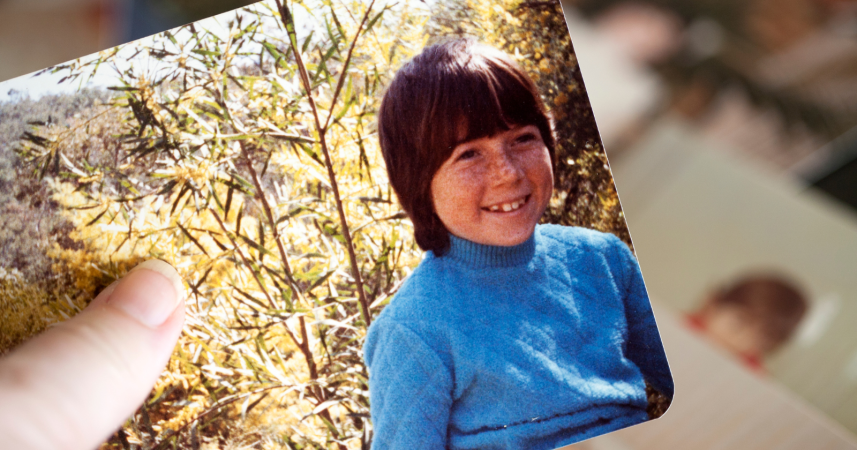
There's something to be said for the skills we developed when we couldn't Google our way out of every situation.
Don't get me wrong, I'm not here to bash kids today or wax nostalgic about the "good old days." The internet has given us incredible opportunities and conveniences that I wouldn't trade.
But there's something to be said for the skills we developed when we couldn't Google our way out of every situation.
Today's kids are growing up with instant access to information, constant connectivity, and solutions at their fingertips. That's amazing, but it also means missing out on some surprisingly valuable life skills that came naturally to those of us who lived through the transition.
Here are five of them.
1. How to be genuinely bored and make something of it
Remember staring at the ceiling for what felt like hours, complaining to your parents that there was "nothing to do"?
That boredom wasn't just empty time – it was creative fuel.
Without phones to scroll or YouTube videos to binge, we had to get resourceful. We'd build elaborate pillow forts, create entire storylines with action figures, or spend afternoons drawing comics that made absolutely no sense.
Boredom taught us that entertainment doesn't always come from external sources. Sometimes the best ideas emerge when your mind has nothing else to occupy it.
Today's kids rarely experience that pure, unstimulated state. There's always another video, game, or app waiting. They're incredibly entertained, but they might be missing out on discovering what their minds can create when left to their own devices.
2. Reading body language and picking up social cues in real time
When your only option for hanging out was face-to-face, you got really good at reading the room.
You learned to notice when someone was genuinely laughing versus just being polite. You could tell if your friend was actually upset despite saying they were "fine." You picked up on the subtle shift in energy when you'd overstayed your welcome at someone's house.
These weren't skills we consciously developed – they happened naturally when most of our social interactions required us to be physically present with other people.
Today's kids are incredibly connected, but much of that connection happens through screens. Text messages, social media posts, and video chats are amazing tools, but they filter out a lot of the subtle communication that happens through posture, micro-expressions, and the general vibe of being in the same space as someone.
It's not that they can't learn these skills, but they have fewer opportunities to practice them naturally.
3. Navigating without GPS and actually knowing your way around
Getting lost was a rite of passage. And more importantly, so was figuring out how to get un-lost.
I remember driving to new places with printed maps, inevitably missing a turn, and having to pull over to study street signs and landmarks. Sometimes you'd have to swallow your pride and ask a stranger for directions.
This forced us to develop spatial awareness and really pay attention to our surroundings. We knew which way was north, we remembered distinctive buildings and intersections, and we could give someone directions without pulling out a phone.
There's something deeply satisfying about truly knowing an area – not just the route your GPS takes you, but the shortcuts, the alternate paths, and how everything connects.
Kids today can get anywhere with a few taps, which is incredibly convenient. But they might never experience that confidence that comes from genuinely understanding the geography of their world, or the problem-solving skills that come from figuring out where you are when you have no idea.
4. The art of delayed gratification and anticipation
Waiting for things used to be half the fun, didn't it?
You'd count down the days until your favorite TV show's season finale, or save up allowance money for weeks to buy that CD you really wanted. There was genuine excitement in anticipation – it made the payoff so much sweeter when it finally arrived.
I remember rushing home from school on Tuesdays because that's when new albums were released at the record store. The anticipation built up the entire experience into something special.
This wasn't just about entertainment either. Research projects meant multiple trips to the library. Finding an answer to a random question might take days or weeks. We learned that some things are worth waiting for, and that the process of working toward something can be just as rewarding as getting it.
Today's kids live in an on-demand world where most desires can be satisfied immediately. That's convenient, but it might be harder for them to develop patience and learn to appreciate the journey rather than just the destination.
5. Making concrete plans and actually sticking to them
Remember when making plans meant making plans? You'd agree to meet someone at a specific time and place, and that was it. No last-minute location changes via text, no "running 10 minutes late" updates, no ability to ghost if something better came up.
This created a different relationship with commitment. You had to think through your decisions more carefully upfront because backing out was much more complicated and awkward.
You also got better at estimating time and planning ahead. If you said you'd be somewhere at 7 PM, you had to actually leave early enough to account for traffic or unexpected delays, because you couldn't just send a quick text explaining why you were running behind.
Today's constant connectivity makes social interactions more flexible, which has real advantages. But it might also make it easier to treat commitments as tentative and always subject to change based on whatever feels most appealing in the moment.
The bottom line
Look, I'm not suggesting we throw our phones in a drawer and go back to dial-up internet. The digital world has given us incredible tools and opportunities that genuinely make life better in countless ways.
But there's something valuable in recognizing what we might be trading off. The skills that came naturally from pre-internet life – patience, deep focus, spatial awareness, genuine boredom – weren't just byproducts of slower technology. They were foundations for how we learned to engage with the world and with ourselves.
Maybe the real lesson isn't about what kids today are missing, but about what all of us can be more intentional about preserving.
If You Were a Healing Herb, Which Would You Be?
Each herb holds a unique kind of magic — soothing, awakening, grounding, or clarifying.
This 9-question quiz reveals the healing plant that mirrors your energy right now and what it says about your natural rhythm.
✨ Instant results. Deeply insightful.