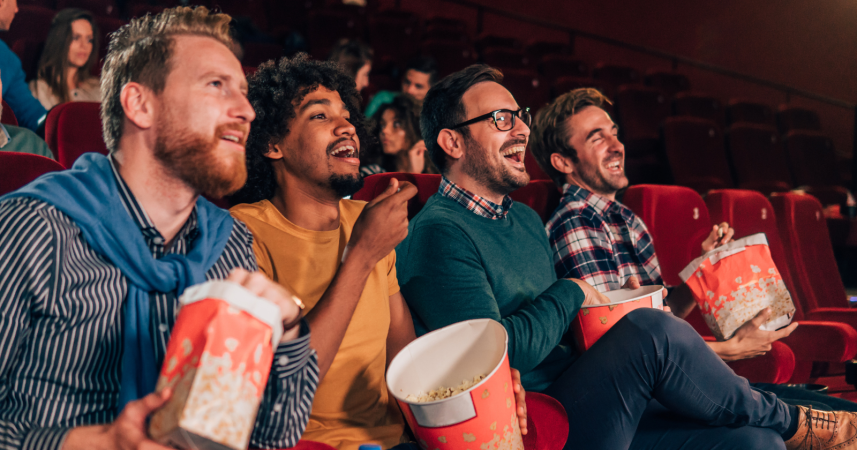
The habits you develop around movie theaters when money is tight don't disappear just because your income increases - they reveal themselves in small behaviors that people who grew up wealthier never even think about.
My partner and I went to see a movie last month.
When we got to the theater, they immediately headed to the concession stand.
I automatically walked past it toward the entrance.
They looked confused. "Don't you want anything?"
The honest answer was yes, but my default assumption is that you don't buy concessions at the theater. You bring your own snacks or you go without.
My partner, who grew up more comfortably than I did, had the opposite assumption. Going to the movies means getting popcorn and a drink. That's just part of the experience.
That moment made me realize how many small behaviors around movie theaters are actually class markers. The way you approach cinema as entertainment reveals a lot about the economic circumstances that shaped you.
1) Sneaking in outside food automatically
I don't even think about it anymore. I have snacks in my bag before we leave the apartment. Candy from the grocery store, a water bottle, sometimes something more substantial if it's a long movie.
My partner was genuinely surprised the first time they saw me do this. Not judgmental, just confused about why I'd bother when you can just buy food there.
But when you grow up lower-middle class, theater concession prices are absurd. Eight dollars for popcorn that costs fifty cents to make? Ridiculous. You learn early that sneaking in snacks is just common sense.
People who grew up wealthier don't have this reflex. They might occasionally bring something in, but it's not their default mode. For them, buying concessions is part of the movie experience. For people like me, it's an unnecessary expense to avoid.
2) Calculating if matinee pricing is worth adjusting your schedule
When someone suggests seeing a movie, my first question is usually about timing. Can we catch a matinee? Is there a discount day?
This drives my partner slightly crazy because they just want to see the movie when it works for our schedule, not when it's cheapest.
But I grew up understanding that movie tickets cost different amounts at different times, and you plan around the cheaper options. Adjusting your schedule to save five dollars per ticket was normal.
People who grew up with more money don't do this math. They see a movie when they want to see it. The price difference between matinee and evening shows isn't significant enough to factor into their decision-making.
For people from lower-middle class backgrounds, that calculation is automatic. Even now, when saving ten dollars on tickets doesn't materially impact my life, I still feel satisfaction from catching the matinee price.
3) Checking multiple theaters for the best ticket price
Not all theaters charge the same amount. Some have discount days. Some have membership programs. Some are just cheaper overall.
I know which theaters around Venice Beach and LA have the best pricing, which ones have promotions on what days, and which ones are worth the extra travel time for the savings.
My partner goes to whichever theater is most convenient or has the best seating. Price doesn't factor into the decision unless the difference is dramatic.
This is a classic class marker. People who grew up lower-middle class treat movie theaters like any other purchase—you research, compare, and optimize for value. People who grew up wealthier prioritize convenience and experience over cost.
Neither approach is wrong, but they reflect completely different relationships with money and leisure spending.
4) Staying through all the credits
I always stay until the lights come up. Every time.
My partner finds this bizarre. They're ready to leave as soon as the main credits start rolling.
This comes from growing up understanding that you paid for the entire movie experience, and leaving early feels like wasting money. You stay until it's completely over because that's what you paid for.
There's also the practical element that many movies have post-credit scenes now, and missing them feels like not getting the full value of your ticket.
People who grew up wealthier don't have this mindset. The movie is over when the story ends. Sitting through credits feels like wasting time, not maximizing value.
It's a subtle difference, but it reveals underlying attitudes about consumption and value. One approach treats entertainment as something to extract full worth from. The other treats it as something to enjoy and move on from.
5) Reusing the same drink cup for free refills
Some theaters offer free refills on large drinks. I learned early that you can hold onto your cup and bring it back on future visits.
I've done this for years. Same cup, multiple movies, free refills each time.
My partner didn't even know this was possible. They buy a drink if they want one, don't think about it beyond that single visit.
This is peak lower-middle class behavior—finding the loophole that lets you get something for free that other people are paying for. It feels like beating the system, even though the theater probably accounts for it in their pricing.
People who grew up with money don't think this way. They don't look for ways to game the system for small savings because the effort doesn't feel worth it relative to the return.
But when you grow up lower-middle class, every small saving feels like a win. It's not really about the money, it's about the satisfaction of being resourceful.
6) Seeing movies multiple times only if someone else suggests it
I rarely suggest seeing a movie I've already watched in theaters. That feels like an unnecessary expense when I could see something new.
But if someone else wants to see it and invites me, I'll go. The social experience justifies the cost in ways that personal enjoyment alone doesn't.
My partner will see movies they loved multiple times without hesitation. If they enjoyed it, they want to experience it again. The ticket price is just the cost of entertainment they know they'll enjoy.
This reflects different thresholds for justifying entertainment spending. Lower-middle class thinking requires clear value—new experience, social connection, something that justifies the cost beyond just "I want to."
People who grew up wealthier have lower barriers for spending on enjoyment. If they want to see it again, that's sufficient justification. No additional reasoning required.
7) Bringing your own water bottle instead of buying drinks
Theater drinks are marked up even more than popcorn. Five dollars for a bottle of water that costs a dollar at the store makes no sense.
So I bring my own water bottle. Always. It's automatic.
My partner buys drinks at the theater without thinking about it. If they're thirsty, they buy something. The markup doesn't register as significant enough to plan around.
This difference shows up in how we approach convenience versus cost. For me, bringing a water bottle requires minimal planning and saves money, so it's obviously the right choice.
For them, being thirsty and buying a drink in the moment is worth the premium because planning ahead for small savings doesn't feel necessary.
Neither approach is more virtuous. They just reflect different baseline assumptions about when cost-saving measures are worth the effort.
Final thoughts
These behaviors aren't about being cheap or unable to afford movie theater prices. I can afford concessions now without thinking about it.
But the habits formed by growing up lower-middle class are deeply ingrained. They persist because they're not just about money, they're about how you relate to consumption and value.
People who grew up wealthier approach movie theaters as an experience to enjoy without calculating. People who grew up lower-middle class approach them as an expense to optimize.
My partner and I have found compromise. I still bring snacks sometimes, but I've learned to occasionally buy concessions just for the experience. They've learned to appreciate catching matinee pricing when it works with our schedule.
But our default instincts remain different. Mine is to minimize cost while maximizing value. Theirs is to maximize enjoyment without worrying about optimization.
Understanding that these are class markers rather than personality differences helps. It's not that one of us is more responsible or more spontaneous. We're just operating from different frameworks shaped by the economic circumstances that formed us.
If you recognize these behaviors in yourself, you probably grew up lower-middle class. And there's nothing wrong with that. These habits reflect resourcefulness and intentionality about spending.
But it's worth noticing when they're still serving you and when they're just residual anxiety about money that no longer needs to dictate your choices.
Sometimes it's okay to buy the overpriced popcorn just because you want it. Even if it makes no logical sense. Even if younger you would judge you for it.
That might be the most radical thing someone from a lower-middle class background can do: spend money on something purely because it brings joy, without needing to justify the value.
What’s Your Plant-Powered Archetype?
Ever wonder what your everyday habits say about your deeper purpose—and how they ripple out to impact the planet?
This 90-second quiz reveals the plant-powered role you’re here to play, and the tiny shift that makes it even more powerful.
12 fun questions. Instant results. Surprisingly accurate.