None of the features I listed are evil; the problem is what happens when our brains quietly file them under “basic needs.”
You know that feeling when you walk into someone’s house and think, “Oh, so this is what people mean by ‘must-haves’ now?”
That is usually a clue that we are not just talking about comfort anymore.
We are talking about class, expectations, and how our brains quietly move the goalposts of what feels “basic.”
In this post, I want to walk through six home features that often feel like non-negotiables once you are solidly upper-middle-class.
None of these are evil as some of them are genuinely useful.
The point is awareness; when we see our “needs” clearly, we make better decisions about money, space, and what actually matters:
1) Dedicated guest bedroom
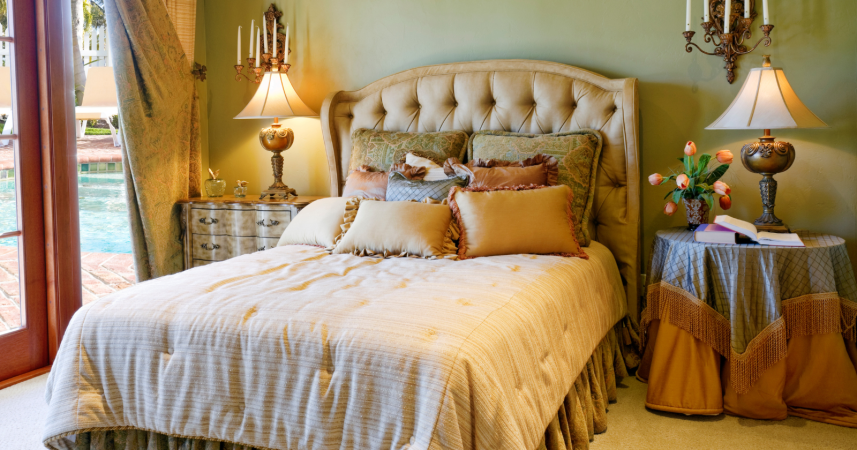
If having a full extra bedroom that mostly sits empty feels like a bare minimum, you are probably living in a reality many people never touch.
A dedicated guest room is a luxury.
It is a whole room reserved for occasional visitors; it needs furniture, bedding, decor, cleaning.
In many cities that room alone could be someone’s entire studio apartment.
Yet once you have it, it can start to feel like a basic courtesy.
You might catch yourself thinking, “I could never ask friends to sleep on a sofa.”
That is comfort creep.
Psychologically, we anchor our expectations to whatever we repeatedly experience.
If you always had to share rooms growing up, a guest bedroom looks like wild abundance.
However, if you have had one for a few years, it starts to feel like “normal.”
There is nothing wrong with wanting guests to feel comfortable because it is generous.
The growth move is to notice the story under it: Is a guest room truly a non-negotiable for your values, or is it just what people in your income bracket seem to do?
2) Chef style kitchen gear
As a vegan, I spend a lot of time in the kitchen.
I care about good tools, but there is a big leap between “functional kitchen” and “mini cooking show set”.
You might be upper-middle-class if things like this feel standard instead of extra:
- High powered blender for smoothies and homemade nut butters
- Air fryer
- Espresso machine with a steam wand
- Gigantic fridge with a filtered water dispenser and precise humidity drawers
- Special knives “just for herbs”
Some of them are incredibly useful for plant based cooking and reducing food waste.
The subtle shift happens when you stop seeing them as tools and start seeing them as requirements.
I have visited friends who sincerely said, “I cannot eat healthy without a Vitamix.”
That sounds logical if you live in a world of TikTok recipes and wellness influencers.
But zoom out, though: People have cooked nourishing meals for centuries with one pot, a knife, and a flame.
I have mentioned this before but our brains quickly adapt to higher levels of comfort.
Psychologists call it the hedonic treadmill; what once felt like an upgrade soon becomes the new baseline.
If you catch yourself scrolling for a newer, sleeker, slightly more efficient kitchen gadget, it might be worth pausing.
Ask yourself: Is this about my health and values, or is this about chasing a feeling of “enough” that keeps moving?
3) Climate control everywhere
If “too hot” or “too cold” in your home means immediately reaching for central air, zoned heating, or a smart thermostat app on your phone, that is another quiet status tell.
Perfect indoor temperature used to be seasonal.
In winter you wore sweaters inside; in summer you opened windows and used fans.
It was not ideal, but it was normal.
Now, for many upper-middle-class households, the expectation is constant comfort.
Cool air in every room during a heatwave, heated bathroom floors so your feet never touch a cold tile, and separate temperature zones so nobody compromises.
Comfort is not the villain here, but it is worth noticing what happens psychologically when we never feel slightly uncomfortable.
There is also an environmental angle: Constant climate control often means higher energy use.
Many people on lower incomes simply cannot afford to keep their homes at a perfect 72 degrees all year.
If “I need this or I cannot function” describes your relationship with climate control, that is a cue to pause.
What would it look like to have a preference for comfort, while still being aware that it is a privilege, not a universal baseline?
4) Separate home office space

The pandemic normalized remote work, but it did something else.
It quietly turned “a place to sit with a laptop” into “obviously I need a separate office”.
You know you are in upper-middle territory when the idea of working at the kitchen table feels primitive.
I remember writing my early music blog posts at a tiny table that wobbled every time I typed.
It was not ideal, but it worked.
Later, when I finally had a real workspace with a door, my productivity did go up and I could focus.
I could spread out books and notes on behavioral science, plan long form pieces, get into flow.
The trap is thinking “this setup is the only way I can be creative or productive”.
It is a story; the story feels real because it is backed by comfort, by YouTube desk tours, by a culture that says professional output requires professional gear.
If a separate home office is on your “non negotiable” list, try this reframe.
Instead of “I need it or I cannot work”, try “It genuinely helps, and I am lucky to have it. I could adapt if I had less.”
That small shift keeps you grounded, not entitled.
5) Endless storage solutions
Another sign you are living in an upper-middle class bubble: You talk about storage like it is oxygen.
Walk in closets for each adult, a pantry that is basically a mini grocery aisle, and a garage or basement packed with bins, shelves, and labeled boxes.
The story here is sneaky as it sounds like “I just need more storage.”
Usually, the reality is “I have more stuff than I can comfortably manage, and instead of questioning the stuff, I am upgrading the container.”
From a psychology perspective, clutter creates mental load.
Your brain has to keep track of everything you own.
That burns energy that could have gone into creativity, relationships, or rest.
Upper-middle-class life often gives us the money to buy more and the space to hide it better.
Our homes look organized, yet our minds still feel overloaded.
There is nothing wrong with a well designed closet.
The self development angle is to flip the question.
Instead of “How can I fit all this in?”, try “Why do I have so much that I need all this space?”
Maybe what you actually need is not another shelving unit, but a clearer sense of what matters.
6) Luxury setups for pets
Here is a fun one that I started noticing during house visits.
If these feel like just “what you do” when you have a dog or cat, you are living in a very specific socioeconomic bubble.
I remember visiting a house with a dedicated dog washing station.
Tile walls, sprayer, storage for vegan shampoo and towels.
It was beautiful, yet it also made my mental list of “okay, this is definitely not standard”.
As someone who cares about animals, I get the desire to give them a great life.
Better food, safe spaces, enrichment toys; that all lines up with compassion.
The shift to “necessity” happens when things like built in pet showers, automatic litter systems, and subscription boxes of treats feel like the floor, not the ceiling.
It is useful to zoom out again.
Most people worldwide who love animals care for them without any of these features.
They use what they have, and they improvise.
Recognizing that your pet’s lifestyle is part of your class position just grounds you in reality.
You can still spoil your dog and you can still buy the cat tree; you just do it with gratitude instead of assumption.
Bringing it home
None of the features I listed are evil because the problem is not the features.
It is what happens when our brains quietly file them under “basic needs.”
When that happens, we start chasing square footage over community, decor over values, upgrades over experiences.
We forget how much we already have.
You just have to tell yourself the truth.
Ask yourself: Which of these “necessities” do I actually care about, based on my values? Which ones are just inherited expectations from my income bracket, social circle, or social media feed?
The more honest you are with those answers, the more freedom you get.
Freedom to downsize without feeling like you failed, freedom to choose travel over a bigger closet, and freedom to put your money into things that align with who you want to be, not just where you happen to sit on the income chart.