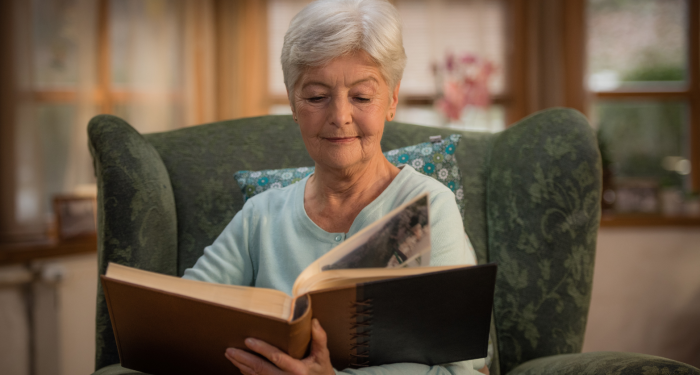
She discovered her forty-year collection of meticulously marked calendars—every family birthday recorded in colored ink—on the same day she realized no one had asked about her own birthday plans in years.

Add VegOut to your Google News feed. 
There's a shoebox in my closet filled with calendar pages dating back to 1982.
Each one is covered in my handwriting, marking birthdays, anniversaries, and important dates in different colored ink.
Last month, while organizing, I found myself staring at these pages and realized something that made me sit down right there on the bedroom floor: in forty years of meticulous record-keeping, I couldn't remember the last time someone had thrown me a surprise party or even asked me weeks in advance what I wanted to do for my birthday.
This is an observation about a pattern I've noticed not just in my own life, but in countless families I've known.
The keeper of birthdays, the one who bakes the cakes and organizes the celebrations, often finds their own special day passing with little fanfare.
It's as if our role as the family's memory keeper somehow makes us invisible when our turn comes around.
1) The invisible emotional labor of remembering
Have you ever noticed how certain roles in families just seem to happen?
Nobody officially appoints someone as the birthday rememberer, yet somehow, one person ends up with mental files of everyone's favorite cake flavors, their shirt sizes, and whether they prefer morning or evening celebrations.
This person sends the group texts, coordinates the restaurant reservations, and makes sure there's always a card that everyone can sign.
This emotional labor is real work, though it rarely gets recognized as such.
It requires mental energy, planning skills, and most importantly, a deep attentiveness to others.
The birthday rememberer holds space in their mind for everyone else's milestones and preferences.
They're the ones who notice when someone mentions wanting something three months before their birthday and file it away for later.
Here's what I've learned: When you're always the one orchestrating the symphony, people forget that you might want to hear the music too.
They assume you'll handle your own celebration the same way you handle everyone else's, or worse, they assume you don't need one at all.
2) Why we become the keepers of celebrations
For most of my life, I was a chronic people-pleaser.
It wasn't until therapy in my fifties that I understood how this trait had shaped my role in every relationship.
Being the birthday rememberer felt like a way to matter, to be needed, to ensure my place in the family ecosystem.
If I was indispensable for celebrations, then I was valuable, right?
Many of us who become the family's celebration coordinator do so because we genuinely love making others feel special.
There's joy in seeing someone's face light up when they realize you remembered not just their birthday, but their favorite kind of chocolate or that they collect vintage postcards.
This giving nature is beautiful, but it can also train others to see us primarily as givers rather than as people who might also need to receive.
3) The loneliness of always being the organizer
Last year, my birthday fell on a Tuesday.
I woke up to a few text messages and a card from my daughter that arrived two days late with an apology about Amazon shipping delays.
That evening, my husband asked if I wanted to go out to dinner, but I could tell he was hoping I'd say no because the game was on.
I said no.
What struck me wasn't the lack of celebration itself, but the stark contrast to the birthday party I'd organized for my sister-in-law just three weeks earlier, complete with her favorite flowers, a photo collage, and guests from three different states.
As I sat on my couch that Tuesday night, I felt a particular kind of loneliness that comes not from being alone, but from realizing that the energy you pour out doesn't automatically flow back to you.
This is the same feeling the mom who makes everyone's doctor appointments gets when she's sick and nobody notices.
It's what the friend who always initiates plans feels when they stop reaching out and their phone goes silent.
There's a special ache in being the one who holds everything together while wondering if anyone would notice if you stopped.
4) Breaking the cycle without breaking relationships
A few years ago, I wrote about learning to claim my own space as an older woman who often felt invisible.
That lesson applies here too: We can't wait for others to suddenly realize we need celebrating.
We have to advocate for ourselves, even when it feels uncomfortable or selfish.
This year, I did something different.
A month before my birthday, I sent a group text to my family: "I'm turning 70 this year, and I'd like to actually celebrate it. I'm planning a dinner at that Italian place downtown on Saturday the 15th. Hope you can make it."
It felt awkward, demanding, but also necessary.
The response was interesting.
My daughter called immediately, surprised and maybe a little guilty: "Mom, I didn't realize... I mean, you always say you don't want a fuss."
And she was right.
I had always said that, believing it was what I should say, what gracious people say.
However, underneath that practiced modesty was a person who actually did want some fuss, just a little.
5) Teaching others how to celebrate us
Here's something I've learned from decades of teaching and parenting: People aren't mind readers.
We train others how to treat us through what we accept, what we request, and what we model.
If we always deflect attention, always insist we don't need anything special, always handle our own celebrations, then that's exactly what others will expect us to do.
I've started being more explicit about what I want.
Not in a demanding way, but in the same caring way I ask others about their preferences.
"I love breakfast celebrations," I told my family, "and I really don't like surprise parties, but I do like knowing something special is planned."
It felt vulnerable to admit I wanted attention, but vulnerability, I've learned, is often the price of authentic connection.
Final thoughts
If you're the birthday rememberer in your family, the one with everyone's important dates in your phone and their cake preferences memorized, I see you.
Your work matters, even when it goes unnoticed, but remember this: You deserve to be celebrated too.
You deserve to have someone else worry about the candles and the reservations and whether there's enough ice cream.
Sometimes, claiming that space means having uncomfortable conversations, planning your own party, and letting go of the role entirely and seeing what emerges in that space.
What matters is recognizing that your giving nature, while beautiful, doesn't negate your need to receive.
You are worthy of celebration yourself.
If You Were a Healing Herb, Which Would You Be?
Each herb holds a unique kind of magic — soothing, awakening, grounding, or clarifying.
This 9-question quiz reveals the healing plant that mirrors your energy right now and what it says about your natural rhythm.
✨ Instant results. Deeply insightful.
Marlene Martin
Marlene is a retired high school English teacher and longtime writer who draws on decades of lived experience to explore personal development, relationships, resilience, and finding purpose in life’s second act. When she’s not at her laptop, she’s usually in the garden at dawn, baking Sunday bread, taking watercolor classes, playing piano, or volunteering at a local women’s shelter teaching life skills.
More Articles by Marlene