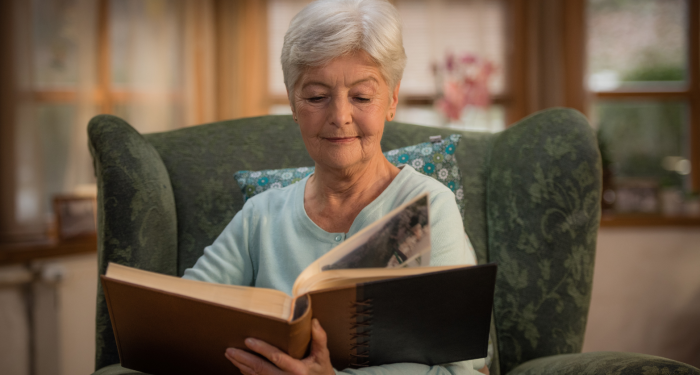
While your adult children have already forgiven your parenting mistakes and moved on, they're still waiting for the one thing that could transform your relationship: hearing you actually admit you were wrong.

Add VegOut to your Google News feed. 
Last Thanksgiving, I watched my friend's family gathering unravel over dessert.
It wasn't about politics or money or who got Mom's china. It was about something much simpler and infinitely more painful: her father couldn't say the words "I was wrong." The tension had been building for years, invisible walls constructed from unspoken hurts and unacknowledged mistakes.
As I drove home that night, I thought about all the families I know carrying similar burdens, and how different things might be if we could just have one honest conversation about our failures as parents.
We boomers pride ourselves on being the generation that broke barriers and challenged conventions. We marched for civil rights, questioned authority, and revolutionized everything from music to technology.
Yet when it comes to admitting our parenting mistakes to our adult children, we suddenly become as rigid as the establishment we once rebelled against. The irony isn't lost on me.
1) Why vulnerability feels like defeat
Have you ever noticed how easy it is to apologize to a stranger for bumping into them at the grocery store, but how impossibly hard it feels to apologize to your grown child for the deeper wounds? There's something about looking into the eyes of someone you raised and saying, "I got it wrong" that feels like admitting you failed at the most important job you ever had.
Growing up, many of us were taught that parents were infallible authorities. Admitting mistakes wasn't just uncommon; it was seen as weak. We internalized this message so deeply that even now, decades later, the thought of telling our children we messed up feels like betraying some sacred parental code.
But here's what I've learned: that code was written by people who confused authority with authenticity, and strength with stubbornness.
I spent years justifying my absences during my children's childhoods. Single motherhood meant survival mode, and survival mode meant missing things.
Important things. When I finally sat down with my kids and acknowledged how my constant scrambling to keep us afloat had made me less present than I wanted to be, I expected judgment. Instead, I got understanding. They had already forgiven me; they were just waiting for me to forgive myself.
2) The stories we tell ourselves
Virginia Woolf once wrote, "The past only comes back when the present runs so smoothly that it is like the sliding surface of a deep river."
Sometimes that smooth surface is actually denial, and the past we're avoiding is the truth about our parenting choices.
We tell ourselves elaborate stories to avoid confronting our mistakes. "They turned out fine" becomes our mantra, as if their success erases our shortcomings. "That's just how things were back then" becomes our shield against accountability. But our children don't need our justifications; they need our honesty. They need to hear us say, "Yes, I see it now. I see how that hurt you."
Missing my son's college graduation because I couldn't afford the plane ticket is a regret that still visits me at 3 a.m. For years, I wrapped that absence in explanations about financial responsibility and practical limitations.
But the truth was simpler and more painful: I had failed to prioritize saving for something that mattered deeply to him. When I finally told him this, without the protective layer of excuses, something shifted between us. The invisible distance that had grown over the years began to close.
3) What your children already know
Do you really think your adult children don't remember? They remember the promise you broke to attend their school play. They remember the harsh words spoken in exhaustion. They remember the divorce that turned their world upside down and how you were too caught up in your own pain to fully see theirs.
They remember, and they've spent years trying to understand, to make sense of it all, often blaming themselves in the process.
Your children have probably already done the work of understanding you as a flawed human being rather than an infallible parent. They've likely spent time in therapy or long conversations with friends, piecing together how your struggles shaped their childhood.
What they're waiting for isn't perfection; it's acknowledgment. They want to know that you see what they see, that their experience was real and valid.
A serious falling out with my sister taught me something crucial about family reconciliation.
For five years, we didn't speak, each of us fortified behind our own version of events. When we finally broke through that silence, it wasn't because one of us was proven right. It was because we both admitted we had been wrong in different ways. That same principle applies to our relationships with our children.
4) How to start the conversation you've been avoiding
Starting this conversation doesn't require a dramatic confrontation or a tearful confession. Sometimes the most powerful admissions come in quiet moments. "I've been thinking about when you were young," you might begin. "There are some things I wish I'd done differently."
Be specific. Vague apologies feel hollow. Instead of "I wasn't perfect," try "I know I was often irritable after work, and you deserved better than my short temper." Don't make excuses in the same breath as your apology. The phrase "I'm sorry, but..." undoes everything that came before it.
Listen more than you speak. When you open this door, your children might have things to say that are hard to hear. They might have anger they've been carrying for decades. Let them express it without defending yourself. This isn't about you being understood; it's about them being heard.
Recently, I discovered old letters in my parents' attic that revealed family struggles I'd never known about. It helped me understand my own parents' limitations, but it also made me realize how much healing could have happened if these truths had been shared while they were alive.
Don't let your family history remain buried in metaphorical attics.
5) The unexpected gifts of admission
What surprises most of us about these conversations is not how hard they are, but how liberating they feel afterward. That weight you've been carrying, that defensive armor you've worn for decades, suddenly becomes unnecessary. When you admit your mistakes, you free yourself from the exhausting work of pretending they didn't happen.
More importantly, you model something invaluable for your children: the courage to be accountable. You show them that growth doesn't stop at a certain age, that it's never too late to evolve, to apologize, to repair. You give them permission to be imperfect parents themselves someday, to make mistakes without drowning in shame.
These conversations often unlock other conversations. Once you've established that it's safe to be honest about the past, your children might share more about their present struggles.
The relationship transforms from one of careful distance to genuine intimacy. You stop being just a parent and child; you become two adults who can truly see each other.
Final thoughts
The conversation we've been avoiding isn't just about apologizing for past mistakes. It's about finally seeing our children as whole people who were shaped by our choices, both good and bad. It's about having the courage to drop our defenses and meet them in a place of mutual humanity.
Yes, it's uncomfortable. Yes, it might involve tears. But on the other side of that discomfort is the kind of closeness we claim we want with our families. The question isn't whether you were a perfect parent - none of us were. The question is whether you're brave enough now to admit it.
If You Were a Healing Herb, Which Would You Be?
Each herb holds a unique kind of magic — soothing, awakening, grounding, or clarifying.
This 9-question quiz reveals the healing plant that mirrors your energy right now and what it says about your natural rhythm.
✨ Instant results. Deeply insightful.

Marlene Martin
Marlene is a retired high school English teacher and longtime writer who draws on decades of lived experience to explore personal development, relationships, resilience, and finding purpose in life’s second act. When she’s not at her laptop, she’s usually in the garden at dawn, baking Sunday bread, taking watercolor classes, playing piano, or volunteering at a local women’s shelter teaching life skills.
More Articles by Marlene