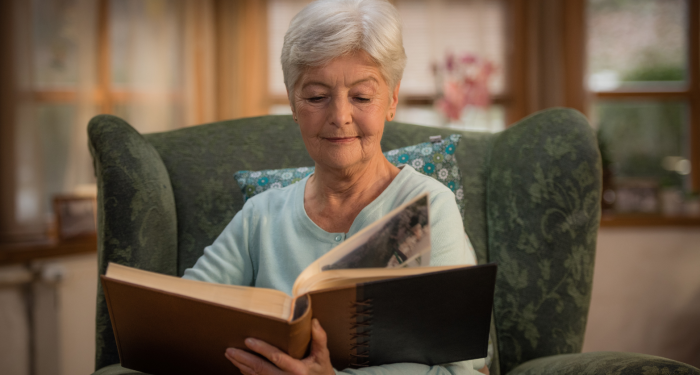
After decades of tag-teaming carpools and coordinating soccer schedules, you're suddenly alone with your spouse in a quiet house, staring at each other across the kitchen table and realizing you haven't had a real conversation—one that wasn't about logistics or grandkids—in years.

Add VegOut to your Google News feed. 
Picture this: You're sitting across from your spouse at the same kitchen table where you once helped kids with homework, planned birthday parties, and negotiated curfews. The house is quiet now, almost eerily so.
No doors slamming, no music blaring from upstairs, no arguments about screen time. Just the two of you and the soft tick of the clock you never noticed before. You look at each other, really look, and realize you haven't had a conversation that wasn't about logistics, grandkids, or health insurance in months. Maybe years.
This is the moment so many couples over 60 find themselves in, and it's terrifying. Because the question hanging in the air, unspoken but deafening, is this: Without the kids, without the shared project of raising a family, who are we to each other now?
The conversation we've been postponing
I remember sitting in a couples counseling session during the fifth year of my second marriage, feeling like a failure for needing help. The therapist asked us a simple question: "What do you do together for fun?"
The silence that followed was excruciating. We looked at each other, then at the floor, then back at the therapist. Finally, my husband mumbled something about watching the news together. The news. That was our idea of shared recreation.
The truth is, many of us spent decades in survival mode. We were tag-teaming school pickups, dividing and conquering weekend sports schedules, troubleshooting teenage dramas. We became logistics partners, co-managers of a small, chaotic enterprise.
And we were good at it. We knew our roles, our responsibilities, our rhythms. But somewhere along the way, we forgot to nurture the part of our relationship that existed outside of parenthood.
Now the enterprise has closed its doors, the employees have moved on to start their own branches, and we're left staring at each other like strangers who happen to share a mortgage.
Why facing this truth feels impossible
There's a reason we avoid this conversation, and it's not just fear. It's grief. Acknowledging that we might not have much in common anymore means admitting that something precious might have slipped away while we weren't looking. It means confronting the possibility that the person we promised to love forever has become someone we barely know.
When I took early retirement at 64 because my knees couldn't handle another day of standing in front of a classroom, I mourned the loss of my identity as a teacher. But that grief paled in comparison to the panic I felt when I realized I'd be home all day with a husband I'd primarily communicated with through hurried morning coffee and exhausted evening recaps for the past decade.
We develop elaborate avoidance strategies. We fill our calendars with doctor's appointments, volunteer work, separate hobbies. We turn up the television a little louder. We invite the grandkids over more often, grateful for the familiar buffer they provide. Anything to avoid sitting in that uncomfortable silence and asking the questions that might unravel everything.
Starting from where you actually are
But here's what I learned during those seven years of supporting my husband through Parkinson's: avoiding difficult truths doesn't make them disappear. It just makes them grow larger and more unwieldy in the shadows.
The conversation needs to start not with grand pronouncements or ultimatums, but with honest curiosity. What do you actually enjoy doing now, not twenty years ago when you were different people? What makes you laugh? What books are you reading? What did you think about during your walk this morning?
These might sound like first date questions, and in a way, they are. You're getting to know each other again, or maybe for the first time without the constant soundtrack of family life.
I discovered that my husband, who I'd always thought of as purely practical, had developed a fascination with bird watching during his lunch breaks. He discovered that I'd been writing poetry in the early morning hours before anyone else woke up. These weren't earth-shattering revelations, but they were threads we could pull on, conversations we could have that went beyond the functional.
Building something new from the foundation you have
Virginia Woolf once wrote, "Life is not a series of gig lamps symmetrically arranged; life is a luminous halo." The same could be said of long marriages. They're not neat progressions from honeymoon to golden anniversary. They're messy, with periods of distance and closeness, recognition and bewilderment.
The key is understanding that you don't have to resurrect who you were as a couple before kids. Those people don't exist anymore. You've both been changed by the experience of parenting, by loss, by age, by the simple accumulation of days. The question isn't how to get back to something, but how to build forward into something new.
Start small. Find one thing you both might enjoy trying. Maybe it's a cooking class, maybe it's walks after dinner, maybe it's reading the same book and talking about it. Don't expect fireworks. In fact, expect awkwardness. You're learning new dance steps after years of moving to different music.
What surprised me most was discovering that my husband showed love through quiet acts I'd been too busy to notice. While I was looking for grand declarations, he was changing my car's oil, making sure my reading chair got the best light, brewing my coffee just right every morning without fail.
Once I started paying attention, I realized we had more in common than I thought: we both showed up, day after day, in our own imperfect ways.
Final thoughts
The empty nest doesn't have to be empty of connection, but it does require us to be architects of something new. That honest conversation about what you have in common now? It's not a one-time event but an ongoing dialogue. Some days you'll discover delightful commonalities. Other days you'll realize you're living parallel lives under the same roof.
Both are okay. Both are workable.
The courage isn't in having all the answers. It's in being willing to sit with the questions, to look at each other across that quiet kitchen table and say, "I'm not sure who we are together anymore, but I'm willing to find out." That willingness, that curiosity, that gentle bravery in the face of uncertainty - that might just be the most important thing you have in common after all.
What’s Your Plant-Powered Archetype?
Ever wonder what your everyday habits say about your deeper purpose—and how they ripple out to impact the planet?
This 90-second quiz reveals the plant-powered role you’re here to play, and the tiny shift that makes it even more powerful.
12 fun questions. Instant results. Surprisingly accurate.