As she sat across from her adult daughter at coffee, she realized the inheritance her children desperately needed wasn't in any will or deed—it was the conversation where she finally admitted she was terrified of disappearing into the role of "Mom" and losing the woman who still wanted to take salsa lessons at 68.

Add VegOut to your Google News feed. 
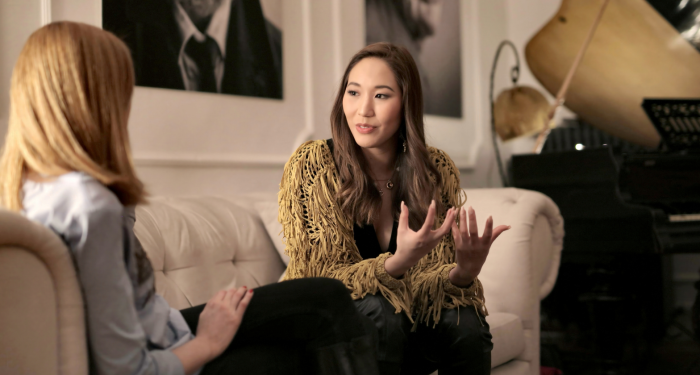
Last week, I found myself crying in my car after coffee with my daughter.
Not because anything went wrong, but because for the first time in our forty-two years together, I told her that I'm terrified of becoming invisible.
That sometimes I feel like I'm disappearing into the role of "Mom" or "Grandma" and losing the woman who still dreams about taking salsa lessons and writing terrible poetry at 3 AM.
The conversation lasted two hours, and when we hugged goodbye, she whispered, "I've been waiting my whole life to meet you."
That moment changed everything I thought I knew about what my children need from me.
We spend so much time organizing our papers, updating our wills, and making sure our children know which cousin gets the china.
But here's what nobody tells you: Your adult children are often desperate to know who you are beyond the parent who raised them.
They want to understand your fears, your unfulfilled dreams, and yes, even your needs that have nothing to do with being their mother or father.
1) Why this conversation feels impossible
Growing up, we were taught that good parents sacrifice everything and never burden their children with their problems.
My generation perfected the art of answering "How are you?" with "Fine" even when our worlds were crumbling. We became masters at hiding our struggles behind casseroles and carpools.
When my husband died, I remember standing in my kitchen the day after the funeral, making sandwiches for my grieving children while my own heart was shattered into pieces I couldn't count.
My son, barely sixteen, asked if I was okay, and I said, "Don't worry about me, sweetheart. I'm worried about you." Looking back, that might have been the moment I taught him that my feelings didn't matter as much as his.
The truth is, we're terrified. What if our children judge us for admitting we're lonely? What if they roll their eyes when we say we need more than a weekly phone call? What if revealing our whole selves somehow diminishes their respect for us?
But here's what I've learned: Our children are adults now. They've experienced their own heartbreaks, their own 3 AM anxieties, their own moments of feeling utterly lost.
They have the capacity to see us as human beings, not just as their parents. The question is whether we have the courage to let them.
2) The weight of unspoken truths
Remember that Virginia Woolf wrote, "The eyes of others our prisons; their thoughts our cages." How many of us are living in cages built from what we think our children expect us to be?
I spent decades believing my children needed me to be endlessly strong, endlessly available, endlessly selfless.
When I started therapy in my fifties, my therapist asked me a simple question that unraveled everything: "What would happen if you disappointed someone?" I couldn't answer.
The thought was so foreign, so terrifying, that I just sat there in silence.
The unspoken truths we carry become heavier with age. The dream of going back to school that we never pursued because there wasn't time. The marriage that looked perfect from the outside but left us feeling alone.
The anxiety that we managed with wine and busy schedules instead of honest conversation. The way we sometimes resented the very children we would die for, simply because we lost ourselves in raising them.
These truths don't disappear just because we don't speak them.
They show up in passive-aggressive comments at holiday dinners, in the distance we can't quite bridge, in the way our children tiptoe around certain subjects because they sense landmines they can't see.
3) What your children might be waiting to hear
A few months ago, I finally told my son about the impossible choice I faced when I was caring for my aging parents while trying to raise him and his sister.
How I would drive from my mother's chemotherapy appointments straight to his baseball games, crying in the parking lot for exactly three minutes before putting on my brave face.
How some nights I was so exhausted that I let them eat cereal for dinner and felt like a failure.
His response surprised me: "Mom, I remember the cereal dinners. They were some of my favorites because you actually sat with us instead of bustling around the kitchen."
Your children might be waiting to hear that you're still figuring things out. That retirement isn't the endless vacation everyone pretends it is. That you miss having a purpose beyond being available for babysitting.
That you want to be included in their lives as more than an obligation or a holiday tradition.
They might need to hear that you see them as adults capable of supporting you, not just as children who need protecting.
That you value their opinions on your decisions. That sometimes you need their help, and that needing help doesn't make you weak.
4) How to start when you don't know where to begin
Can I tell you something? The conversation doesn't have to be perfect. In fact, it shouldn't be. This isn't a presentation or a speech; it's an invitation into your inner world.
Start small. Maybe over coffee, mention that you've been thinking about taking an art class but you're scared you'll be terrible at it. Or share that you've been feeling restless lately and you're not sure why.
These small admissions create openings for bigger truths.
Write a letter if talking feels too hard. I know someone who wrote her children individual letters explaining who she was before she became their mother, what dreams she had to set aside, and what dreams she's picking back up now.
She didn't mail them right away; she sat with them, edited them, and eventually read them aloud during a family weekend.
Be prepared for various reactions. Some children will embrace this new openness immediately. Others might need time to adjust to seeing you as a complete person rather than just their parent.
That's okay. You're changing a dynamic that's been in place for decades.
Final thoughts
Last month, I wrote about finding purpose after retirement, but I realize now that finding purpose starts with admitting who we really are and what we really need.
Our children don't need us to be perfect monuments to parenthood. They need us to be real, flawed, still-growing human beings who happen to be their parents.
The house will get sorted. The will is important. But the gift of knowing who you really are? That's the inheritance that actually changes lives.
It's the conversation that says, "I trust you enough to show you my whole self, and I believe you're strong enough to handle it."
We don't have infinite time. Every day we wait is a day less of authentic connection, of real understanding, of the deep relationship that's possible when we stop performing and start being.
Your children are ready. The question is: Are you?
If You Were a Healing Herb, Which Would You Be?
Each herb holds a unique kind of magic — soothing, awakening, grounding, or clarifying.
This 9-question quiz reveals the healing plant that mirrors your energy right now and what it says about your natural rhythm.
✨ Instant results. Deeply insightful.

Marlene Martin
Marlene is a retired high school English teacher and longtime writer who draws on decades of lived experience to explore personal development, relationships, resilience, and finding purpose in life’s second act. When she’s not at her laptop, she’s usually in the garden at dawn, baking Sunday bread, taking watercolor classes, playing piano, or volunteering at a local women’s shelter teaching life skills.
More Articles by Marlene