Every morning she opens her eyes to a world that speaks in hashtags instead of sentences, measures connection in Wi-Fi bars instead of handwritten letters, and treats her lifetime of wisdom like an expired coupon—yet she gets up anyway, armed with nothing but Earl Grey tea and the quiet rebellion of refusing to disappear.

Add VegOut to your Google News feed. 
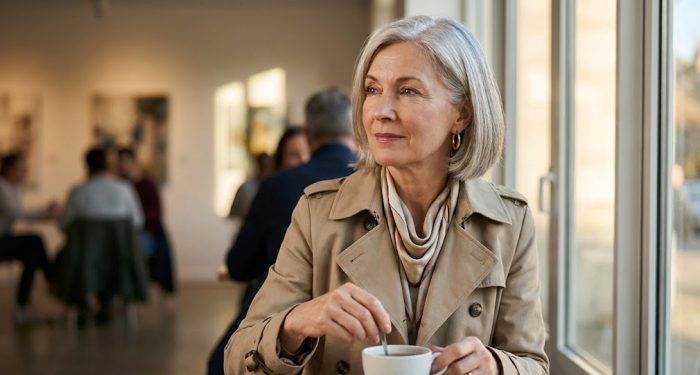
The smell of Earl Grey fills my kitchen at dawn, steam rising from the same chipped mug I've used for twenty years.
Outside my window, the world hums with notifications I'll never hear, appointments synced to clouds I don't quite trust, and conversations happening in abbreviations I'm still learning.
I watch my neighbor's teenage son walk past, eyes glued to his phone, navigating by peripheral vision alone. When I was his age, we navigated by landmarks and memory. Now I navigate by determination and a refusal to be left behind.
Last week, I stood in the bank for forty minutes trying to deposit a check because the app wouldn't recognize my signature. The teller, who looked about twelve, kept insisting it would be "so much easier" if I just used mobile deposit.
I wanted to tell her about the years I balanced checkbooks by hand, teaching high school students the same skill in my English classroom between lessons on Steinbeck and semicolons.
Instead, I smiled and waited while she processed my deposit the "hard way."
The daily act of translation
Do you know what it feels like to wake up fluent in a language the world no longer speaks? I spent 32 years teaching teenagers to communicate through writing, to express themselves with clarity and purpose.
Now I watch my grandchildren communicate entirely through memes and abbreviated texts that would have earned them failing grades in my classroom. "LOL," my granddaughter texts me. I had to Google what that meant when I got my first smartphone at 68.
The world hasn't just changed; it's been completely rewritten in a code I'm constantly deciphering. Every interaction requires translation.
The grocery store wants me to download their app for coupons. The doctor's office sends appointment reminders through a patient portal that requires two-factor authentication.
Even my beloved library now primarily offers digital books that disappear from my device after two weeks, as if the words themselves have expiration dates.
But here's what they don't understand: I've been translating all my life. I translated my mother's silence when my father left us. I translated rejection letters into motivation when I was applying for teaching jobs as a divorced single mother.
I translated my first husband's absence into presence for my children, becoming both parents when I'd barely figured out how to be one.
Technology as a second language
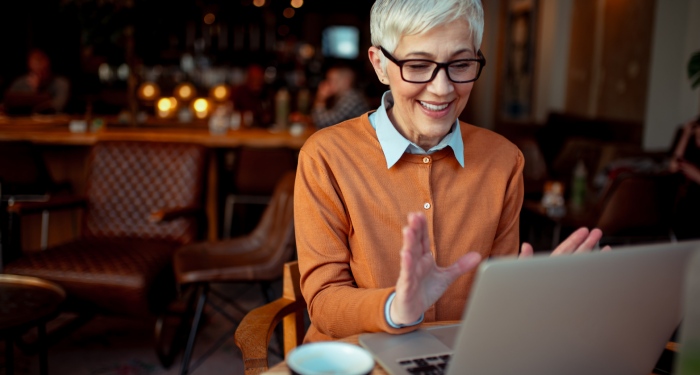
My arthritic fingers hover over the keyboard of my laptop, typing my weekly essay for the writing group I joined after retirement. The younger members submit their pieces through Google Docs, a platform that took me three months to understand.
They don't know that I once graded 150 essays by hand every two weeks, my feedback flowing in red ink margins. Now I struggle to figure out how to leave a comment in their digital documents without accidentally deleting their work.
"You're so brave for learning all this technology," a thirty-something woman in my watercolor class told me last month. Brave? I wanted to laugh. I survived raising two children on a teacher's salary after my divorce.
I went back to school at night to get my master's degree while teaching full-time.
I held my second husband's hand through two years of Parkinson's, watching the man who once built our deck with his own hands struggle to hold a coffee cup. That was brave. Learning to use Zoom is just adaptation.
Yet she's not entirely wrong. There's a particular courage required in admitting you don't know something when you've spent seven decades accumulating knowledge.
Every time I ask my grandson to show me how to post a photo on social media, I'm acknowledging that my expertise has limits. Every time I call customer service and admit I can't find the button they're describing, I'm vulnerable in a way that physical challenges never made me feel.
The invisibility cloak I never asked for
Something happens to women around 60. We don't gradually fade; we suddenly vanish. One day store clerks see you, the next they look through you to serve the person behind you.
Conversations happen around you rather than with you. Your opinions, filtered through seven decades of experience, carry less weight than a twenty-five-year-old's Twitter thread.
I remember the exact moment I realized I'd become invisible. I was at a technology store, trying to buy a new phone after mine died.
The young salesman directed all his explanations to my daughter, even though I was the one asking questions and paying. "Your mom will love this feature," he said, as if I wasn't standing right there, checkbook in hand (yes, I still use checks, another act of rebellion).
This invisibility would be easier to bear if it weren't so selective. I'm invisible when I have something to contribute but highly visible when I'm moving too slowly at the self-checkout.
I'm invisible when applying for volunteer positions that require "fresh perspectives" but visible when someone needs wisdom about grief, loss, or starting over.
Finding purpose in the margins
The women's shelter where I volunteer doesn't care that I can't create a TikTok video or don't understand cryptocurrency. They need someone who understands what it means to rebuild your life from scratch.
When I sit with a woman who's left everything behind, I don't need an app to connect.
I just need to remember my own kitchen table, counting quarters for laundry while my babies slept, planning a future that seemed impossible.
My literacy students don't care that I still print handouts instead of sharing digital files. They care that I show up every Thursday, that I remember their names and their stories, that I see their potential when the world has written them off.
One woman, who learned to read at 43, told me I gave her the gift of books.
I wanted to tell her she gave me the gift of purpose, but sometimes the deepest truths don't need words.
As I wrote in a post last month about finding meaning after loss, purpose doesn't retire when we do. It just changes shape, like water finding new channels.
My purpose used to be shaping young minds through literature. Now it's proving that older minds still have something to offer, that wisdom doesn't become obsolete just because it's stored in a brain that remembers rotary phones.
The revolution of showing up
What would happen if we all just stopped? If everyone over 65 decided the world had moved on without us and we simply withdrew?
The volunteer networks would collapse. The wisdom keepers would go silent. The grandchildren would lose their anchors to history. The world would lose the people who remember what it was like before everything became instant and disposable.
So I keep showing up. I attend my Italian class where I'm older than the instructor's mother. I hike trails that my knees protest but my spirit demands.
I join online book clubs, struggling with the unmute button but determined to share my thoughts on this month's selection. Each appearance is a small revolution, a refusal to go gentle into that good night.
Final thoughts
Tomorrow morning, I'll wake again to a world that wasn't designed for me. My phone will demand updates I don't understand. The coffee shop will assume I know what a "mobile order" is.
The medical portal will require another password I'll have to reset. But I'll make my Earl Grey, open my journal, and write another page in cursive that nobody teaches anymore.
This is what courage looks like at 70: Not conquering mountains but conquering the daily assumption that we're too old to learn, too slow to matter, too set in our ways to adapt.
Every day we choose participation over withdrawal, we're writing a different story about aging. We're proving that relevance isn't about age; it's about refusing to become irrelevant.
The world may have been redesigned for someone younger, but it still needs those of us who remember when it was designed differently.
We're the bridges between what was and what is, the translators of history, the keepers of stories that Instagram can't capture.
And that, perhaps, is the bravest thing of all: Knowing the world has moved on and choosing to move with it anyway, at our own pace, in our own way, with our own irreplaceable value intact.
If You Were a Healing Herb, Which Would You Be?
Each herb holds a unique kind of magic — soothing, awakening, grounding, or clarifying.
This 9-question quiz reveals the healing plant that mirrors your energy right now and what it says about your natural rhythm.
✨ Instant results. Deeply insightful.

Marlene Martin
Marlene is a retired high school English teacher and longtime writer who draws on decades of lived experience to explore personal development, relationships, resilience, and finding purpose in life’s second act. When she’s not at her laptop, she’s usually in the garden at dawn, baking Sunday bread, taking watercolor classes, playing piano, or volunteering at a local women’s shelter teaching life skills.
More Articles by Marlene