The woman who caught her friend judging her for using the good silverware and folding napkins for a solo pasta dinner discovered that this "weird" habit actually reveals seven powerful psychological traits that separate those who thrive in solitude from those who merely survive it.

Add VegOut to your Google News feed. 
I was having dinner alone last Thursday night when it hit me.
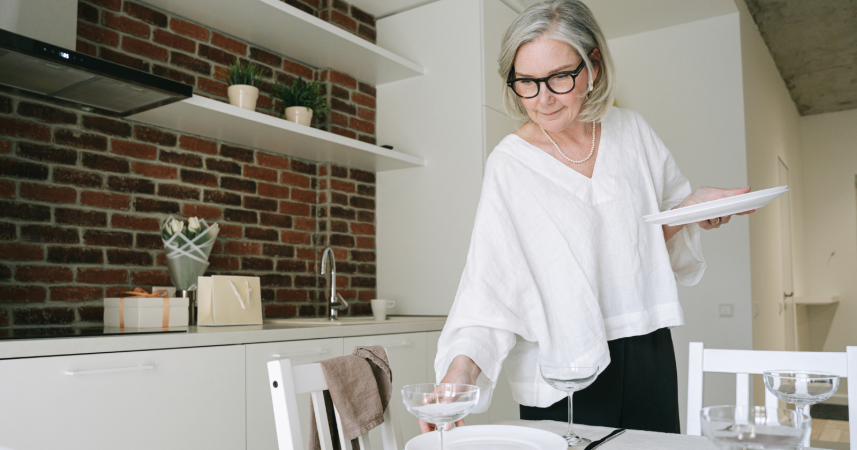
There I was, carefully arranging my placemat, folding my napkin, setting out the good silverware - the whole nine yards. For a simple pasta dish I'd thrown together after a long day of writing.
My friend had stopped by earlier to drop something off and caught me mid-table-setting. "Expecting someone?" he asked, eyeing the careful arrangement. When I told him it was just for me, he looked at me like I'd lost it.
But here's the thing - I spent years in fine dining, watching how the ritual of a properly set table transforms not just a meal, but the entire experience of eating. And somewhere along the way, I realized that maintaining these standards when I'm alone isn't about pretending. It's about something much deeper.
Turns out, psychology backs this up. People who set the table properly even when dining solo aren't playing house or living in denial. They're displaying specific psychological traits that often correlate with success, resilience, and mental well-being.
Let me walk you through what I've discovered.
1. They have exceptional self-respect
You know what separates setting a proper table for yourself from just eating over the sink? Self-respect.
And I'm not talking about that superficial "treat yourself" Instagram culture. As Psychology Today puts it: "Self-respect isn't the same as feeling good about yourself. It comes from living in a way consistent with your values, and treating yourself with regard, not just love or affection."
Think about it. When you take the time to set a proper place for yourself, you're essentially saying: I deserve this. Not because anyone's watching. Not because you're posting it online (I never do). But because you've decided that your standards don't fluctuate based on audience size.
During my years in luxury hospitality, I watched countless people transform when presented with a beautifully set table. Their posture changed. They ate more slowly. They savored their food. Why should we deny ourselves that same experience just because we're alone?
The act itself is almost meditative. Each fork placed, each glass positioned - it's a small ritual of self-acknowledgment that says: this moment, this meal, this person matters.
2. They understand the power of rituals
Ever notice how the most successful people you know have these little rituals they never break?
Setting a table properly when alone is exactly that kind of ritual. It's not about the table - it's about what the act represents. It's a daily practice of maintaining structure when no one's keeping score.
When I lived in Bangkok for three years during my "long break" between careers, I learned about the importance of daily rituals from the locals. Morning offerings, evening prayers, careful food preparation - these weren't performances. They were anchors.
The same principle applies to table setting. It's a ritual that grounds you, especially when life feels chaotic. You're creating a moment of order in your day, a small island of civility that belongs entirely to you.
3. They practice mindfulness naturally
Here's something I've noticed: people who set their table properly when alone tend to eat differently. They're present. They're engaged with their food. They're not scrolling through their phone with one hand while shoveling food with the other.
There's something about a properly set table that demands presence. You've invested effort into creating this moment, so you show up for it fully. The napkin on your lap, the fork in your left hand, the knife in your right - these physical anchors keep you in the moment.
This mindfulness extends beyond the meal. It's practice for being present in other areas of life. If you can be fully present for a solo dinner, you can be present for that difficult conversation, that important meeting, that creative breakthrough you've been chasing.
4. They maintain discipline without external motivation
This is the big one. Anyone can perform when there's an audience. The real test of character is what you do when no one's watching.
Setting a proper table for yourself is discipline in its purest form. There's no Instagram validation. No impressed dinner guests. No one to judge you if you eat straight from the pot. Yet you choose to maintain the standard anyway.
I learned this lesson hard during my Bangkok years. Living alone in a foreign country, working remotely, it would have been easy to let everything slide. No one would know if I ate every meal standing over the sink.
But maintaining those small disciplines - the table setting, the morning meditation I picked up there, the structured routine - kept me anchored when everything else felt foreign.
5. They value process over outcome
Most people focus on the meal. Table-setters focus on the entire experience.
It's not about making the food taste better (though somehow, it often does). It's about honoring the process. The selection of plates, the folding of napkins, the placement of cutlery - each step has value independent of the outcome.
This mirrors how successful people approach most things in life. They don't just focus on results; they find meaning in the journey. Every small action becomes an opportunity for excellence, not because it leads somewhere specific, but because excellence itself is the point.
6. They create beauty for its own sake
Tradition in Action notes that "Setting a simple but attractive place setting encourages polite dining alone." But it goes deeper than politeness.
People who set their table when alone understand that beauty doesn't need justification. They create aesthetically pleasing moments not for others, but because they've decided their life should contain beauty, period.
This isn't about luxury or showing off. A properly set table can be achieved with mismatched thrift store finds. It's about the intention, the care, the decision that your solo Tuesday night dinner deserves the same consideration as a dinner party.
7. They refuse to let standards slip
Finally, and perhaps most importantly, these people understand something crucial about standards: they're easier to maintain than to rebuild.
When you let your standards slip because "it's just me," you're training yourself that your worth fluctuates based on who's watching. That's a dangerous precedent.
Where else might those standards start slipping? Your work when the boss isn't looking? Your fitness routine when no one's checking? Your creative projects when there's no immediate audience?
Setting that table every night, even when you're exhausted, even when no one will know, is a daily vote for the person you've decided to be. It's a refusal to let circumstances dictate your standards.
Final thoughts
Look, I get it. Some nights, eating cereal straight from the box while standing in your kitchen feels like all you can manage. We're human. We're tired. Life is demanding.
But there's something powerful about refusing to let your standards dissolve just because the audience left. It's not about perfection or performance. It's about deciding that the life you've built, the person you've become, deserves to be honored even - especially - when you're the only witness.
Tonight, try it. Set your table properly. Use the good plates. Fold your napkin. Light a candle if you're feeling fancy. Not because anyone's watching, but precisely because they're not.
You might just discover that the most important audience you'll ever have is yourself.