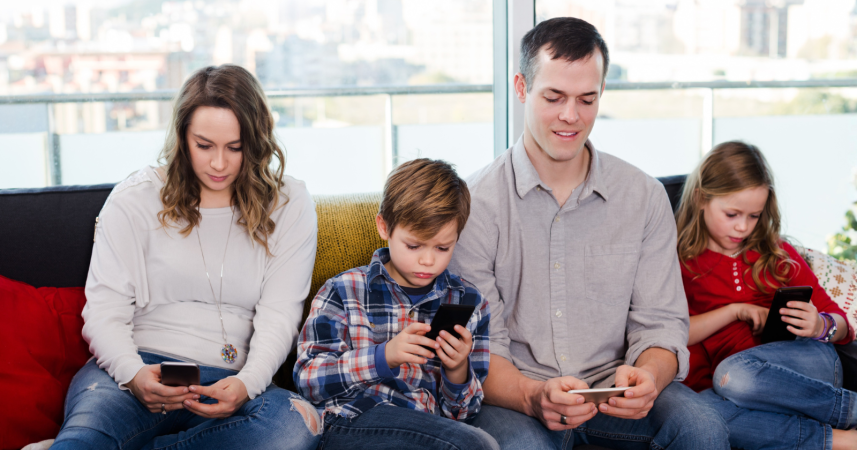
The silence was deafening as seven family members sat in the same room last Christmas, each lost in their own screen, and I realized I'd felt less alone eating Chinese takeout by myself three years earlier.

Add VegOut to your Google News feed. 
I can still picture it perfectly: The Christmas tree lights twinkling in the corner, the smell of cinnamon rolls warming in the oven, and seven people sitting in the same living room, each absorbed in their own glowing rectangle.
My grandson's thumbs moved frantically across his phone screen.
My daughter scrolled through something that made her occasionally smile to herself. Even the eight-year-old had an iPad propped on her knees. The only sound was the occasional notification ping and the grandfather clock ticking in the hallway.
That's when it hit me - this peculiar modern ache that I couldn't quite name at first. Here we were, together for the holidays, everyone healthy and present, and yet I felt more alone than I had on the quiet Thanksgiving I'd spent by myself three years earlier, reading a novel and eating Chinese takeout.
The illusion of togetherness
Have you ever noticed how we can be physically closer to people than ever before and still feel miles apart?
During my teaching years, I watched this phenomenon unfold in my classroom. Students would sit side by side at lunch, each plugged into their own device, occasionally showing each other something on their screens but rarely making actual eye contact or having real conversations.
Back then, I thought it was just a teenage thing. Now I watch the same scene play out at every family gathering, with ages ranging from my great-granddaughter to folks my own age. We gather in the same rooms, breathe the same air, but inhabit completely different worlds.
The strangest part is that everyone seems to be having a good time in their digital bubbles. They're chatting with friends, watching videos that make them laugh, staying connected to their broader circles. But what about the circle right here, right now, in this room where we've gathered specifically to be together?
When presence becomes absence
Last Thanksgiving, I tried an experiment. I put my phone in the bedroom drawer and just observed. What I saw broke my heart a little.
My son showed his daughter a funny video on his phone instead of telling her the story himself. My granddaughter texted her boyfriend who was with his own family, missing the conversation happening right in front of her about college applications - something she'd been stressed about for months.
The devices weren't just stealing moments; they were stealing stories. The kind of rambling, interrupted, laugh-filled stories that used to unfold over holiday meals when there was nothing else to distract us. The stories that started with "Remember when..." and ended with everyone adding their own version of events.
I thought about all the holiday dinners from my childhood, when boredom forced us to actually engage with each other. Sure, Uncle Robert's fishing stories got repetitive, and yes, we'd heard about cousin Marie's trip to Florida at least six times.
But in between the familiar refrains, magic happened. Secrets spilled out. Family lore got passed down. We learned who we came from and, by extension, who we were.
The fear of missing out on what's right in front of us
What strikes me most is the irony of it all. We're so afraid of missing out on what's happening in the digital world that we're missing out on the irreplaceable moments happening in our living rooms.
Your teenager won't always want to come home for the holidays. Your parents won't always be able to travel to see you. These gathered moments are finite, more finite than we like to admit.
After losing my husband to Parkinson's, I understand viscerally how quickly "always" becomes "never again." I wish I had a recording of his laugh at our last holiday dinner together, when he was still himself enough to tell his favorite jokes.
But I don't, because I was probably checking my email or reading the news on my phone, assuming there would be more dinners, more jokes, more time.
The poet Mary Oliver asked, "Tell me, what is it you plan to do with your one wild and precious life?" I want to ask: What do we plan to do with our wild and precious holiday moments? Scroll through other people's highlight reels while our own highlights sit across from us, waiting to be noticed?
Creating islands of real connection
So how do we bridge this gap? How do we rediscover each other across the digital divide? I've learned you can't just demand everyone put their phones away - that creates resentment, not connection. Instead, I've started creating what I call "magnetic moments" that naturally draw people away from their screens.
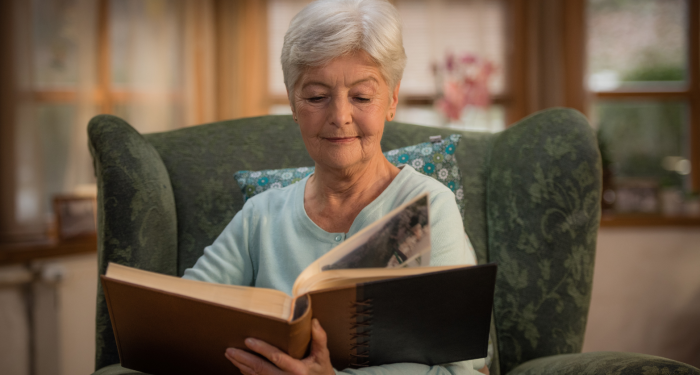
This year, I brought out a box of old family photos - the kind you have to hold in your hands, not swipe through. Suddenly, phones were forgotten as everyone crowded around, laughing at hairstyles and trying to guess who was who. My grandson, the one always gaming, spent an hour asking about relatives he'd never met, building his own sense of family history.
I've also started asking specific, engaging questions at dinner. Not "How's school?" but "What's the most surprising thing you learned this month?" Not "How's work?" but "Tell me about a moment this week when you felt proud of yourself." These questions require thought, spark stories, and most importantly, can't be answered while looking at a screen.
Final thoughts
The loneliest holidays aren't actually about the phones, of course. They're about the disconnection, the sense that we're all together but profoundly apart, sharing space but not ourselves.
The devices are just the symptom of something deeper - our discomfort with silence, our fear of vulnerability, our habit of choosing the easy distraction over the harder work of real presence.
This holiday season, I'm not advocating for a complete digital detox. But I am suggesting we notice when we reach for our phones out of habit rather than need.
Notice when we're using them as shields against the beautiful, messy, sometimes awkward reality of being with family. Notice when we're choosing the curated, controlled world in our palms over the unpredictable, irreplaceable world right in front of us.
Because someday, and sooner than we think, we'll wish we could gather everyone in one room again. And when that day comes, I doubt we'll remember a single thing we saw on our phones. But we'll remember the stories told, the laughter shared, and the feeling of being truly, completely together.