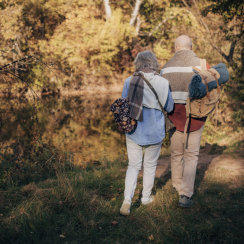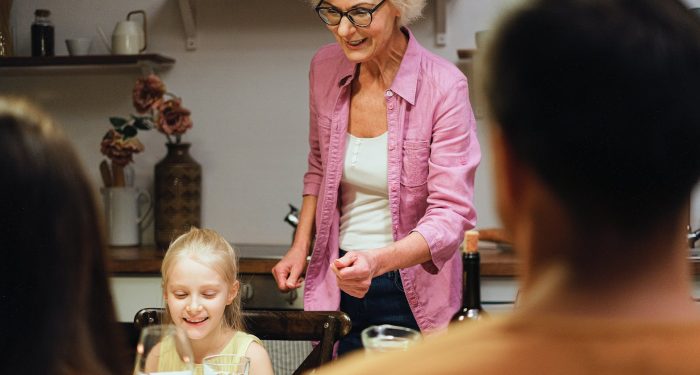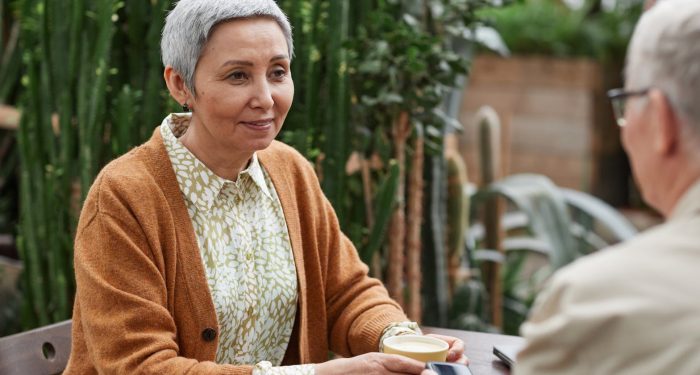
The women form effortless circles of connection while we men huddle around the grill like it's a life raft, but when the burgers are done, so is our only acceptable reason for standing together.

Add VegOut to your Google News feed. 
Last weekend at my neighbor's backyard gathering, I watched it happen again.
The women had formed a natural constellation on the patio, their voices rising and falling like music, hands gesturing as they leaned into each other's stories.
Meanwhile, we men had gravitated to the grill like iron filings to a magnet, examining the temperature gauge as if it held the secrets of the universe.
The silence between us was thick enough to slice with the spatula someone was nervously flipping.
I stood there with my beer, watching this familiar dance, and felt that hollow ache I've come to recognize in myself and see reflected in the eyes of men my age.
We've mastered the art of discussing lawn care and weather patterns, but ask us to talk about what keeps us up at night, and we become mute statues.
The script we never learned to rewrite
Growing up, we were handed a very specific manual for male connection: Talk about work, sports, and things you can fix with your hands.
Emotions were for behind closed doors, if anywhere at all, and our fathers taught us this script through their silence as much as their words.
I spent thirty-five years in the restaurant business, and you know what I noticed? Men would sit at my bar for hours, coming in like clockwork, sitting in the same spots, ordering the same drinks.
They'd talk to me about everything except what mattered: Their kids who wouldn't return their calls, the fear of retirement, and the marriage that had become two strangers sharing a mortgage.
These conversations only happened after too many whiskeys, and even then, we'd pretend the next day that nothing had been said.
The women who came into my restaurant moved through the space differently.
They'd arrive in pairs or groups, dive straight into the meat of their lives within minutes.
No warm-up required, and no alcohol necessary to unlock basic human connection.
When the grill goes cold
Here's the thing about barbecue conversations: They have a built-in expiration date.
Once those burgers are done, once the coals have cooled, the reason for standing together evaporates.
We scatter like we've been caught doing something wrong.
After my divorce, I noticed this pattern everywhere.
Every social gathering followed the same choreography.
We'd cluster around some practical task or object: The grill, the TV during the game, and the car someone was having trouble with.
We needed these props because we'd never learned to just stand together and talk.
The loneliness hits different when you're surrounded by people.
It's the dull ache of being with your supposed peers and feeling like you're speaking different languages.
You're all standing there, holding drinks, making the right sounds at the right moments, but nobody's really connecting.
The emotional price of practical talk
My therapist, who I resisted seeing for months after my divorce, asked me once to describe my closest friendships.
I rattled off names, how long I'd known these guys, what we did together: Golf on Saturdays, poker monthly, and the occasional fishing trip.
"But what do you talk about?" she asked.
I sat there, genuinely stumped.
We talked about plenty of things: The market, our backs hurting, and which contractor to avoid.
But when she pressed further, asking when I'd last told a friend I was struggling, when I'd last asked one of them how they were really doing, I had nothing.
The revelation stung.
I'd spent decades being what I thought was a good friend, showing up for barbecues and game nights, always ready with a joke or a beer.
However, I'd never once told these men that my marriage falling apart had left me feeling like a failure and that retirement terrified me because I didn't know who I was without work to define me.
Breaking the code
Learning to connect differently at this age feels like trying to write with your non-dominant hand as everything feels forced and awkward.
But here's what I've discovered: Other men are desperate for it too.
I started small.
Instead of waiting for someone else to make plans, I became the guy who sends the text.
The first few attempts were painful—we'd sit there, reverting to our safe topics within minutes—but persistence matters.
One morning, over coffee with a friend I'd known for twenty years, I just said it: "I'm lonely as hell, and I don't know how to fix it."
The silence that followed felt like jumping off a cliff, then he set down his cup and said, "Thank God someone finally said it."
That conversation changed everything.
We started talking about real things, such as his son who wouldn't speak to him, my fear that I'd wasted my chance at real intimacy, and the way we both felt invisible at social gatherings, even surrounded by people we'd known for decades.
Teaching old dogs new tricks
The thing about being emotionally available versus being the life of the party is that they require opposite skills.
I'd spent decades perfecting the art of deflecting with humor, of keeping things light, of being the guy everyone wanted at their barbecue but nobody really knew.
My son called me out on it last year.
"Dad," he said, "you've told that fishing story a hundred times, but you've never told me how you felt when Mom left."
The truth of it knocked the wind out of me.
So, I'm learning: Learning that vulnerability doesn't make you weak, that other men are starving for authentic connection just like I am, and that it's never too late to change the script you were handed.
These days, when I'm at those backyard gatherings, I try to be different.
When the barbecue conversation ends, I ask follow-up questions, admit when I don't know something, and share when I'm struggling.
Sometimes it lands—sometimes it doesn't—but each attempt makes the next one easier.
Final words
The loneliness of being a boomer man at a social event is about recognizing that we were given incomplete tools for connection and thinking it's too late to learn new ones (but it's not).
The barbecue might end, but the conversation doesn't have to; we just need to be brave enough to keep talking when the coals go cold.
What’s Your Plant-Powered Archetype?
Ever wonder what your everyday habits say about your deeper purpose—and how they ripple out to impact the planet?
This 90-second quiz reveals the plant-powered role you’re here to play, and the tiny shift that makes it even more powerful.
12 fun questions. Instant results. Surprisingly accurate.