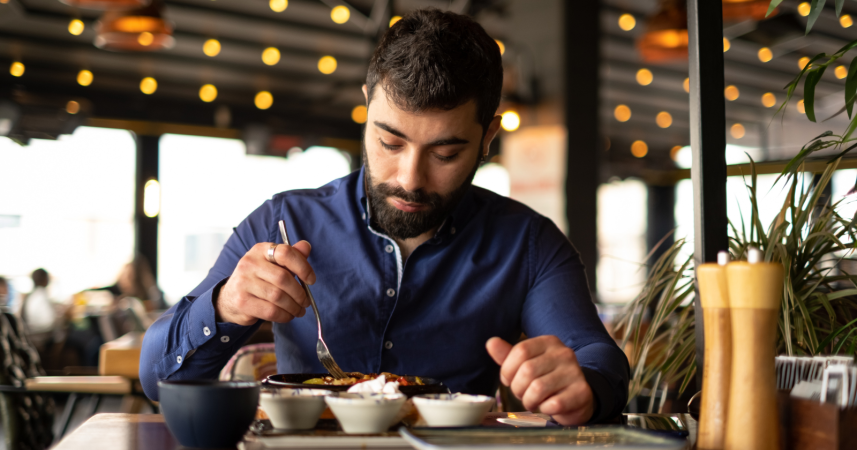
In the crushing quiet of solo dinners, a divorced restaurant owner discovers that the empty chair across from him holds more weight than the food on his plate—until he learns the profound difference between being alone and being lonely.

Add VegOut to your Google News feed. 
The kitchen table used to seat four. Now there's one placemat, one fork, one knife, one glass of water sweating rings onto the wood. The refrigerator hums its mechanical lullaby. Outside, a dog barks three times, then stops.
You cut into your meal and the scrape of metal on ceramic sounds like a violation of some unspoken rule about how much noise one person is allowed to make.
After thirty-five years in the restaurant business, I thought I knew everything about food and the rituals around it. Turns out I knew nothing about eating alone until I had to do it every night for two years. The divorce papers were signed on a Thursday.
By Monday, I was living above the restaurant, and every meal became a meditation on silence I never asked for.
The weight of an empty chair
You don't realize how much space another person takes up until they're gone. Not just their physical presence, but the anticipation of their reactions, their preferences, their voice filling the gaps between bites. When you cook for two, there's a rhythm to it. When you cook for one, there's just efficiency.
I started eating standing up at the counter. Told myself it was faster that way. The truth was simpler: sitting at a table set for one felt like admitting something I wasn't ready to admit. The empty chair across from me had developed its own gravitational pull, heavy with absence.
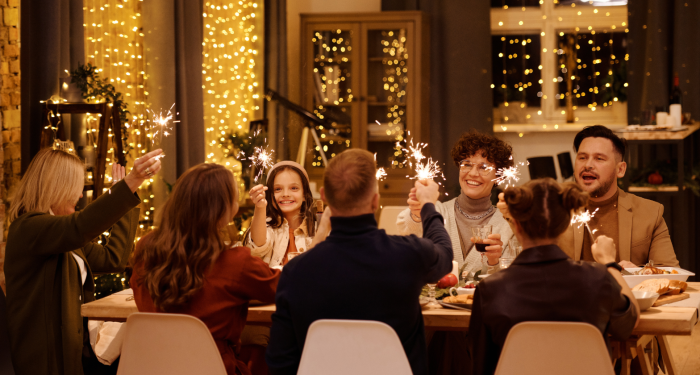
In the restaurant, I was surrounded by the symphony of shared meals all day. Couples leaning across tables, families passing dishes, friends laughing over appetizers.
Then I'd climb the stairs to my apartment and face the brutal arithmetic of single servings. One portion. One serving. One person trying to pretend the TV counted as company.
When your thoughts become too loud
The thing nobody warns you about is how loud your own mind gets when there's no one to interrupt it. Every meal alone becomes an involuntary therapy session.
You're cutting your food and suddenly you're thinking about that argument from three years ago. You're buttering your bread and wondering if this is what the rest of your life looks like. You're washing your single plate and the running water sounds like judgment.
I tried podcasts. I tried music. I tried eating with the news on. But there's something about the act of eating that demands presence, and when you're present with just yourself, all your carefully avoided thoughts show up uninvited to dinner.
Some nights, I'd catch myself setting two places out of habit. Other nights, I'd make too much food because my hands still remembered the portions from before. The leftovers would sit in the fridge like evidence of my inability to adjust to this new mathematics of solitude.
The performance no one watches
There's an intimacy to sharing meals that we don't acknowledge until it's gone. Someone knowing you take your coffee black. Someone automatically passing you the hot sauce before you ask. Someone who knows you save the best bite for last. These small choreographies of care evaporate when you eat alone.
I found myself becoming feral in my eating habits. Why use a plate when you can eat directly from the pot? Why sit at the table when you can stand over the sink? Why cook at all when cheese and crackers technically counts as dinner? Without witness, the rituals that make us human start to feel like unnecessary theater.
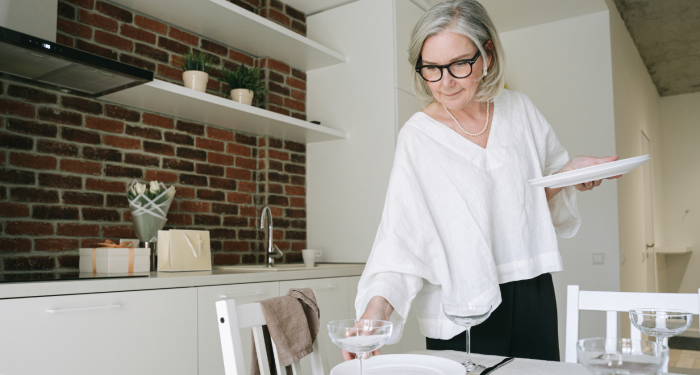
But then something shifted. Maybe it was exhaustion from maintaining anger, or maybe it was simple hunger for something better than microwave dinners, but I started cooking real meals again. Just for me. I'd plate them properly, use the good dishes, pour wine into an actual glass instead of drinking from the bottle.
Learning to be your own dinner companion
The breakthrough came on a random Wednesday. I'd made myself a proper dinner—roasted vegetables, a hearty grain bowl, even lit a candle.
Halfway through the meal, I realized I wasn't waiting for something anymore. I wasn't eating quickly to get it over with. I was just eating, tasting, being present with myself without the crushing weight of loneliness.
That's when I understood the difference between being alone and being lonely. Loneliness is resistance to your own company. Being alone is accepting it, maybe even enjoying it.
The silence that once felt oppressive started to feel spacious. The sound of my own chewing stopped being embarrassing and became just another sound, like rain or traffic.
I started experimenting with this new relationship with solitude. I'd try new recipes without worrying if someone else would like them.
I ate dinner at whatever time felt right, not when convention dictated. I discovered I actually prefer eating in complete silence sometimes, letting the flavors have my full attention without the distraction of conversation.
The unexpected gift of eating alone
These days, I cook dinner almost every night with Linda. Our kitchen is full of the sounds I once missed—the choreography of two people who know each other's rhythms, the comfortable conversation that flows between stirring and chopping. It's a gift I don't take for granted because I know what the absence of it feels like.
But I also know something I didn't know before those two years of solitary dinners: how to be comfortable with my own company. Sometimes Linda works late, and I eat alone. The silence doesn't feel heavy anymore. It feels like space. Room to think, to taste, to be present with the simple act of nourishing myself.
I learned that eating alone isn't about the food getting cold or the portions being wrong or even the silence.
It's about facing yourself without the buffer of another person's presence. It's about learning that you can be enough company for yourself, that your own thoughts aren't enemies to be drowned out but companions to be acknowledged.
Final words
The hardest part of eating alone isn't the silence—it's the story we tell ourselves about what that silence means. We think it means we're unloved, unwanted, or somehow failing at the basic human act of sharing a meal.
But silence isn't absence. It's space. And in that space, if we're brave enough to sit with it, we might find something we didn't know we were looking for: the ability to enjoy our own company, one meal at a time.
The kitchen table that used to seat four still seats four. But now I know that whether it's full or I'm alone, I'm okay either way. The clock doesn't get louder anymore. It just keeps time, marking another meal, another moment of being human, whether witnessed or not.