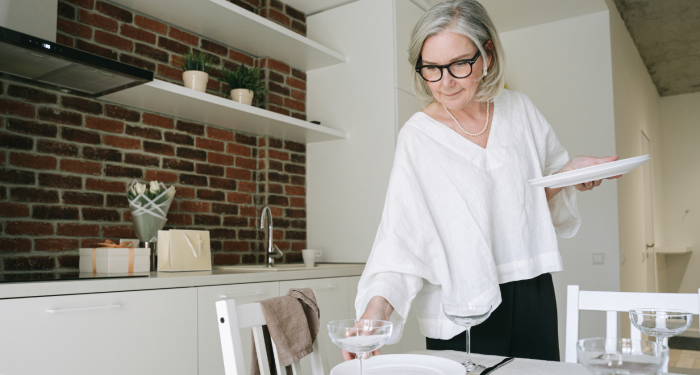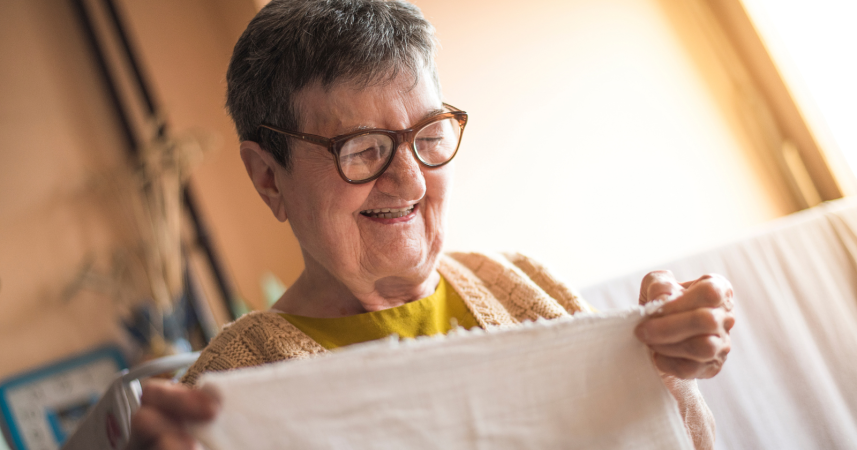
The cracked mug in your parent's kitchen that they refuse to replace isn't stubbornness or sentimentality — it's a physical anchor to a moment when you existed as the center of their universe, and they're holding onto it because they know you won't understand its value until it's all that's left of them.

Add VegOut to your Google News feed. 
Last week, I caught myself cradling a chipped ceramic mug like it was made of spun gold. The handle had been glued back on twice, and there was a hairline crack running down one side that leaked if you filled it too high. But when the afternoon light hit those uneven brushstrokes of purple and yellow paint, when I traced my finger over the wobbly letters spelling "WORLD'S BEST MOM" in a seven-year-old's handwriting, I felt that familiar tightness in my chest. This mug, which any reasonable person would have thrown away years ago, sits in the place of honor at the front of my cupboard while the matching set of Williams-Sonoma mugs gets pushed to the back.
I've been thinking about this phenomenon a lot lately, especially as I watch my friends navigate the complex territory of downsizing, estate planning, and those awkward conversations with adult children about who wants what. We're the generation that supposedly values material success above all else, yet here we are, guarding our broken treasures like dragons hoarding gold.
The currency of memory
What makes an object precious? It's not the price tag or the brand name or even its functionality. My mother's rolling pin, worn smooth in the middle from decades of pie crusts and cookie dough, means more to me than any fancy kitchen gadget I own. When I use it, I can still see her hands guiding mine, teaching me how to roll from the center outward, how to know by feel when the dough was just right.
There's a tea towel hanging in my kitchen from a trip to Cornwall in 1996. It's stained, threadbare in places, and depicts a cartoonish map of the coastline that's mostly faded away. But every time I dry dishes with it, I'm back in that tiny seaside cottage, watching the rain streak the windows while my family played cards around the kitchen table. That towel cost three pounds. The memories it holds? Priceless.
Have you noticed how the things we can't let go of are rarely the things that impressed anyone? Nobody gasps in admiration at my collection of birthday cards from the 1980s or the shoebox full of ticket stubs from concerts and plays. Yet these are the items I rescued first when our basement flooded five years ago, leaving the expensive stereo system for last.
What our children don't see yet
My adult children exchange glances when they visit, mystified by my attachment to what they see as clutter. "Why do you keep Dad's broken watch?" they ask, pointing to the Timex that hasn't worked since 2003. How do I explain that I keep it because I can still hear it ticking on his nightstand, still see him checking it every morning before work, still remember him teaching our son how to read analog time on its worn face?
They don't understand yet that objects become repositories for entire chapters of our lives. That chipped serving platter isn't just a platter; it's every Thanksgiving for twenty years, every birthday cake it held, every face that smiled around the table when it appeared. They see inefficiency where I see a life lived.
Young people often talk about experiences over possessions, and I admire that philosophy. But what they haven't discovered yet is how certain possessions become the physical anchors for those experiences. The experience fades from memory, becomes fuzzy around the edges, but the object remains, ready to unlock the whole scene again with startling clarity.
The weight of keeping and letting go
Of course, there's a shadow side to all this cherishing. I've seen friends become paralyzed by possessions after losing a spouse, unable to part with anything because everything holds a memory. The line between treasuring and hoarding can blur when grief is involved. After finding my mother's recipe box tucked away in the attic, I spent an entire weekend crying over index cards spotted with vanilla extract and flour. Each recipe wasn't just instructions for food; it was evidence of care, of nurturing, of love passed down through generations in the language of measuring cups and oven temperatures.
But there's also liberation in learning what truly matters. During those two difficult years when I had to accept help to feed my children, I sold plenty of things I thought I valued. The china set, the silver, the "good" jewelry. And you know what? I barely remember what most of it looked like. But that handmade Mother's Day card from 1985, with the crooked hearts and misspelled words? That stayed. That still sits in my nightstand drawer, worth more than all the china in the world.
The inheritance nobody wants
Here's what keeps me up at night: what happens to these treasures when we're gone? Our children, practical and minimalist, will likely keep a few things out of obligation or guilt. But that mug I cherish? That broken watch? The tea towel? These will probably end up in boxes marked for donation, their stories lost forever.
And maybe that's okay. Maybe each generation needs to create its own collection of precious, worthless things. Maybe my children are already doing this, though they don't realize it yet. Perhaps one day they'll find themselves explaining to their own bewildered offspring why they can't throw away a certain coffee-stained book or a concert t-shirt with holes in it.
Virginia Woolf wrote about "moments of being," those flashes when life's intensity breaks through the cotton wool of daily existence. Our treasured objects are the physical evidence of those moments. They're proof that we lived, that we loved, that ordinary Wednesdays could become extraordinary memories, that a child's art project could matter more than a retirement portfolio.
Final thoughts
That cracked mug sits on my kitchen counter this morning, holding my coffee despite its imperfections. One day, probably sooner than I'd like to admit, someone will clear out this house and puzzle over why I kept such things. But until then, I'll keep drinking from vessels that leak memories, drying dishes with faded holidays, and checking the time on watches that stopped marking it years ago. Because the real treasure was never the object itself, but the life it witnessed, the love it held, the proof that we were here.