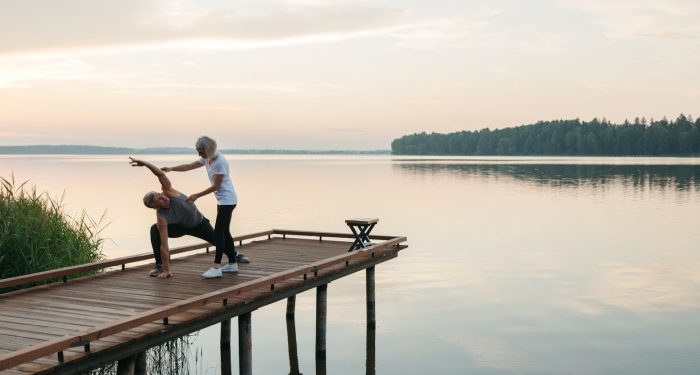
After decades of dutifully bringing her famous green bean casserole to every family gathering, she sat in her car outside her sister's house last Thanksgiving and made a decision that would either make her the family villain or finally set her free.

Add VegOut to your Google News feed. 
Last Thanksgiving, I sat in my car outside my sister's house for twenty minutes before driving away. I'd brought the green bean casserole, the one everyone expects me to make, sitting warm on the passenger seat. But I couldn't bring myself to walk through that door.
At 62, after decades of dutiful attendance at every holiday, birthday, and reunion, I finally admitted something that felt both terrible and liberating: I don't actually enjoy family gatherings. I never have.
The drive home that day, casserole still beside me, was one of the most peaceful holiday afternoons I'd experienced in fifty years.
No forced conversations about politics with relatives I see twice a year. No pretending to laugh at the same stories I've heard since childhood. No exhausting performance of closeness with people who share my DNA but not much else.
Just me, some jazz on the radio, and the profound relief of finally being honest with myself.
The weight of obligatory joy
Growing up as the youngest of four sisters in small-town Pennsylvania, Sunday dinners weren't optional. We didn't have much money, but we had that table, and attendance was mandatory.
I learned early that showing up was synonymous with love, that physical presence equaled emotional connection. This equation got carved into my bones before I knew how to question it.
For decades, I believed something was wrong with me. Why did these gatherings leave me feeling more lonely than being actually alone? Why did I dread the approach of every holiday with a knot in my stomach that would tighten as the day drew near?
I'd watch my sisters seemingly enjoy themselves, trading gossip and inside jokes, while I felt like an actress who'd forgotten her lines but had to keep performing anyway.
The truth is, obligatory joy is exhausting. It requires a constant vigilance, a careful monitoring of your face to ensure it displays the right amount of enthusiasm.
You learn to time your laughs, to ask the right follow-up questions, to hug with the appropriate warmth. You become an expert at small talk about weather and work, never venturing into the territory of real feelings or authentic connection.
When tradition becomes a trap
There's a quote from Virginia Woolf that haunts me: "Life is not a series of gig lamps symmetrically arranged; life is a luminous halo."
Yet family traditions often feel exactly like those symmetrical lamps, predetermined and inflexible, lighting a path we're expected to walk whether it leads anywhere meaningful or not.
After our parents passed, I found myself mediating disputes among my sisters about everything from Mom's china to Dad's tools. Those fights taught me something crucial about family complexity: proximity doesn't guarantee understanding, and shared history doesn't automatically create shared values.
We were four women who happened to grow up in the same house, shaped by the same circumstances but responding to them in completely different ways.
The traditions we clung to after our parents died felt less like comfort and more like obligation. We'd gather because that's what families do, going through motions that had lost their meaning.
The Sunday dinners became monthly brunches, then holiday-only affairs, each iteration more strained than the last. We were trying to preserve something that maybe never existed in the first place, at least not in the way we remembered it.
The difference between showing up and being present
Have you ever noticed how we use the phrase "spending time" with family, as if time is currency we reluctantly hand over?
I spent fifty years paying this tax, showing up physically while my mind wandered elsewhere. I became a master of being there without being present, occupying space without occupying the moment.
This performance of presence is particularly exhausting for those of us who struggle with people-pleasing. My whole life, I said yes when I meant no, smiled when I wanted to cry, stayed when I wanted to leave.
It wasn't until therapy in my fifties helped me understand boundaries that I realized how much of my life I'd spent in rooms I didn't want to be in, with people who didn't really know me because I'd never let them see who I actually was.
The irony is that by always showing up, I prevented any possibility of genuine connection. How can you truly connect with someone when you're wearing a mask? How can they love the real you when you've never shown it to them?
My sisters knew the version of me who brought green bean casserole and asked about their kids' schools. They didn't know the woman who'd rather spend Thanksgiving reading poetry in her pajamas.
Finding freedom in honesty
The day I decided to stop pretending wasn't dramatic. There was no big confrontation, no dramatic announcement at the dinner table. I simply started declining invitations.
"I'm going to pass on Easter this year," I told my oldest sister. The silence on the other end of the phone was deafening, but I didn't fill it with excuses or apologies.
What surprised me most was the relief. Not just mine, but I suspect theirs too. Without me there performing enthusiasm, maybe they could relax into their own authentic rhythms. Maybe my absence gave them permission to acknowledge their own ambivalence about these gatherings.
I think about a serious falling out I had with one sister that lasted five years. When we finally reconciled, I thought it would mean returning to the old patterns, the obligatory gatherings and forced closeness.
Instead, it taught me about a different kind of forgiveness, one that doesn't require pretending the past didn't happen or that we're closer than we actually are. We text occasionally now, send birthday cards, and that feels more honest than any Sunday dinner ever did.
Creating your own definition of connection
Since that Thanksgiving when I drove away, I've spent holidays in ways that actually nourish me. Sometimes that means volunteering at a soup kitchen, where the connections feel more genuine despite being with strangers.
Sometimes it means traveling solo, eating room service while watching old movies. Sometimes it means inviting one or two chosen friends over for a meal without any traditional trappings.
What I've discovered is that real connection can't be scheduled or mandated. It happens in unexpected moments, in conversations that surprise you, with people who see you as you are rather than who you're supposed to be. Some of these people might be family, but many won't be, and that's okay.
Final thoughts
If you're reading this and feeling a spark of recognition, know that it's okay to choose solitude over forced togetherness. It's okay to admit that family gatherings drain rather than restore you. This doesn't make you a bad person or mean you don't love your family. It means you're finally being honest about what you need.
The relief I felt when I stopped pretending has opened up space for genuine connections in my life, just not where tradition told me to look for them.
Fifty years of performing closeness taught me that real intimacy can't be scripted. Sometimes the most loving thing you can do, for yourself and others, is to stop showing up for the performance and start showing up for your actual life.
If You Were a Healing Herb, Which Would You Be?
Each herb holds a unique kind of magic — soothing, awakening, grounding, or clarifying.
This 9-question quiz reveals the healing plant that mirrors your energy right now and what it says about your natural rhythm.
✨ Instant results. Deeply insightful.
Marlene Martin
Marlene is a retired high school English teacher and longtime writer who draws on decades of lived experience to explore personal development, relationships, resilience, and finding purpose in life’s second act. When she’s not at her laptop, she’s usually in the garden at dawn, baking Sunday bread, taking watercolor classes, playing piano, or volunteering at a local women’s shelter teaching life skills.
More Articles by Marlene