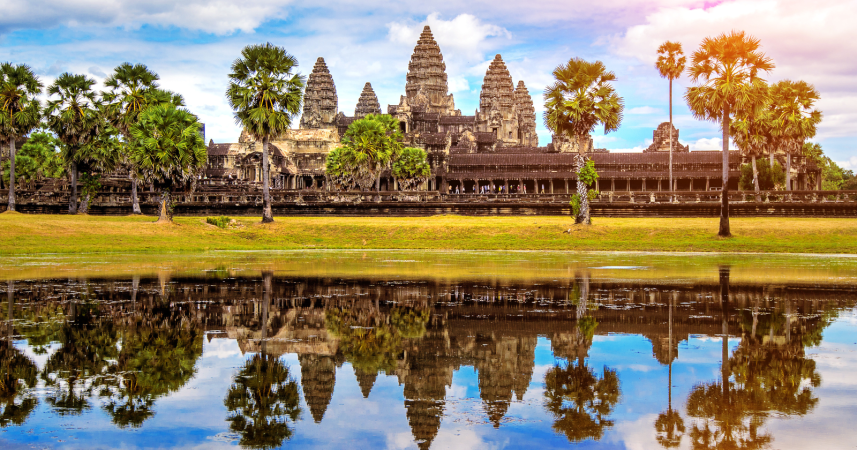
Before smartphones turned travel into a curated feed of perfect moments, getting lost meant finding yourself—and those unfiltered memories hit different when they exist only in your mind, not the cloud.

Add VegOut to your Google News feed. 
Remember that trip where you got lost for three hours in Venice's maze-like streets, only to stumble upon the most incredible little osteria tucked away in a quiet corner? That restaurant doesn't exist on Google Maps.
You can't find it on TripAdvisor. And that's exactly why that memory burns so bright in your mind.
I've been thinking a lot lately about how fundamentally different travel was before smartphones took over our pockets. During my three years living in Bangkok, I watched the shift happen in real-time.
The backpackers who arrived in 2010 with dog-eared Lonely Planet guides were replaced by 2013's crowd, faces buried in screens, following the blue dot on their maps.
Don't get me wrong. I'm not here to romanticize getting food poisoning because you couldn't check restaurant reviews. But if you experienced certain places before everything became instantly searchable, photographable, and shareable, you carry something special. Your memories exist in a different dimension, unfiltered and raw.
1) The backstreets of Marrakech's medina
Can you imagine navigating Marrakech's medina today without Google Maps? The thought probably makes you break out in a sweat. But here's what you missed if you only know it through a screen: the complete sensory overload that forces you into the present moment.
Without a phone to rescue you, getting lost wasn't a minor inconvenience. It was the entire point. You'd follow the smell of leather until you found the tanneries. You'd trust that kid who offered to guide you for a few dirhams. Sometimes he'd lead you exactly where you wanted. Sometimes you'd end up buying tea from his uncle.
Those wrong turns? They became the story. That panic when you realized you had absolutely no idea where your riad was? That's when you actually engaged with the place, asked for help, made connections. You weren't following a predetermined path optimized by an algorithm. You were actually exploring.
2) Times Square at midnight
Sounds crazy to include Times Square, right? It's the most photographed, most cliché spot in New York. But experiencing it before smartphones was fundamentally different.
Picture this: You're standing in that electric chaos at midnight, and instead of 10,000 phones held high, blocking views and killing the vibe, everyone's heads are tilted back, actually looking at the lights. No one's livestreaming. No one's trying to capture the "perfect shot" for Instagram. People are just... there. Present. Overwhelmed together.
The energy was different when everyone experienced it simultaneously, without the filter of a screen. You felt like part of something bigger, not a content creator mining for likes.
3) Full moon parties in Thailand
During my years in Bangkok, I made the pilgrimage to Ko Pha Ngan multiple times. The early ones, before smartphones dominated, were absolutely unhinged in the best possible way.
Think about it: 20,000 people on a beach, and nobody's documenting every second. No Snapchat stories. No Instagram posts at 3 AM showing off your neon body paint. The stupid things you did stayed between you and the friends who witnessed them. The amazing moments lived only in your memory, making them somehow more precious.
Without phones, you couldn't find your friends once you lost them. So you didn't lose them. Or if you did, you made new ones. You were forced to commit to the people around you, to the experience itself, rather than constantly shopping for a better option or checking what was happening at other parties across the island.
4) Angkor Wat at sunrise
Watching the sun rise over Angkor Wat without a sea of phone screens might be the biggest difference of all. When I lived in Thailand, I made several trips to Siem Reap, and the early ones were magical in a way that's probably impossible to replicate now.
Yes, there were cameras. But people took a few shots and then put them down. They sat on the grass and watched the light change. They observed how the temple's reflection shifted in the pond. They were present for the actual experience, not the documentation of it.
Now? It's a photography competition. Everyone's trying to get that shot that'll blow up their feed. The experience becomes secondary to capturing the experience.
5) The Trans-Siberian Railway
Seven days on a train across Russia without internet. Just you, your compartment mates, endless birch forests, and whatever books you thought to bring. The boredom was part of it. The disconnection was the point.
You talked to strangers because they were the only entertainment available. You played cards with Russians who didn't speak your language. You stared out the window for hours, letting your mind wander in ways it never does anymore. You wrote in journals (I still have my detailed notebooks from these trips) because there was nothing else to do.
That forced intimacy with strangers and yourself? That doesn't happen when everyone retreats into their phones at the first sign of awkwardness.
6) Tulum's beaches before Instagram fame
If you knew Tulum before it became Instagram's darling, you experienced a completely different place. Empty stretches of perfect beach. A handful of cabanas. Maybe one beach bar that played reggae until dawn.
You didn't go there because influencers told you it was the spot. You went because another backpacker mentioned it, or because you were exploring the coast and stumbled upon it. The discovery was yours. The experience wasn't pre-packaged, pre-photographed, pre-validated by thousands of likes.
When every meal wasn't photographed, you actually tasted the food. When every sunset wasn't stories-worthy, you actually watched it set.
7) The Northern Lights in Iceland
Seeing the Aurora Borealis before smartphones meant standing in the freezing dark, not knowing if they'd appear at all. No apps to tell you the KP index. No alerts to optimize your viewing time. Just patience, luck, and faith.
When they finally appeared, you watched them. Really watched them. Not through a screen, trying desperately to capture something your phone camera couldn't really handle anyway. The memory exists in your mind exactly as your eyes saw it, not mediated by technology's limitations.
8) Havana's streets
Cuba before widespread internet was a time capsule in the most beautiful way. Without Google Maps, you wandered. Without restaurant apps, you ate where locals ate. Without translation apps, you fumbled through conversations with hand gestures and broken Spanish.
The mistakes were glorious. The discoveries were genuine. You couldn't research the "best" mojito in town, so every mojito was potentially the best one. The city revealed itself to you slowly, organically, through wrong turns and chance encounters.
9) Tokyo without translation apps
Finally, navigating Tokyo when you couldn't instantly translate every sign, menu, and conversation? That was true immersion. You ordered by pointing at plastic food displays. You got on the wrong train and ended up in incredible neighborhoods you never would have visited intentionally.
The confusion was part of the adventure. The miscommunications became stories. You developed skills that apps have now made obsolete, like reading body language, being comfortable with uncertainty, and trusting strangers.
Final thoughts
Look, I'm not suggesting we should all throw our phones in the ocean and go back to paper maps. Technology has made travel more accessible, safer, and often more enriching. I use my phone constantly when I travel now, and I keep detailed digital notes about every meal and every place, just like I used to do in my physical notebooks.
But if you experienced these places before smartphones, you own something that can't be replicated. Your memories aren't backed up in the cloud. They exist only in your mind, which somehow makes them more valuable. You earned them through discomfort, confusion, and genuine discovery.
That's not nostalgia talking. That's recognition that when we removed friction from travel, we also removed some of its transformative power. When we made everything searchable, we eliminated true discovery. When we made everything shareable, we forgot how to experience things just for ourselves.
Those memories you have from before? Guard them carefully. They're from a different era of human experience, and we're never going back.
What’s Your Plant-Powered Archetype?
Ever wonder what your everyday habits say about your deeper purpose—and how they ripple out to impact the planet?
This 90-second quiz reveals the plant-powered role you’re here to play, and the tiny shift that makes it even more powerful.
12 fun questions. Instant results. Surprisingly accurate.