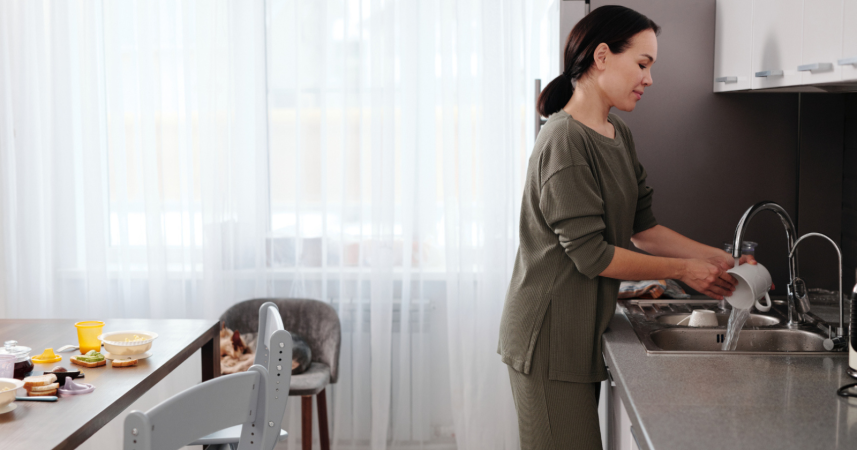
These simple household rituals passed down through generations of stretched budgets and shared spaces have become unconscious acts of dignity that wealthy kids never needed to learn.

Add VegOut to your Google News feed. 
The smell of Pine-Sol mixed with lemon furniture polish takes me back faster than any photograph ever could.
One whiff and I'm eight years old again, standing in our cramped Pennsylvania kitchen, watching my mother attack the linoleum with a mop that had seen better days.
She'd hum while she worked, transforming our modest home into something that sparkled with pride, if not prosperity.
Growing up working class leaves its fingerprints on you in unexpected ways.
While some people inherit trust funds or family businesses, those of us from humble beginnings inherit something different: An arsenal of cleaning habits so deeply ingrained they've become part of our DNA.
These routines weren't just about cleanliness; they were about dignity, resourcefulness, and making the most of what we had.
1) Doing dishes immediately after eating
Is there anything more automatic than carrying your plate to the sink the moment you finish your last bite? In our house, dishes didn't pile up because there simply weren't enough to go around.
With six people sharing one set of dinnerware, leaving dishes unwashed meant someone else couldn't eat.
This habit has followed me through decades. Even now, at dinner parties, I catch myself clearing plates before dessert arrives, much to my friends' amusement.
They think I'm being helpful, but really, I'm just obeying an internal timer that started ticking the moment I was tall enough to reach the faucet.
The idea of going to bed with dishes in the sink still makes me physically uncomfortable, like wearing wet socks or leaving a door unlocked.
2) Making beds first thing in the morning
"A made bed means a made day," my mother would say, pulling hospital corners tight enough to bounce a quarter off.
In a house where bedrooms doubled as homework stations, play areas, and storage spaces, a neatly made bed created instant order from chaos.
It was the quickest way to make a room look presentable, even if toys lurked beneath the bed skirt and laundry overflowed from the closet.
This two-minute morning ritual became my anchor through college dorm rooms, first apartments, and every home since.
During those difficult years when we relied on food stamps, making the bed each morning felt like a small victory, a way of telling the world and ourselves that we hadn't given up.
3) Wiping down surfaces as you go
Have you ever noticed how some people can cook an entire meal and leave the kitchen looking like a tornado hit it? That was never an option for us.
Counter space was precious real estate, and leaving spills meant attracting visitors we couldn't afford to feed – the six-legged kind.
My mother, bent over her sewing machine in our dining room that doubled as her workspace, would wipe down her area between each project. "Clean as you go," she'd remind us, her hands never stopping their productive dance.
Today, I find myself unconsciously wiping counters while coffee brews, cleaning the bathroom sink while brushing my teeth, dusting surfaces while talking on the phone.
These micro-cleaning moments add up to a perpetually tidy space without ever feeling like work.
4) The Saturday morning deep clean
Saturday mornings meant all hands on deck. While other kids watched cartoons, we four sisters divided and conquered: One vacuumed, another dusted, someone scrubbed the bathroom, and the youngest (that was me) collected and sorted laundry.
The radio played oldies while we worked, and by noon, our little house gleamed.
This wasn't just about cleanliness; it was about teamwork and shared responsibility. We learned that maintaining a home was everyone's job, not just mom's.
Even now, Saturday mornings feel incomplete without at least one thorough cleaning task. The rhythm of those mornings – the satisfaction of transformation, the pride in our collective effort – became a meditation I still practice.
5) Repurposing everything before throwing it away
Glass jars became drinking glasses. Butter containers stored leftovers. Old t-shirts transformed into cleaning rags. Nothing left our house without serving at least two purposes. This wasn't trendy upcycling; it was necessity dressed up as creativity.
Do you save twist ties? Rubber bands? That perfectly good box something came in? If you grew up working class, I bet you do. The guilt of waste was trained out of us early.
Even now, with recycling bins and enough resources to buy new, I carefully wash out yogurt containers, thinking they're perfect for sending leftovers home with friends.
6) Cleaning windows and mirrors with newspaper
Paper towels were a luxury we couldn't afford to waste on windows. Instead, we used yesterday's newspaper, which my father brought home after his mail route. The ink, he claimed, added shine better than any store-bought product.
Whether that was true or just parental mythology, the practice stuck.
There's something satisfying about the squeak of newspaper against glass, the way it never leaves lint behind. I tried to explain this to a friend recently, showing her my stash of newspapers saved specifically for cleaning.
She looked at me like I'd suggested using carrier pigeons instead of email. But old habits, especially ones that work, die hard.
7) Spot-treating stains immediately
When you only have three good shirts, a stain is a crisis. We became stain removal experts by necessity, armed with knowledge passed down like family recipes: Cold water for blood, white vinegar for grass, hairspray for ink.
The moment something spilled, we sprang into action like a well-trained emergency response team.
This vigilance has saved countless garments over the years. While others might toss a stained shirt or pay for professional cleaning, I still reach for my arsenal of home remedies first.
It's not about the money anymore; it's about the principle. Why waste something that can be saved?
8) The evening ten-minute tidy
Before bed, we'd do a quick sweep through the house, returning items to their homes, fluffing cushions, folding throw blankets. Ten minutes, no more, but enough to ensure we'd wake up to order rather than chaos.
In a small house where every room was visible from another, clutter had nowhere to hide.
This nightly ritual has become my meditation, a way of closing one day and preparing for the next.
Sometimes, as I fold that last blanket or straighten those final cushions, I think about how these simple acts connect me to my younger self, to my parents, to a way of life that valued care over convenience.
Final thoughts
These cleaning routines we carry from our working-class childhoods aren't just about maintaining tidy spaces.
They're about respect for what we have, understanding that taking care of things makes them last longer, and finding dignity in any circumstance. They remind us that wealth isn't measured in what you own but in how you care for it.
When I watch my adult children automatically clear their plates or wipe down their counters, I smile. Some inheritances don't come with paperwork or bank accounts.
Sometimes they come in the form of habits, quietly passed down, that remind us where we came from and who we are. And honestly? I wouldn't trade these lessons for all the housekeepers in the world.