Those carefree afternoons when you vanished until the streetlights flickered on weren't just childhood memories—they were secretly programming your adult brain in ways that still influence every decision you make today.

Add VegOut to your Google News feed. 
The other day, I watched a mother hover anxiously as her ten-year-old climbed a tree in the park, calling out warnings about every branch. It struck me how different this was from my own childhood, when my sisters and I would disappear for entire afternoons, our parents trusting we'd show up when the streetlights came on.
Those of us who grew up in the 60s and 70s lived in a world where children roamed free, solved their own problems, and learned life's lessons through unsupervised adventures. We didn't realize it then, but those experiences were quietly shaping the adults we'd become.
Looking back now, I see how profoundly those unstructured hours influenced how I trust people, manage stress, and navigate relationships. The freedom we had wasn't neglect; it was a different philosophy about childhood that created a generation with unique strengths and, yes, some particular challenges too.
1) Walking to school alone taught you self-reliance before you knew the word existed
Remember setting off for school with just your lunch money jingling in your pocket? No cell phone, no tracking device, just you and the familiar route you'd memorized by heart.
When it rained, you figured out whether to wait it out under the drugstore awning or make a run for it. When the class bully waited at the corner, you learned to take the long way around through the Johnsons' backyard.
These daily journeys taught us something profound about handling life's challenges. We learned that most problems have solutions if you stay calm and think them through.
Today, when I face a difficult situation, I still hear that inner voice from childhood saying, "You've figured things out before. You can figure this out too." That early self-reliance became the foundation for how we approach obstacles as adults. We don't immediately look for someone to solve our problems; we start by asking ourselves what we can do.
2) Playing until dark without adult supervision wired your brain for healthy risk assessment
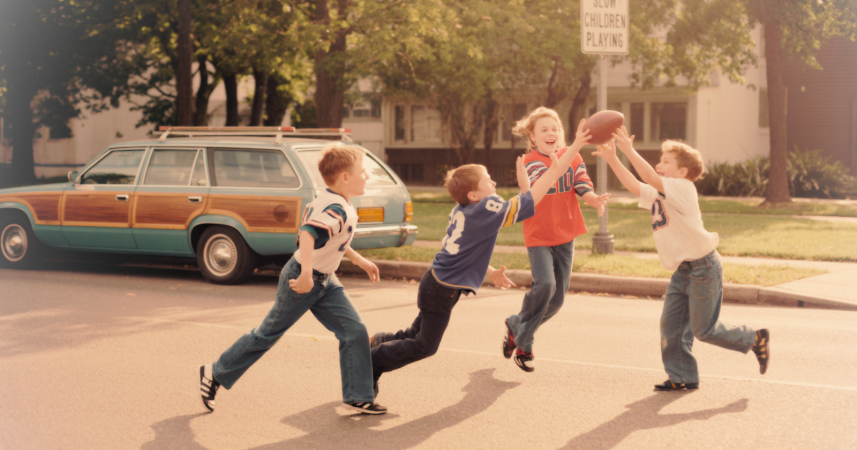
Those endless summer evenings spent playing kick the can or building forts in the woods weren't just fun; they were teaching us to evaluate danger for ourselves.
We learned the difference between the scary-but-safe height of the rope swing over the creek and the genuinely dangerous idea of jumping from the railroad trestle. No adult was there to tell us which was which. We had to feel it out, test our limits, and learn from our mistakes.
This early practice in risk assessment shapes how we make decisions today. We tend to trust our gut instincts because we developed them young. When facing a new opportunity or challenge, we instinctively weigh the real dangers against the imagined ones.
We're often more comfortable with uncertainty than younger generations because we had to be comfortable with it from age seven.
3) Resolving conflicts without adult intervention created your negotiation style
Growing up sharing a bedroom with two sisters meant constant negotiations over everything from who got the top bunk to whose turn it was to choose the radio station. When disputes arose during neighborhood games, we had to work them out ourselves or the game ended. There was no referee, no parent mediating, just kids figuring out fairness through trial and error.
These experiences created adults who approach conflict differently. We tend to work things out directly with people rather than involving third parties. We learned early that compromise isn't losing; it's how you keep the game going.
In my previous post about navigating family dynamics during the holidays, I touched on how this generation often serves as natural mediators, and I think it stems from all those years of practice on the playground.
4) Having nowhere to go but outside built your relationship with solitude and nature
"Go outside and play" wasn't a suggestion in our house; it was a directive.
With only three TV channels and no devices to entertain us, we spent hours exploring, daydreaming, and just being present with ourselves. I remember lying in the grass watching clouds, convinced I could influence their shapes with my mind, or sitting by the creek for what felt like hours, just thinking.
This forced relationship with solitude and nature gave us something precious: the ability to be alone with our thoughts without discomfort. We don't need constant stimulation or validation. That quiet confidence in our own company influences how we handle stress today.
When life gets overwhelming, many of us instinctively seek solitude in nature, returning to that childhood sanctuary where problems seemed to shrink against the vastness of the sky.
5) Getting lost and finding your way home developed your inner compass
Have you ever noticed how our generation rarely panics when we're lost? There's a reason for that. We all have stories of taking a wrong turn on our bikes and ending up in an unfamiliar neighborhood, or wandering too far in the woods and losing sight of familiar landmarks.
We learned to stay calm, look for clues, ask for help when needed, and trust that we'd eventually find our way back.
This experience of being lost and finding ourselves again shaped our approach to life's bigger uncertainties. When careers take unexpected turns or relationships shift in ways we didn't anticipate, we have an inner knowing that being lost is temporary. We trust our ability to reorient ourselves because we've been doing it since childhood.
6) Having unsupervised time with friends taught you loyalty and secret-keeping
The bonds we formed during those unsupervised hours were different from friendships formed under adult eyes. We kept each other's secrets about everything from failed attempts at smoking to crushes on older siblings' friends.
We covered for each other, stood up for each other, and learned the weight of trust when no authority figure was there to enforce it.
These early lessons in loyalty and discretion shaped how we form relationships as adults. We tend to have a small circle of deeply trusted friends rather than large networks of acquaintances. We understand that trust is earned through actions over time, not through words or social media connections.
When someone confides in us, we feel the weight of that trust in our bones, remembering what it meant when someone kept our secrets all those years ago.
Final thoughts
Those unsupervised hours of our childhood weren't just nostalgia-worthy adventures; they were the workshop where our adult selves were forged. The freedom we had to fail, figure things out, and find our own way gave us a particular kind of resilience and self-trust that serves us well today.
While I wouldn't trade those experiences for anything, I also understand why the world has changed. What matters is recognizing how those early freedoms shaped our strengths, and perhaps finding ways to nurture similar independence and resilience in today's children, even in a very different world.