In that tiny kitchen with peeling linoleum and a radio held together with electrical tape, I discovered that my parents' greatest gift wasn't what they could afford to give us — it was what they showed us when they thought we weren't looking.

Add VegOut to your Google News feed. 
The smell of onions sizzling in butter still takes me back to that cramped kitchen with the peeling linoleum and the radio that only picked up three stations clearly.
I must have been eight or nine, sitting at our wobbly kitchen table doing homework while Mom stirred something on the stove and Dad came in from his shift at the factory.
He was tired, you could see it in the way his shoulders curved forward, but when that old radio started playing "Unchained Melody," something shifted in the air.
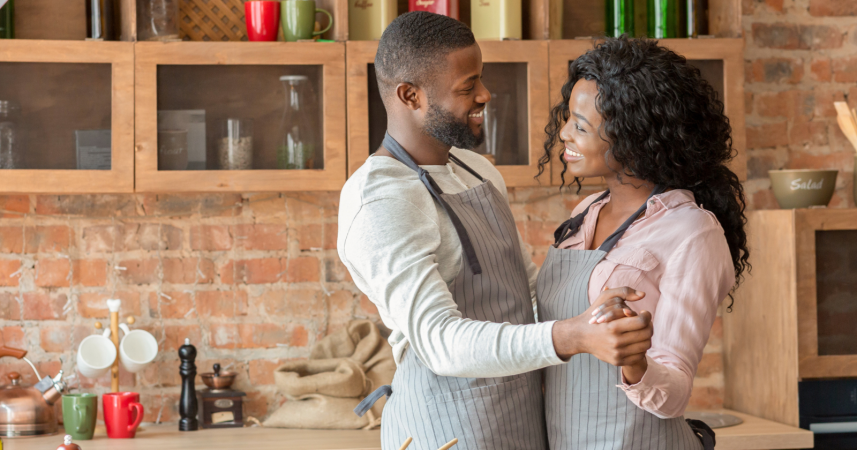
Dad set down his lunch pail and held out his hand to Mom. She laughed, wiping her hands on her apron, protesting about dinner burning. But he pulled her close anyway, and they swayed there between the refrigerator and the stove, her head on his shoulder, his work boots shuffling on the worn floor.
For those three minutes, our kitchen transformed into something magical. They weren't tired parents stretching a paycheck. They were just two people who chose each other, again and again, even when life was hard.
When love shows up in ordinary moments
We didn't have the house with the white picket fence.
Our vacations were drives to the state park with sandwiches packed in a cooler. My school clothes came from the clearance rack, and eating out meant the occasional Friday night pizza that we'd stretch to feed five people. But watching my parents find each other in those stolen moments taught me something that no amount of money could have bought.
Love isn't waiting for the perfect circumstances. It's not postponed until the bills are paid off or the kids are grown or retirement finally arrives. Real love shows up in Tuesday night kitchens and Thursday morning coffee and Sunday afternoon naps on the couch. It dances even when the floor is dirty and the radio keeps cutting out.
Years later, after my first husband passed and I thought I'd never feel that kind of connection again, I found myself at a school fundraiser auction. I'd been teaching at the same high school for decades by then, and these events were more obligation than entertainment.
But there was this moment when I accidentally outbid a man on a weekend getaway package I didn't even want. He turned to see who'd beaten him, and instead of being annoyed, he laughed. That laugh reminded me of something I'd forgotten: joy doesn't require perfect timing.
The inheritance of small gestures
After my mother passed, I spent weeks going through her things. Hidden in the back of a cabinet, I found her old recipe box, the one with the faded roses painted on the sides.
Inside, tucked between the index cards for pot roast and apple pie, were little notes my father had left her over the years. "Coffee's ready, beautiful." "Saved you the last piece." "Dancing with you tonight."
Those scraps of paper, some stained with cooking oil, others written on the backs of grocery receipts, were their love story. Not the grand gestures or expensive gifts, but the daily decision to see each other, really see each other, even when life got monotonous.
My second husband understands this language of small gestures. He doesn't write poetry or plan elaborate surprises. Instead, he starts my car on cold mornings, leaves my favorite tea brewing when he hears me stirring, and yes, sometimes he pulls me away from the dinner preparations to dance to whatever's playing.
He shows love through quiet acts, through consistency, through showing up even when showing up looks like nothing special to anyone else watching.
Teaching ourselves to see what matters
Do you remember what your family didn't have when you were growing up? Or do you remember the moments when love made everything else fade into the background?
I've been thinking about this a lot lately, especially as I watch my own children navigate their adult lives, worried about having enough, being enough, achieving enough.
We live in a world that keeps score with possessions and achievements, that measures success by accumulation. But what if we measured differently? What if we counted the times someone made us laugh when we wanted to cry? The cups of coffee shared in comfortable silence? The hands held during scary doctor appointments? The ordinary Tuesday when someone chose to dance with us in the kitchen?
Growing up without excess taught me to notice abundance in different places. Sunday dinners where we all squeezed around that small table, passing mismatched dishes and talking over each other.
The way my mother could stretch a pound of ground beef into a feast with enough creativity. How my father would turn off the TV when any of us needed to talk, really talk, even though that hour after dinner was his only downtime.
Choosing to dance anyway
There's a Mary Oliver line I've always loved: "Tell me, what is it you plan to do with your one wild and precious life?" For the longest time, I thought this meant grand adventures and bold choices.
But now I think Oliver might have also meant this: What will you do with your ordinary Wednesday? How will you love in your everyday kitchen? Who will you choose to see, really see, when the light is unflattering and the day has been long?
My parents didn't wait for perfect. They danced in a kitchen that needed repainting, to a radio held together with electrical tape, after days that wore them down to the bone. They showed me that love isn't a luxury for people who have everything figured out. Love is what makes everything else bearable, beautiful even.
Final thoughts
Sometimes I catch my reflection in the kitchen window while I'm cooking dinner, and I see my mother there, her hands, her stance, her way of tilting her head when she's concentrating.
And sometimes, when the light hits just right and a good song comes on, I understand that I inherited more than her recipe box.
I inherited the knowledge that love lives in small spaces and ordinary moments, that it dances when nobody's watching, and that sometimes, if you're very lucky, someone is watching and learning that this, this right here, is what matters most.