Hidden in a dusty attic box, decades of unsent letters revealed my mother had the money, the plan, and the apartment to leave my father in 1973—but chose to stay for reasons that shattered every assumption I'd held about her marriage.

Add VegOut to your Google News feed. 
Last Tuesday afternoon, while sorting through boxes in my late mother's attic, I discovered something that would fundamentally shift how I understood the woman who raised me.
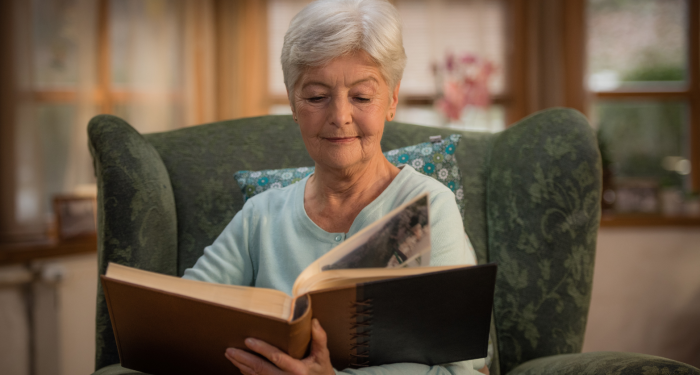
Tucked between yellowed Christmas decorations and forgotten photo albums was a shoebox wrapped in twine, filled with letters she'd written but never sent during the 1970s. As I sat cross-legged on the dusty floor, reading page after page of her careful handwriting, I realized I'd spent my entire life misunderstanding the most important decision she ever made.
Growing up, I believed my mother stayed in her marriage for all the conventional reasons we assume women of her generation did: financial dependence, social expectations, fear of being alone. I carried a quiet resentment about this, especially during my rebellious twenties when I swore I'd never sacrifice my independence for anyone.
But these letters revealed a completely different story, one that has left me reconsidering not just her choices, but my own assumptions about love, sacrifice, and what it means to stay.
The woman in the letters wasn't the mother I knew
The first letter was dated March 1973, addressed to someone named Catherine who I later realized was her college roommate.
In it, my mother wrote about a job offer she'd received from a fashion house in New York. She'd been working as a seamstress from our home, taking in alterations and creating custom pieces for local clients. But this was different. This was a chance to design, to move to the city, to become someone entirely new.
"I could take the children and start fresh," she wrote. "The salary would be enough. More than enough, actually."
My hands trembled as I read those words. She had an exit plan. She had financial independence within reach. The narrative I'd constructed about her being trapped began to crumble with each page I turned.
In another letter, this one to her sister, she detailed the logistics she'd worked out: the apartment she'd found near a good school, the neighbor who'd offered to help with childcare, even the bus schedule she'd memorized for getting to work. She wasn't a woman paralyzed by fear or crushed by circumstance. She was prepared, capable, ready.
Her reasons for staying weren't what I expected
So why did she stay? The answer came in a series of letters written over several months in 1974, none of them sent, all of them addressed to my father. In them, she wrestled with a truth that challenged everything I thought I knew about their relationship.
She stayed because she believed in his potential for change. Not in the naive way we often hope people will transform, but because she'd seen glimpses of the man he could be.
She wrote about moments I'd never witnessed: how he'd stayed up all night when my brother had pneumonia, singing softly to keep him calm. How he'd secretly been attending therapy sessions, though he'd never admit it to anyone. How he'd started leaving notes in her sewing basket, just single words like "sorry" or "trying."
"I know what leaving looks like," she wrote in one particularly raw letter. "I've planned it a dozen times. But I also know what staying and fighting for something looks like. And right now, in this moment, staying feels like the braver choice."
Have you ever discovered that someone you thought you knew completely had depths you'd never imagined?
Reading her words, I felt like I was meeting my mother for the first time. She wasn't staying out of weakness or resignation. She was making a conscious choice, every single day, based on information and experiences I'd never been privy to.
What she saw that I couldn't see
Children see their parents' marriages through such a limited lens. We witness the arguments, the cold silences, the slammed doors. But we don't see the reconciliations that happen after we've gone to bed, the quiet conversations over morning coffee, the small gestures of repair that adults keep private.
In one letter, my mother described watching my father teach my brother to ride a bike, and how his patience in that moment reminded her of why she'd fallen in love with him in the first place. "He's two different people," she wrote, "and I keep hoping the better one will win."
She documented his struggles with depression, something never discussed in our household. She wrote about his father's death and how it had changed him, created wounds she could see but couldn't heal. She understood him in ways I never could have as a child, or even as a young adult judging their marriage from the outside.
This isn't to romanticize what was clearly a difficult relationship. My mother's letters also contained pain, frustration, and moments of deep loneliness. But they revealed a complexity I'd never allowed for in my simplified version of their story.
How this discovery changed my own understanding of love
Virginia Woolf once wrote, "The eyes of others our prisons; their thoughts our cages." I'd caged my mother in my own limited perception of who she was and why she made the choices she did. These letters freed her from that cage, but they also freed me from the burden of resentment I'd carried.
I think about my own marriage now, about the times I've stayed through difficulties that others might not understand. How would my choices look to someone viewing them from the outside? How would they look to my own daughter years from now?
My mother's letters taught me that staying isn't always about fear or dependence. Sometimes it's about seeing something others can't see, believing in possibilities that haven't yet materialized, or simply defining courage differently than the world expects you to.
She did eventually leave my father, when I was in college. By then, she told me years later, she knew she'd tried everything. She left not in defeat but with the peace of someone who'd seen a commitment through to its natural end.
The fashion house opportunity had long passed, but she never mentioned it, never held it over anyone's head as a sacrifice she'd made.
Final thoughts
Finding those letters felt like discovering a secret room in a house I'd lived in all my life. They reminded me that our parents are full human beings with rich inner lives we rarely glimpse.
My mother wasn't just teaching me about creativity and practicality when she worked at her sewing machine all those years. She was living out a complex negotiation between love and independence, hope and reality, staying and leaving.
I've kept the box of letters on my desk, tied with the same twine I found them in. Sometimes I reread them, finding new layers each time. They've become a reminder that the stories we tell ourselves about other people's choices are often woefully incomplete.
And perhaps more importantly, they've taught me that there's profound bravery in staying when you have the power to leave, if you're staying for reasons that are truly your own.
What’s Your Plant-Powered Archetype?
Ever wonder what your everyday habits say about your deeper purpose—and how they ripple out to impact the planet?
This 90-second quiz reveals the plant-powered role you’re here to play, and the tiny shift that makes it even more powerful.
12 fun questions. Instant results. Surprisingly accurate.