She confessed to dancing on tables, reading forbidden books, and falling in love with someone who wasn't my father—revelations that shattered everything I thought I knew about the woman who taught Sunday school for twenty years.

Add VegOut to your Google News feed. 
The question came while we were washing dishes together after Sunday dinner. "Mom," I said, handing her a plate to dry, "what would you want your grandchildren to know about you that has nothing to do with being their grandmother?"
She stopped mid-wipe, holding the dish towel suspended in air. Her eyes got that faraway look I remember from childhood when she'd pause at the kitchen window, watching something only she could see. "That I once danced on tables," she said finally. "That I read Anaïs Nin in secret. That I fell in love with someone who wasn't their grandfather and it changed everything about how I understood myself."
I nearly dropped the casserole dish I was scrubbing. This was my mother talking. The woman who taught Sunday school for twenty years. Who made us wear pantyhose to church until I was seventeen. Who still apologizes when she says "damn."
That night, I couldn't sleep. Her words kept circling through my mind like moths around a porch light. Not just what she said, but how she said it, with this quiet fierceness I'd never heard before. It made me realize how much we flatten the people we love into the roles they play for us. How many dimensions we miss because we're too busy seeing them as who they are to us rather than who they are to themselves.
She was twenty-three and fearless once
Over the next few weeks, I kept returning to our conversation, asking her to tell me more. She revealed pieces of herself like someone carefully unwrapping china that's been stored for decades.
There was the summer she hitchhiked to California with her college roommate, sleeping on beaches and living on peanut butter sandwiches. The poetry she wrote that she later burned because "married women didn't need such things." The job offer in Paris she turned down because good daughters didn't move across an ocean from their parents.
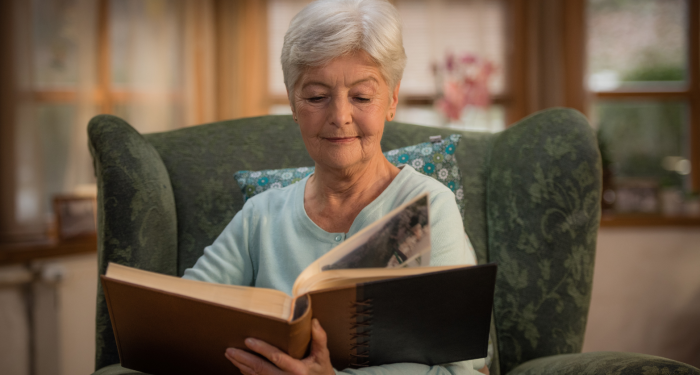
"I want them to know I was brave before I was careful," she told me one afternoon, sorting through old photographs. She held up a picture of herself at twenty-three, wearing bell-bottoms and a cropped top, her hair wild and long. "This girl thought she could change the world. She protested wars. She believed love could solve everything. She was magnificently naive and absolutely certain about everything."
Have you ever looked at your parents and suddenly seen the ghost of who they were before you existed? It's like discovering a whole novel written in invisible ink on pages you thought you'd already read.
My mother wasn't just the woman who raised me, who knew exactly how I liked my eggs and could sense my mood from the way I closed the front door. She was also this person with dreams that had nothing to do with children or grandchildren, with desires and regrets and stories I'd never thought to ask about.
The art of becoming invisible
"There's this thing that happens to women," my mother explained, folding laundry while we talked. "We become invisible in stages. First, we're too young to be taken seriously. Then we're mothers and that's all anyone sees. Then we're old and people look through us like we're made of glass."
She told me about the business she almost started in her forties, making ceramic jewelry. She'd taken classes, bought equipment, even reserved a booth at the local craft fair. But then her mother got sick, and there were soccer games and school plays, and slowly the clay dried up in its bags, the tools gathered dust.
"I kept telling myself I'd get back to it," she said. "But life has this way of making you forget you ever wanted things for yourself."
What struck me most wasn't the sadness in her voice but the acceptance. Not resignation exactly, but a kind of peace with the choices she'd made. Still, she wanted her grandchildren to know she'd been an artist once, even if just in her imagination. That she'd had hands that could create beauty from earth and fire and water.
Love is more complicated than fairy tales suggest
The revelation about falling in love with someone who wasn't my father came out slowly, in fragments. It happened when she was fifty-eight, she said. A man in her book club. Nothing ever happened physically, but emotionally, she was gone.
"I learned you can be perfectly content in your marriage and still have your breath taken away by someone else's mind," she said. "It doesn't mean your marriage is wrong. It means you're human and complex and capable of holding multiple truths at once."
She wanted her grandchildren to know that love isn't as simple as the stories suggest. That you can love someone and still feel lonely. That you can be grateful for the life you've built and still wonder about the ones you didn't choose. That acknowledging these feelings doesn't make you bad or ungrateful, it makes you honest.
"Tell them that their grandmother knew what it was to want things she couldn't have," she said. "And that she learned to find beauty in that wanting, even when it hurt."
The woman behind the role
As our conversations continued, I began keeping a list of things she wanted her grandchildren to know.
That she'd read "The Second Sex" hidden inside her home economics textbook. That she'd been fired from a job for refusing to make coffee for the men in the office. That she'd once driven to the ocean alone at midnight just to scream at the waves.
That she'd written letters to herself at thirty, forty, fifty, promising to stay interesting, to keep learning, to never become someone who only talked about their children's accomplishments.
"I want them to know I failed at things," she said. "That I was terrified most of the time I was raising their parents. That I made it up as I went along and got it wrong as often as I got it right."
She wanted them to understand that becoming a grandmother hadn't erased everything else she'd been. That inside the woman who baked cookies and attended every school play lived someone who'd had her heart broken, who'd taken risks, who'd been selfish and selfless and everything in between.
Final thoughts
My mother turns eighty-four next month. She still dances when she thinks no one is watching. She finally started writing poetry again, keeping a notebook by her bed for the words that come in the dark.
Sometimes I catch her looking at her grandchildren with this expression I now understand. She's wondering if they'll ever really see her, the whole of her, not just the parts that belong to them.
What keeps me awake now isn't just what my mother told me, but what it makes me wonder about myself. What will I want my own grandchildren to know about me someday? What parts of myself am I already forgetting to mention, to celebrate, to mourn? We spend so much time becoming who others need us to be that sometimes we forget we're allowed to be everything else we are, too.