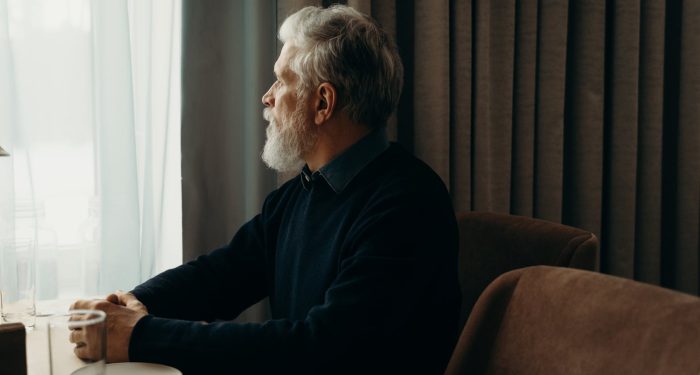
After decades of measuring worth by paychecks and promotions, countless retirees are discovering the devastating cost of dismissing personal interests as "unproductive" – and finding themselves strangers to their own desires just when they finally have time to pursue them.
Last month at the community center, I watched two newly retired men sit at opposite ends of the recreation room.
One was teaching himself watercolors, laughing at his lopsided attempts at painting a pear.
The other sat scrolling through his phone, occasionally sighing and checking his watch.
When I asked the second gentleman what brought him there, he shrugged and said, "My wife thought I should find something to do. I've never been much for hobbies."
That conversation has stayed with me because it perfectly captures something I've observed throughout my years: The generation that built careers on pure productivity often arrives at retirement's doorstep empty-handed, with no personal passions to carry them forward.
They worked, they provided, they achieved, but somewhere along the way, they forgot to cultivate joy for its own sake.
1) The productivity trap that shaped a generation
Growing up in the shadow of the Great Depression, many in our generation internalized a powerful message: idle hands are the devil's workshop.
Our parents, having witnessed or experienced real scarcity, taught us that every moment should count toward something tangible.
A promotion, a savings account, and a child's college fund.
This mindset served us well in many ways.
We built strong careers, raised families, and contributed to our communities.
But it also created a peculiar blindness.
Activities that didn't directly contribute to these goals were seen as frivolous, even selfish.
I remember a colleague who loved painting but gave it up when her children were born, convinced that spending Sunday afternoons at an easel was time stolen from her family.
She never picked up a brush again, even after her kids left home.
The irony is that we confused being busy with being productive.
We filled our days with tasks and obligations, mistaking motion for meaning.
Now, without the structure of work to define our days, many discover they've become strangers to their own desires and interests.
2) Why hobbies matter more than we realized
Have you ever noticed how children naturally gravitate toward activities simply because they're enjoyable? They don't need a reason beyond curiosity or pleasure.
Somewhere in adulthood, we lost that permission to pursue joy without justification.
But hobbies are laboratories for the soul.
Through them, we discover parts of ourselves that our professional roles never touched.
When I started tending my English cottage garden thirty years ago, I thought I was just beautifying my yard.
What I discovered was a meditation practice, a connection to seasons and cycles, and a metaphor for patience that influenced everything from my teaching to my relationships.
Hobbies also build identity beyond our job titles.
They create communities and connections that transcend workplace hierarchies; they give us stories that have nothing to do with quarterly reports or performance reviews.
Most importantly, they remind us that we're whole people, not just workers.
3) The retirement shock of having nothing to wake up for
I've seen it happen too many times.
The countdown to retirement begins with such anticipation.
Freedom at last! No more alarm clocks or demanding bosses.
Then Monday morning arrives, and with it, a creeping emptiness.
What now? Without established interests or passions, retirement can feel less like freedom and more like exile.
Days stretch endlessly.
Television becomes a constant companion.
The sense of purpose that work provided, however imperfect, vanishes without replacement.
One friend described it as "falling off a cliff in slow motion."
He'd been a successful executive, accustomed to packed schedules and important decisions.
Suddenly, choosing between grocery shopping on Tuesday or Wednesday felt like the day's biggest decision.
He hadn't cultivated any interests outside work because he'd always been too busy.
Now, he had all the time in the world and no idea what to do with it.
This is about meaning.
When we define ourselves solely through our productivity and professional accomplishments, retirement doesn't free us; it erases us.
4) Starting fresh when it feels too late
Here's what I want to tell anyone who recognizes themselves in these words: it's not too late.
I started writing at sixty-six, after a friend heard one of my stories at dinner and said, "You should write these down."
That simple suggestion opened a door I didn't even know existed.
Starting something new in our sixties or seventies requires a different kind of courage than the ambition of youth.
It means accepting that we might not be good at it and feeling foolish and uncertain, but it also means giving ourselves permission to be beginners again, and there's something profoundly liberating in that.
The goal is engagement and waking up with something to look forward to that has nothing to do with obligation and everything to do with curiosity.
5) Finding passion in unexpected places
Sometimes our interests surprise us.
The engineer who discovers a love for poetry, the accountant who finds peace in woodworking, or the teacher who becomes obsessed with bird watching.
These are completions.
After winning teacher of the year twice, people often asked me about my secret.
The truth was, teaching gave me purpose, but my garden gave me peace.
One fed the other.
The patience I learned waiting for perennials to establish helped me with struggling students.
The satisfaction of helping a reluctant reader fall in love with books paralleled the joy of coaxing difficult plants to thrive.
Now in retirement, I've discovered that grandparenting is like teaching with more wisdom and less paperwork.
It's parenting with the pressure valve released, but it's my writing that truly surprises me.
All those years of grading essays, and I never imagined I'd find such satisfaction in crafting my own.
Final thoughts
If you're approaching retirement or already there, wondering what comes next, remember that it's never too late to court joy.
Start somewhere, anywhere, and let yourself be bad at something new.
The productivity that once defined you was never your whole story.
It was just one chapter, now it's time to write new ones and let pleasure be your guide instead of purpose.
You might just discover that in pursuing what excites you, purpose finds its way back to you, dressed in different clothes but familiar all the same.