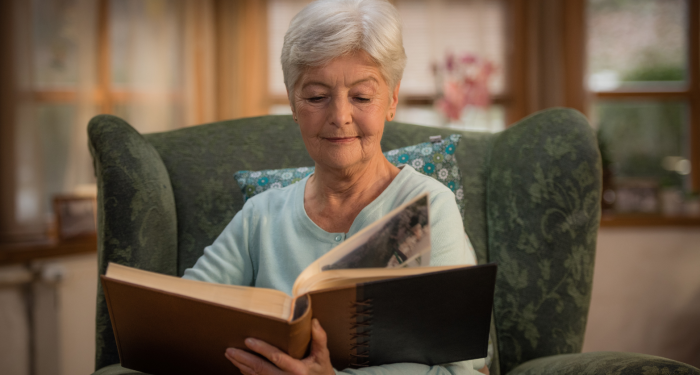
Before smartphones turned every idle moment into a scrolling session, an entire generation learned life's most valuable lessons from empty afternoons and waiting rooms with nothing but year-old magazines.

Add VegOut to your Google News feed. 
Do you remember when summer afternoons stretched endlessly, when waiting rooms had only dog-eared magazines, and when being alone with your thoughts wasn't considered a mental health crisis?
Growing up in the sixties and seventies, we didn't have a word for "mindfulness" because simply existing without constant stimulation was just... Tuesday.
These days, I watch people frantically swipe through their phones the moment an elevator door closes, as if three seconds of stillness might cause them to spontaneously combust.
Meanwhile, those of us who grew up before the internet remember a different relationship with empty time. We didn't see boredom as a problem to solve but as a natural state that often led somewhere interesting.
The truth is, that supposedly "boring" era taught us habits that today's wellness influencers charge hundreds of dollars to teach in weekend retreats.
We learned them not from apps or life coaches, but from long car rides staring out windows, rainy afternoons with nothing on TV, and parents who responded to complaints of boredom with "go find something to do."
1) Daydreaming without guilt
When was the last time you let your mind wander without immediately reaching for your phone?
In my childhood home in Pennsylvania, I'd spend hours lying on my bed, staring at the ceiling, creating elaborate stories in my head. My three older sisters would be off doing their own things, and I'd be there, perfectly content in my imagination.
Today, this kind of mental drifting is almost extinct. But here's what we knew then that seems forgotten now: Daydreaming is where creativity lives and where you process experiences, solve problems without trying, and discover what you actually think about things.
Some of my best insights still come when I'm staring out my sunroom window, book forgotten in my lap, mind wandering to places my conscious self didn't know it needed to go.
2) Reading for hours without checking anything
Before smartphones gave us infinite scrolling, we had finite books.
When you picked one up, you stayed there because there was literally nothing else pulling at your attention.
I still read every afternoon, and it amazes me how many people tell me they "wish they had time to read."
But time isn't really the issue, is it? It's the ability to sink into one thing without the constant itch to check something else.
We learned this naturally because our books didn't beep at us, and the only notification we got was someone yelling that dinner was ready.
3) Having conversations with no escape route
Picture this: You're stuck at your aunt's house for Sunday dinner, seated next to your uncle who wants to tell you, in excruciating detail, about his new lawnmower.
Today, you'd probably sneak glances at your phone under the table, but back then? You listened, nodded, and might even ask questions.
This forced presence taught us something valuable: Sometimes, the most boring conversations revealed surprising depths, like that uncle might suddenly shift from lawnmower specifications to a story about his time in Vietnam.
Those long, meandering talks with no exit strategy taught us patience, deep listening, and how to find interest in unexpected places.
4) Walking without podcasts or purpose
Every evening, regardless of weather, I take a walk around my neighborhood: No earbuds, no step counter, no destination, just walking.
This isn't exercise, though I suppose it counts as that. It's what we used to call "getting some air."
Have you ever noticed how different the world looks when you're not trying to maximize your time? When you walk just to walk, you notice things, like the way your elderly neighbor has finally fixed that broken fence, the smell of dinner cooking from various houses, or the quality of light at different times of year.
We did this naturally because walking while listening to something or tracking metrics simply wasn't an option. The walk itself was the point.
5) Waiting without entertainment
Doctor's offices, DMV lines, waiting for someone who was late; we just... waited.
You might strike up a conversation with a stranger, study the terribly bland artwork on the walls, or simply sit with your thoughts.
This taught us something that seems almost radical now: You don't always need to be entertained.
In fact, those empty spaces were often where we processed our lives. Standing in line at the grocery store wasn't dead time; it was thinking time.
It was when you remembered you needed to call your sister, or figured out what to make for dinner, or suddenly understood why you were really upset about that comment your husband made.
6) Creating entertainment from nothing
"I'm bored" was never met with a list of activity options in my house.
If anything, it might earn you extra chores. So, we learned to create our own fun.
My sisters and I would make up elaborate games with rules so complex we'd forget them by the next day, put on "shows" that no one wanted to watch, and dig holes in the backyard for no reason other than to see how deep we could go.
This was creative play because the alternative was staring at the wall, and you know what? We got really good at entertaining ourselves.
That skill, the ability to generate interest from within rather than waiting for it to be delivered to you, might be one of the most valuable things that era taught us.
7) Embracing repetition and routine
Sunday dinners in my family were sacred: Same time, same table, usually the same pot roast.
Today, this might sound boring, but there was something deeply comforting about rhythms you could count on. We didn't need each meal to be an Instagram-worthy event or each weekend to offer novel experiences.
This acceptance of routine without calling it "boring" gave us stability.
It taught us that not every moment needs to be optimized or special. Sometimes Tuesday is just Tuesday, meatloaf is just meatloaf, and that's perfectly fine.
In fact, it's in that ordinariness that life actually happens.
Final thoughts
I'm not suggesting we throw away our smartphones or that everything was better "back in the day," but I do think we lost something when we decided boredom was an enemy to defeat rather than a friend to sit with.
Those empty hours taught us self-reliance, creativity, and how to be comfortable in our own company. They taught us that not every moment needs to be productive, educational, or entertaining.
The next time you feel that itch of boredom, instead of immediately reaching for your phone, try sitting with it for just a moment.
You might be surprised what emerges from that supposedly empty space!