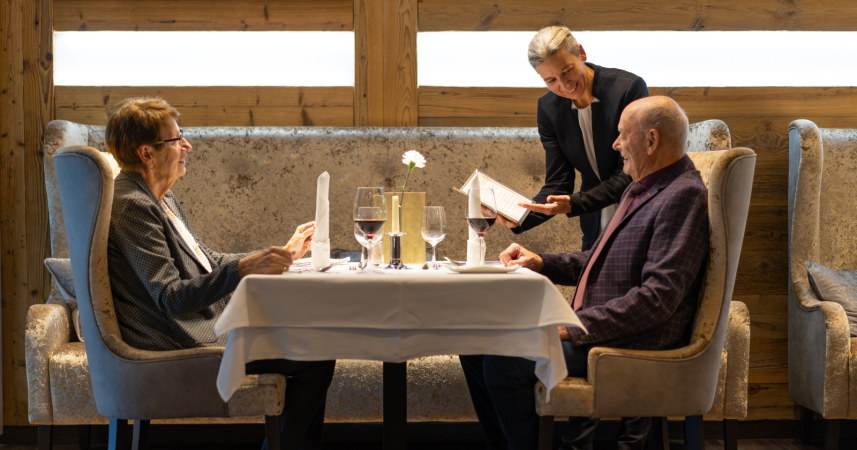
While younger diners frantically photograph their cooling meals and treat reservations like Tinder matches, veteran servers quietly cherish the older customers who still stack their plates, tip in cash, and remember that restaurants have actual humans working in them.

Add VegOut to your Google News feed. 
Remember that moment when a server's eyes light up with genuine appreciation?
I saw it happen last week when an older couple walked into my favorite neighborhood bistro.
They did something so simple, yet the veteran server practically beamed.
They looked up from their phones, made eye contact, and said "Good evening" before even sitting down.
After spending over a decade in luxury hospitality, I've noticed something fascinating.
Servers who've been in the game for a while can spot certain behaviors immediately.
These aren't just random quirks.
They're generational markers that reveal how dining culture has shifted over the years.
The truth is, boomers do things at restaurants that younger generations have largely abandoned.
And here's what might surprise you: experienced servers actually miss these behaviors.
Not because they're stuck in the past, but because these habits made their jobs easier and the whole dining experience more pleasant for everyone involved.
Let's dive into nine things boomers still do that make veteran servers quietly nostalgic for the old days.
1) They make reservations and actually show up
This might sound basic, but it's becoming a lost art.
Boomers call ahead, make a reservation, and then... wait for it... they actually show up.
On time. Without canceling ten minutes before.
Working in fine dining taught me how much no-shows hurt restaurants.
Every empty table represents lost revenue, wasted prep, and staff who could've served someone else.
Younger diners often treat reservations like Netflix watch lists.
They book multiple spots and decide last minute where to go.
But boomers? They treat a reservation like a commitment.
If they can't make it, they call hours or even days ahead.
This simple courtesy helps restaurants plan better and shows respect for the business.
2) They read the entire menu before asking questions
Picture this: A boomer sits down, opens the menu, and actually reads it.
The whole thing.
Including the descriptions under each dish. Revolutionary, right?
Younger customers often ask servers questions that are answered right there on the menu.
"What comes with the salmon?"
Meanwhile, the menu clearly states "served with roasted vegetables and garlic mashed potatoes."
This isn't about being tech-savvy or not.
It's about taking a moment to engage with what's in front of you.
Servers appreciate when customers do their homework first, then ask thoughtful questions about preparation methods or wine pairings.
3) They stack their plates when finished
Here's something I noticed during my years in restaurants: Boomers instinctively stack their empty plates at the edge of the table.
They gather the silverware, place napkins on top, and basically pre-bus their own table.
Is this necessary? No.
But servers notice and appreciate it.
It's a small gesture that says, "I see you're busy, let me make your job a tiny bit easier."
This habit probably comes from an era when people were more conscious about not creating extra work for others.
Younger diners rarely do this.
They're not being rude; they just grew up in a different service culture where this wasn't emphasized.
4) They order decisively
"I'll have the ribeye, medium-rare, with a side salad instead of fries. Ranch on the side."
Done. Next person.
Boomers tend to know what they want and communicate it clearly.
They don't need to conference call three friends about whether the pasta is worth it.
They don't spend fifteen minutes debating between two dishes while the server stands there, pen hovering.
This decisiveness comes from years of dining experience and perhaps less FOMO than younger generations.
They trust their gut, make a choice, and move on.
Servers love this because it keeps service flowing smoothly.
5) They tip in cash
Even when paying with a card, many boomers leave cash tips.
Why does this matter? Cash tips go directly into servers' pockets that night.
No waiting for paychecks, no credit card processing fees eating into the amount.
During my restaurant days, servers would literally light up when they saw cash on the table.
It meant they could pay for gas on the way home or grab groceries without waiting for Thursday's paycheck.
Younger customers almost exclusively tip on cards.
It's convenient, sure, but that cash tip hits different for someone living paycheck to paycheck.
6) They engage in actual conversation with servers
Boomers ask servers about their day.
They remember names.
They inquire about menu recommendations based on the server's personal favorites, not just what's popular on Instagram.
This creates a human connection that makes the job more enjoyable.
Serving tables all day can feel robotic when every interaction is purely transactional.
When someone treats you like an actual person with opinions and experiences, it breaks up the monotony.
I watched this play out countless times.
Servers would spend an extra minute chatting with these tables, not because they had to, but because they wanted to.
These small conversations were bright spots in long shifts.
7) They don't photograph every single dish
Remember when food arrived and people just... ate it?
While it was still hot?
Boomers still do this.
They might snap one quick photo of a special occasion dinner, but they don't need a full photoshoot with multiple angles while their soup gets cold.
They don't rearrange table settings for better lighting or ask servers to wait before clearing plates so they can capture the "aftermath."
Servers appreciate this because it keeps service moving and doesn't disrupt the flow of the dining room.
Plus, hot food tastes better than cold food, no matter how many likes the photo gets.
8) They understand closing time
If a restaurant closes at 10 PM, boomers are paying their check by 9:45.
They get that closing time means the staff wants to go home, not start a new three-course meal at 9:58.
This awareness seems simple, but it's fading.
Younger diners often view closing time as the last possible moment to walk in, not the time to walk out.
They don't realize that staying an hour past close means the entire staff – from servers to dishwashers to managers – has to stay late too.
Having closed countless restaurants myself, I can tell you that the table finishing up as you flip the sign to "closed" becomes everyone's favorite customer.
9) They complain directly instead of just leaving bad reviews
Finally, when something goes wrong, boomers flag down a manager and explain the issue.
Right then. In person.
This gives restaurants a chance to fix problems immediately.
Younger diners often say nothing, leave, then write a scathing Yelp review later.
The restaurant never gets a chance to make it right.
The server might not even know something was wrong until they read about it online days later.
Direct communication might feel uncomfortable, but it's actually kinder.
It assumes good intentions and gives people a chance to correct mistakes.
It treats hospitality as a human interaction, not a product to be rated.
Final thoughts
These behaviors aren't about one generation being better than another.
They reflect different cultural moments and expectations around dining.
But for servers who've been in the industry for decades, these small courtesies represent a dining culture that valued human interaction over efficiency, relationships over transactions.
The interesting thing? None of these behaviors require special skills or knowledge.
Anyone can adopt them.
They're simply choices about how we interact with the people serving us.
Next time you're dining out, try one or two of these old-school moves.
Make eye contact. Stack your plates. Leave a cash tip.
You might just make a veteran server's entire shift a little brighter.