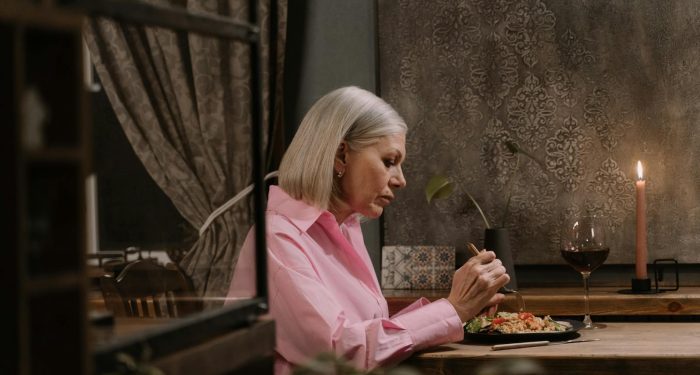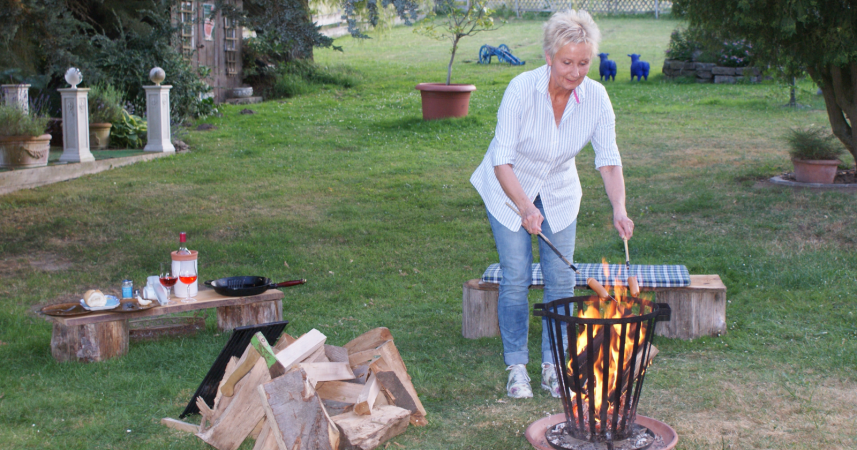
When the power died for eighteen hours in our neighborhood, the same young professionals who mock my paper maps and handwritten recipes were suddenly knocking on my door, watching in awe as I cooked dinner by candlelight and taught their screen-deprived children to make shadow puppets.

Add VegOut to your Google News feed. 
Last week, the lights went out in my neighborhood for eighteen hours.
Not just the power, but the internet, the cell towers, everything. And you know what I witnessed?
The same neighbors who roll their eyes when I pull out my paper map suddenly gathered around my kitchen table, watching me cook dinner over candlelight on my gas stove, asking how I knew what ingredients to use without checking my phone.
The twenty-something from next door, who usually avoids eye contact, knocked on my door asking if I had any books his kids could read since their tablets were dead.
It got me thinking about how quickly the skills we dismiss as outdated become essential when our modern conveniences fail us. Those abilities our generation carries, the ones that make younger folks call us "behind the times," suddenly transform into superpowers when the grid goes down.
1) Reading a physical map without GPS
Remember when getting somewhere new meant spreading a map across the hood of your car? I still keep a road atlas in my glove compartment, much to my children's amusement. "Why don't you just use your phone?" they ask.
But during that blackout, when a young couple needed to find the hospital without GPS, guess who knew how to plot a route using actual street names and landmarks?
There's something deeply satisfying about understanding where you are in relation to everything else, not just following a blue dot on a screen. Maps teach you the shape of a place, the way rivers and roads connect, how neighborhoods flow into each other. You develop an internal compass that technology can't replicate.
2) Starting and maintaining a fire
My mother taught me that fire was humanity's first tool, and respecting it meant understanding it.
Whether it's a fireplace, a campfire, or even a candle arrangement for light, knowing how to safely create and control flame is fundamental. During our power outage, I had three separate neighbors ask if I could help them start their fireplaces. They'd lived in their homes for years but had never actually used them.
Building a fire requires patience and understanding: which wood burns hot, which burns long, how to stack kindling, when to add larger logs. These aren't just camping skills; they're survival skills wrapped in the cozy memory of countless evenings spent by the hearth.
3) Cooking without recipes or measurements
Every Monday, I make soup from whatever needs using up from the week before.
No recipe, no measurements, just instinct developed over decades of feeding a family. This skill baffled my younger neighbors during the blackout. How could I know how much salt to add without a measuring spoon? How did I know those vegetables would work together?
Cooking by feel means understanding ingredients as friends, not strangers. You know that onions and garlic form the foundation of almost anything savory. You understand that acid brightens a dish, fat carries flavor, and salt enhances everything. Your hands become your measuring cups, your nose your timer.
4) Entertaining children without screens
When the tablets died during our blackout, I watched parents panic. But those of us who raised children before screens became babysitters? We pulled out playing cards, taught cat's cradle with string, and remembered every word to "The Wheels on the Bus."
I showed the neighborhood kids how to make shadow puppets on the wall with a flashlight, and suddenly they were creating entire stories.
The art of keeping children engaged with simple things requires imagination and presence. A cardboard box becomes a spaceship. Flour, salt, and water become playdough. Stories don't need illustrations when you know how to paint pictures with words.
5) Basic home repairs and maintenance
Do you know where your water shut-off valve is? Can you reset a circuit breaker?
These questions drew blank stares from many during our neighborhood crisis. But those of us who learned to be our own first responders for household emergencies knew exactly what to do when pipes started making strange noises in the cold.
Understanding your home's bones, knowing how to unclog a drain without calling a plumber, or temporarily patch a leak can mean the difference between inconvenience and disaster. These skills aren't just about saving money; they're about self-reliance when help isn't immediately available.
6) Gardening and preserving food
For thirty years, I've maintained an English cottage garden, growing not just flowers but herbs and vegetables. When supply chains wobble and stores empty, the ability to grow even a small amount of food becomes precious.
But more than growing, knowing how to preserve it matters. Canning, drying, fermenting, these aren't quaint hobbies; they're insurance policies.
During our extended blackout, I had tomato sauce, pickles, and preserved lemons that needed no refrigeration. My neighbors with fridges full of spoiling food looked at my pantry shelves with new respect.
7) Sewing and mending
My mother was a seamstress who believed creativity and practicality could coexist.
She taught me that a needle and thread could solve problems and create beauty. When the power's out and you can't run to the store or order online, being able to repair a torn jacket or hem pants becomes genuinely valuable.
But it's more than emergency repairs. Understanding how things are constructed means you can deconstruct and reconstruct, adapt and modify. That skill translates beyond fabric to a mindset of fixing rather than discarding.
8) Analog time management and planning
I still write in a paper planner, much to everyone's amusement. But when phones died during the blackout, who remembered what day recycling goes out? Who knew phone numbers by heart? Who had important information written down somewhere accessible?
There's reliability in analog systems. Paper doesn't need charging. Handwritten notes don't disappear in a cloud failure. The physical act of writing helps memory in ways typing doesn't.
9) Cash transactions and mental math
When the payment systems went down at our local corner store, they could only accept exact cash. Watching people struggle to calculate tax and make change without their phone calculators was enlightening.
Those of us who remember life before debit cards pulled out our cash and counted out exact change, helping others figure out their totals.
Understanding money as physical objects, being able to quickly calculate percentages for tips, making change, these aren't obsolete skills. They're backup systems for when technology fails.
Final thoughts
That eighteen-hour blackout reminded our neighborhood that progress isn't always linear. The skills we've been told are outdated might just be dormant, waiting for their moment of relevance.
The next time someone dismisses your analog abilities as old-fashioned, remember that you're not behind the times. You're prepared for when time itself seems to stop, when the lights go out, and suddenly everyone needs exactly what you know.