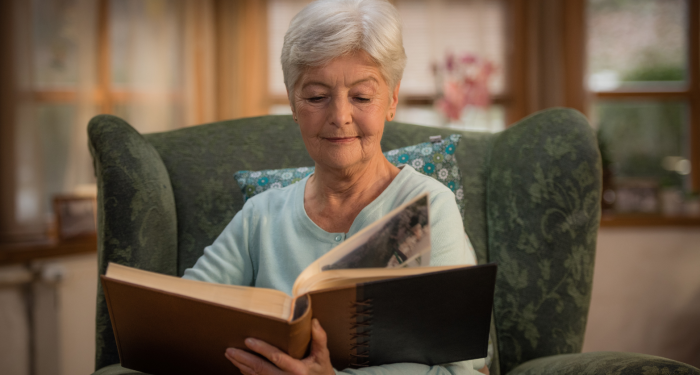
These simple after-school rituals—from the perpetual ironing board to the 3 o'clock percolator—shaped an entire generation in ways we're only now realizing as we catch ourselves unconsciously repeating our mothers' careful movements.

Add VegOut to your Google News feed. 
The smell of Pond's cold cream mixing with the faint scent of laundry starch still takes me back to 1962, standing in the doorway of my mother's bedroom, watching her remove the bobby pins from her hair after another long day. There's something about those everyday rituals our mothers performed that shaped us in ways we're only now beginning to understand.
Those of us who grew up in lower-middle-class homes during the boom years witnessed a particular kind of domestic ballet, one performed by women who stretched every dollar and mended every tear, both literal and metaphorical.
Do you ever find yourself unconsciously humming while you fold laundry, just like she did? These small echoes of our mothers' daily routines carry more weight than we might realize. They're the invisible threads that connect us to a time when life moved at a different pace, when afternoon stretched lazily between school and supper, and when our mothers were the conductors of a complex symphony we barely noticed at the time.
1) Ironing everything, including the bedsheets
The ironing board was a permanent fixture in our kitchen, never quite put away because there was always something that needed pressing. My mother would stand there for what seemed like hours, methodically working through a basket of wrinkled clothes while listening to her afternoon radio programs. Pillowcases, my father's handkerchiefs, even our underwear got the treatment. Nothing escaped that heavy iron with its fraying cloth cord that she'd wrapped with electrical tape at least three times.
I remember the satisfaction on her face when she'd hold up a perfectly pressed shirt, examining it in the afternoon light streaming through the window. It wasn't about appearances, really. It was about taking care of what we had, making things last, showing respect for our belongings even when they were few. She taught me that dignity doesn't require wealth, just attention to the details within your control.
2) Mending clothes with an old cookie tin full of buttons
That Danish butter cookie tin lived on the shelf above her sewing machine, and heaven help you if you actually expected to find cookies inside. It rattled with hundreds of buttons she'd saved over the years, each one a tiny piece of history from a garment long gone. When something ripped or a button popped off, she'd spread those buttons across the kitchen table like treasure, searching for just the right match.
Growing up as the youngest of four sisters meant I wore clothes that had already seen better days on three other bodies. But my mother, a seamstress by trade, could work miracles with a needle and thread. She'd reinforce seams before they split, darn socks until they had more darning than original fabric, and somehow make hand-me-downs feel special with a new ribbon or a different set of buttons.
3) Watching her stories while doing handwork
At 2:30 sharp, the living room became her sanctuary. "As the World Turns" or "The Guiding Light" would flicker on our black and white television while her hands stayed busy with knitting needles or crochet hooks. She never just watched; she always produced something while she followed the dramatic lives of people whose problems seemed both larger and smaller than our own.
Those afghans and dishcloths and mittens weren't just practical items. They were the physical manifestation of her ability to never waste a moment, to find productivity even in rest. I learned from watching her that hands can create beauty while minds wander through story, that entertainment doesn't have to mean idleness.
4) Making afternoon coffee in the percolator
Around 3 o'clock, the percolator would start its rhythmic bubbling on the stove, filling the house with the rich aroma of coffee that was probably more Folgers than anything fancy. She'd pour it into her special cup, the one with the tiny chip on the handle, adding just a splash of evaporated milk from the can.
This wasn't the grab-and-go coffee culture we know today. This was fifteen minutes of sitting at the kitchen table, maybe with a neighbor who'd stopped by, solving the world's problems or discussing whose daughter was getting married and whether the wedding cake would come from the bakery or be homemade. It was a pause, a breath, a small rebellion against the endless list of things that needed doing.
5) Defrosting something for dinner at the last minute
By 3:30, panic would set in as she realized the meat was still frozen solid. Out would come the pink butcher paper package from the freezer, and into a bowl of cold water it would go. She'd change the water every half hour, poking the package occasionally as if that would speed things along. We ate a lot of minute steaks and thin pork chops in those days, probably because they defrosted faster than a roast.
The art of making something from nothing was her superpower. Even with frozen meat and three ingredients in the pantry, she'd manage to put a meal on the table by 5:30. It might have been what she called "mustard chicken" or "poor man's stroganoff," but we never went hungry.
6) Mixing up Tang or Kool-Aid in the good pitcher
That orange powder seemed like the height of sophistication to us, astronaut drink in our very own kitchen. She'd measure carefully with the plastic scoop, stirring with a long wooden spoon until every granule dissolved. The pitcher would go in the refrigerator with strict instructions not to drink it all in one day.
What strikes me now is how she made even this simple act special. It wasn't just dumping powder in water; it was preparing a treat for her children, something sweet at the end of the school day that said welcome home, you matter, this is for you.
7) Starting supper with onions in the cast iron skillet
No matter what she was making, it seemed to start with onions sizzling in that ancient cast iron skillet that had been her mother's. The smell would drift through the house, a signal that the day was shifting into evening, that soon my father would be home, that another day was drawing to its close.
I make soup every Monday now with whatever needs using up from the week before, and I always start with onions in my own well-seasoned skillet. It's like a prayer, really, this ritual of transformation, turning the ordinary into something nourishing.
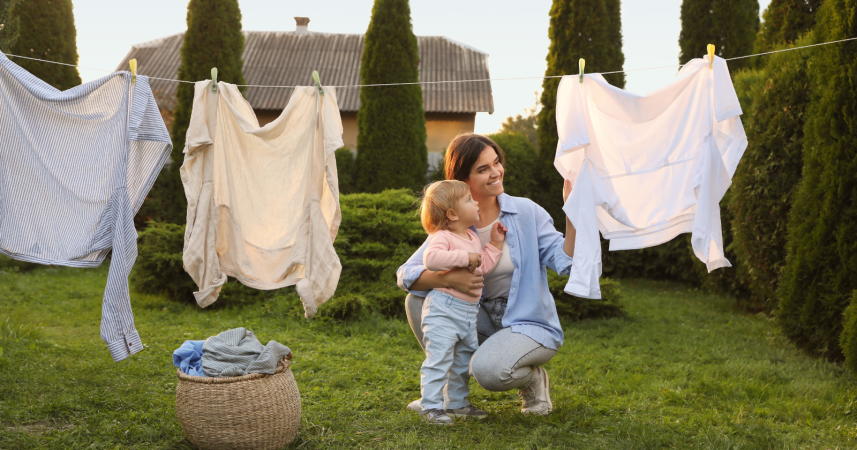
8) Pinning clothes on the backyard line
If the weather was decent, the washing machine would churn through its cycles, and she'd haul the heavy basket of wet clothes to the backyard. The wooden clothespins lived in a bag that hung right on the line, faded from years of sun and rain. She had a system: shirts by the shoulders, pants by the waistband, sheets overlapping to save space and pins.
Everything smelled like sunshine and fresh air when it came in, stiff and sweet. She'd time it just right, bringing everything in before the afternoon dew could dampen it again. There was pride in that line of clean laundry, visible to all the neighbors, announcing that this was a house where things were cared for, where order was maintained despite the chaos of raising children on a tight budget.
9) Setting the table with the everyday dishes
By 5 o'clock, she'd clear whatever homework or sewing project had claimed the kitchen table and set out our everyday dishes, mismatched but clean, each place set properly even though it was just another Tuesday. The paper napkins were folded in triangles, the forks on the left, the knives on the right.
This simple act of preparation said that dinner together mattered, that we were worth the effort of a properly set table even when the meal was simple and the dishes were old. We might not have had much money, but we always had Sunday dinner together, and weeknight dinners too, gathered around that table she set with such care.
Final thoughts
These memories aren't just nostalgia; they're the blueprint for how many of us learned to navigate the world. Our mothers showed us that grace has nothing to do with money and everything to do with attention, that beauty can be created from scraps and determination, that love often looks like repetitive daily acts performed without fanfare.
When I find myself standing at my kitchen sink or folding laundry with particular care, I'm honoring those women who made the ordinary sacred through their constant, quiet devotion to keeping life moving forward, one small task at a time.