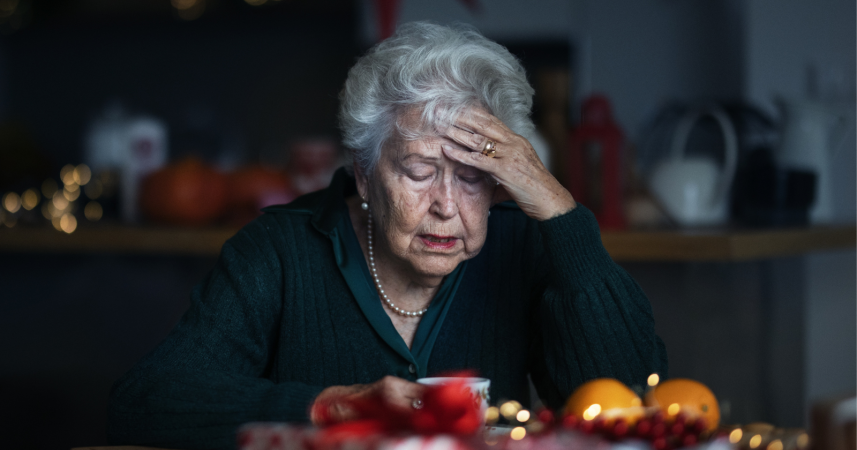
Standing in the kitchen doorway with a platter of Brussels sprouts while my granddaughter directed everyone for the perfect Instagram photo, I felt that peculiar ache of being simultaneously essential and invisible—the moment you realize you've become the wallpaper in your own family's Christmas story.

Add VegOut to your Google News feed. 
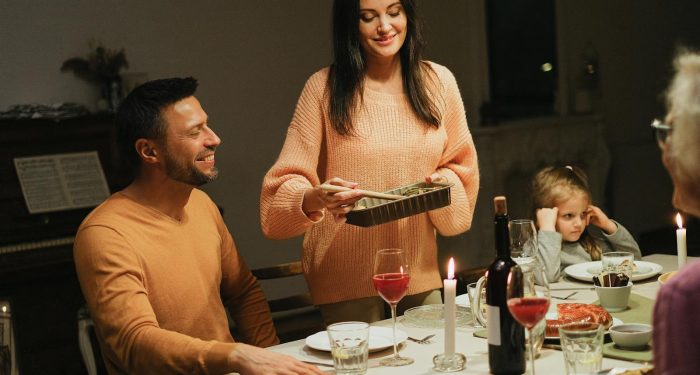
Last Christmas, I found myself standing in the doorway between the kitchen and dining room, holding a platter of Brussels sprouts while my granddaughter directed everyone where to sit for the perfect Instagram photo. "Grandma, can you move a little to the left?" she called out, not unkindly, just focused on getting the shot. And there it was: that peculiar sensation of being simultaneously essential and invisible, like the wallpaper that holds up the paint.
When exactly did I become the oldest person at the Christmas table? It wasn't a sudden coronation. More like a slow-motion game of musical chairs where, one by one, the people ahead of me stopped playing. Now here I am, the matriarch by default, discovering that this particular throne comes with its own unique set of adjustments that nobody really warns you about.
1) The great gift card migration
Remember when Christmas presents came in boxes you could shake? When people spent time wandering through stores, imagining your face as you unwrapped that perfect sweater or book? These days, my stocking might as well be a wallet. Gift cards to places I've never heard of, Amazon vouchers, and those plastic rectangles that could be for anything from groceries to gas.
My 22-year-old granddaughter handed me a Spotify gift card last year. Sweet gesture, truly, but I'm still figuring out how to use the CD player I got five Christmases ago. The transition from "real" presents to vouchers isn't about laziness or lack of care. It's about the growing distance between what the younger generation thinks you need and what you actually want. They see you as impossibly self-sufficient or impossibly set in your ways. Either way, a gift card feels safer than guessing.
2) The silence where questions used to be
"What do you want for Christmas?" used to be the opening salvo of every November phone call. Now? Crickets. It's as if reaching a certain age means you've transcended earthly desires. Or perhaps they assume that by now, you've accumulated everything you could possibly need.
The truth is, I have plenty of wants. A new reading chair that doesn't require a small gymnastics routine to get out of. A really good pair of gardening gloves. Time, mostly. Time with the people asking the questions they're no longer asking.
3) Kitchen-adjacent seating arrangements
At some point, I became the person who sits closest to the kitchen. Not officially, mind you. Nobody makes an announcement. But somehow, year after year, my place setting migrates closer to that swinging door. It makes sense, practically speaking. I'm the one getting up to check the timer, refill the gravy boat, grab the forgotten cranberry sauce.
But there's a metaphor in this geography, isn't there? Close enough to be useful, far enough from the main action to slip away unnoticed. I watch the animated conversations happening at the far end of the table, where my grandchildren debate politics and pop culture with the energy I once brought to similar discussions.
4) When the soundtrack becomes an assault
The music. Lord, the music. When did Christmas carols become something you feel in your chest cavity? My granddaughter controls the playlist from her phone, and Mariah Carey might as well be performing live in my kitchen for all the volume she commands.
"Can we turn it down just a notch?" I suggested last year, and received the kind of patient smile usually reserved for toddlers asking why the sky is blue. They turned it down for approximately three minutes before it crept back up, as if the volume knob had its own agenda.
5) The background actor in someone else's show
Virginia Woolf once wrote about life being a luminous halo, a semi-transparent envelope surrounding us. At Christmas now, I feel like I'm watching that envelope from the outside. My grandchildren are the stars of this show, posting stories, taking selfies, creating memories that I'm in but not of.
I'm the blurred figure in the background, passing through the frame with a dish towel over my shoulder. The keeper of traditions they document but don't quite understand. "Grandma always makes these cookies," they caption, but they don't know the recipe came from my mother-in-law, who got it from her mother, who probably stole it from a neighbor in 1943.
6) Your stories become reruns
Have you noticed that moment when you're midway through a family story and see the subtle eye contact between siblings? That "here we go again" telegraph that says you've told this one before? Maybe last Christmas. Maybe the one before that.
I've become a living rerun, apparently. My stories about their parents as children, about Christmases when we had to shovel three feet of snow just to get to church, about the year the tree fell over at midnight, they've all been heard. Filed away. The younger generation listens politely, the way you half-watch a movie you've seen dozen times, comfortable in its familiarity but not really engaged.
7) Early departure becomes your signature move
By 8 PM, while the party's just warming up, I'm already reaching for my coat. "Leaving already?" they ask, genuine surprise mixing with relief. More room on the couch. Less need to moderate the conversation.
The transition from night owl to early bird happened so gradually I barely noticed, until suddenly I became the person who leaves before dessert is properly digested. The drive home in the dark feels longer than it used to, and my bed calls to me with a siren song that drowns out whatever festivities continue in my absence.
8) The weight of being the keeper
Perhaps the heaviest change is realizing you've become the keeper of everything: traditions, recipes, memories, and ghosts. You're the only one who remembers which ornament came from whose wedding, why we always have oyster stew on Christmas Eve, who used to sit in that empty chair.
Since losing my husband to Parkinson's, I carry his Christmas preferences too, making his favorite cookies even though I'm the only one who notices they're there. It's a particular kind of loneliness, being the sole keeper of shared memories.
Final thoughts
Here's what I've learned about becoming the oldest generation at the Christmas table: invisibility isn't the same as insignificance. We're the foundation that allows everyone else to sparkle. We're the memory keepers, the tradition holders, the ones who ensure the gravy doesn't burn while everyone else makes memories.
Yes, we've moved from center stage to stage manager, but perhaps that's not a demotion. It's simply the next act in a very long play, one where our role has shifted but not diminished. We are the roots that let the tree bloom, even if nobody's looking at the roots when they admire the lights.