From homemade soup deliveries to hours-long bedside vigils, the way older generations approach hospital visits reveals a profound cultural shift that younger visitors might not even realize they're missing.

Add VegOut to your Google News feed. 
Last week, I watched a twenty-something visitor breeze through the hospital lobby, earbuds in, coffee in hand, heading up to see their friend.
They stayed for fifteen minutes, took a selfie, and left.
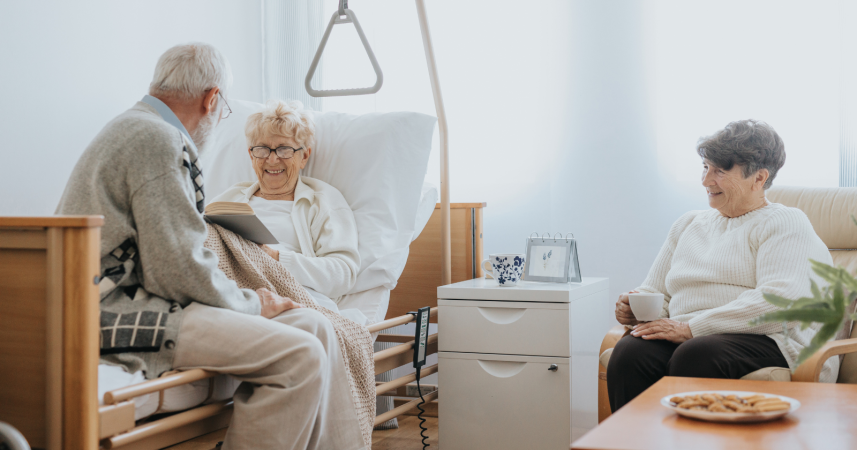
Down the hall, a woman my age sat quietly holding her friend's hand for two hours, having brought homemade soup in a thermos.
The contrast struck me deeply, and it got me thinking about how profoundly hospital visits have changed between generations.
After navigating countless hospital visits over the years, including my own knee replacements and supporting my late husband through his Parkinson's journey, I've noticed these generational differences aren't just about etiquette.
They reflect fundamentally different understandings of what it means to show up for someone during their most vulnerable moments.
1) They bring real food, not just gift shop flowers
Remember when bringing food to someone in the hospital was as automatic as bringing a casserole to a funeral?
My generation still does this. We show up with thermoses of homemade soup, containers of cut fruit, or those special cookies we know our friend loves.
We understand that hospital food can be soul-crushing, and that familiar flavors from home can be medicine for the spirit.
Younger visitors tend to arrive empty-handed or with a quick gift shop purchase.
It's not that they don't care, but somewhere along the way, the tradition of nourishing our sick friends got lost.
Maybe it's because we don't cook as much anymore, or perhaps because we assume the hospital provides everything needed.
But there's something irreplaceable about your friend's homemade chicken soup when you're feeling your worst.
2) They stay for actual visits, not drive-by appearances
When I visit someone in the hospital, I clear my afternoon.
I bring a book in case they fall asleep, and I'm prepared to sit quietly if they don't feel like talking.
This isn't about marking attendance; it's about presence. Real presence.
I've noticed younger visitors often treat hospital visits like checking off a to-do list item.
They pop in for ten or fifteen minutes, often looking at their phones, then rush off to their next commitment.
But healing happens in the quiet moments, in the space between words, in simply knowing someone is there when you wake up from that unexpected nap.
3) They coordinate with other visitors to ensure coverage
Do you know what we used to do before group texts existed?
We called each other. We made schedules. We ensured someone would be there during those long, lonely afternoon hours when the morning medical rounds were done and dinner was still hours away.
My church grief support group still operates this way when one of our members is hospitalized.
We create informal networks, making sure no one spends an entire day alone.
Younger generations might post on social media about their friend being sick, but the actual coordination of sustained support seems to have disappeared.
The digital age has given us more ways to communicate, but perhaps less actual communication about what matters.
4) They help with practical needs without being asked
When my friend was in the hospital last month, I didn't ask if she needed anything. I went to her house, watered her plants, brought in her mail, and made sure her cat was fed.
I brought her favorite hand lotion because I know hospital air dries out your skin, and I grabbed her reading glasses from her nightstand because I remembered she'd forgotten them.
This anticipatory care seems to be a lost art.
Younger visitors wait to be asked, perhaps afraid of overstepping boundaries.
But when you're lying in a hospital bed, worried about your surgery, the last thing you want is to manage a list of requests for help.
Sometimes love looks like simply doing what needs to be done.
5) They know how to be quiet companions
Silence has become uncomfortable for many people, but my generation understands its value in a hospital room.
We can sit quietly, perhaps knitting or reading, just being present without needing to fill every moment with conversation.
Younger visitors often seem anxious in silence, filling it with chatter or turning to their phones.
But when you're ill, sometimes you just need someone there, a warm presence that doesn't demand interaction.
Some of my most meaningful hospital visits have contained more silence than words.
6) They bring entertainment that doesn't require screens
I still bring crossword puzzles, word search books, or a deck of cards when I visit someone in the hospital.
These simple pleasures can pass the time without the harsh blue light of screens that can interfere with rest.
They're also activities we can do together, creating gentle engagement without exhaustion.
While younger visitors might share videos on their phones or encourage their friend to binge-watch something, there's something to be said for entertainment that doesn't require charging, WiFi, or squinting at a small screen when you already have a headache from medication.
7) They follow up after discharge with actual help
The real work often begins after someone leaves the hospital.
My generation shows up with freezer meals, offers rides to follow-up appointments, and checks in regularly during recovery.
We understand that coming home from the hospital can be overwhelming, and that's when practical support matters most.
Younger friends might send a "glad you're home!" text, but the follow-through often ends there.
They seem to assume that discharge means everything is fine, not understanding that recovery at home can be lonelier and more challenging than being in the hospital where help is a button push away.
8) They treat illness as a community concern, not a private matter
Perhaps the biggest difference I've observed is how my generation views illness as something that involves the entire community.
We activate prayer chains, organize meal trains, and create support networks without thinking twice.
We show up because that's what you do. It's not an obligation; it's an expression of our interconnectedness.
Younger generations seem to treat illness as more private, perhaps worried about violating privacy or HIPAA laws they don't quite understand.
They might post about their concern on social media, but the actual showing up, the physical presence, the concrete help, often doesn't materialize.
They care deeply, but that caring doesn't always translate into action.
Final thoughts
These differences aren't about one generation being better than another.
Each era has its own way of expressing care.
But I can't help feeling we've lost something precious in our shift toward efficiency and digital connection.
Hospital visits are about more than the patient getting better; they're about affirming our human bonds when we're most vulnerable.
Maybe it's time we all learned from each other, combining the best of both approaches.
After all, someday we'll all be the one in that hospital bed, hoping someone remembers how to truly show up.
If You Were a Healing Herb, Which Would You Be?
Each herb holds a unique kind of magic — soothing, awakening, grounding, or clarifying.
This 9-question quiz reveals the healing plant that mirrors your energy right now and what it says about your natural rhythm.
✨ Instant results. Deeply insightful.

Marlene Martin
Marlene is a retired high school English teacher and longtime writer who draws on decades of lived experience to explore personal development, relationships, resilience, and finding purpose in life’s second act. When she’s not at her laptop, she’s usually in the garden at dawn, baking Sunday bread, taking watercolor classes, playing piano, or volunteering at a local women’s shelter teaching life skills.
More Articles by Marlene