Standing outside the principal's office in 1982, watching your classmates file past to catch buses you wouldn't be riding home on, you learned lessons about consequences that no modern timeout room or restorative justice circle could ever replicate—and forty years later, you can still feel that specific weight of silence pressing down on your shoulders.

Add VegOut to your Google News feed. 
The smell of mimeograph ink still takes me back to 1978, standing outside Mrs. Henderson's classroom door, listening to the mechanical clock tick above my head while thirty pairs of eyes inside knew exactly why I was there.
That particular cocktail of shame, fear, and impending doom that filled those hallways doesn't exist in schools anymore.
The wooden floors would creak under your shifting weight as you waited for whatever came next, and that sound—that specific silence that followed any major disciplinary moment—was louder than any shouting could ever be.
Those of us who went to school in the 70s and 80s experienced a form of discipline that would horrify today's parents and probably land teachers in court. Yet somehow, most of us survived it, and many would argue we're better for it.
Not because the methods were perfect or humane, but because they created boundaries that were crystal clear and consequences that were immediate and memorable.
1) The whole class stayed after school for one student's misbehavior
Remember collective punishment? When Tommy decided to throw spitballs during math class, all thirty of us would sit in absolute silence after the final bell, watching those yellow buses pull away without us.
No permission slips sent home weeks in advance, no calling parents to arrange alternate transportation. Just the slow realization spreading across the room that we'd all be walking home because of one person's choice.
The guilty party would shrink lower and lower in their seat as twenty-nine pairs of eyes bore into them. By the time we were released, usually after thirty minutes of complete silence, the social dynamics had shifted.
That walk home, with your classmates giving you the cold shoulder or worse, taught lessons about how our actions affect others that no amount of individual detention could match.
The peer pressure was immediate and effective—nobody wanted to be the reason everyone missed their bus again.
2) Teachers could grab your arm and march you to the principal's office
That firm grip on your upper arm meant you were in serious trouble. Not rough enough to leave marks, but firm enough that you knew resistance was futile.
I watched it happen countless times during my years in school, and later administered it myself during my early teaching years. The student would do that awkward half-walk, half-stumble to keep pace with the teacher's determined stride.
Every classroom door you passed became a window to your humiliation. Faces would appear, watching your march of shame. The hallway that usually buzzed with noise would fall silent except for your shuffling feet and the teacher's purposeful steps.
That physical escort communicated the severity of your transgression before a single word was spoken in the principal's office.
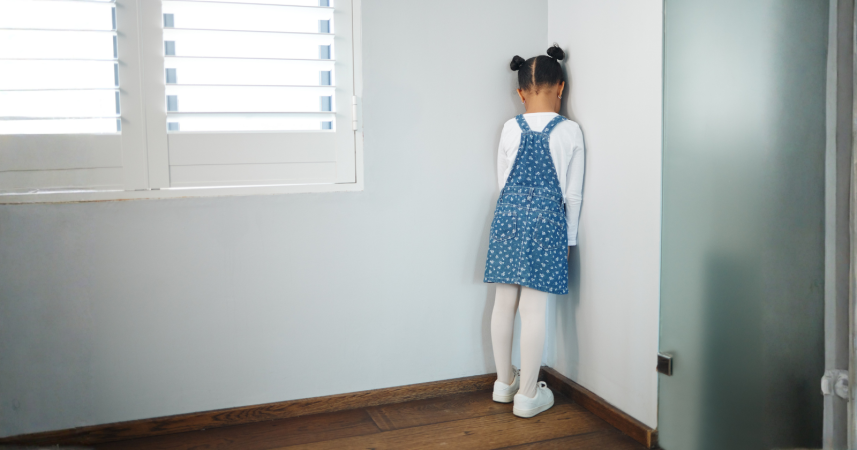
3) Standing in the corner facing the wall during entire class periods
Can you imagine asking a student today to stand with their nose in the corner for fifty minutes? The lawsuit would be filed before lunch. But back then, it was standard practice.
No fidgeting, no leaning, no turning around—just you, the wall, and the lesson continuing behind you that you were definitely going to be tested on later.
Your legs would start to ache after fifteen minutes. By thirty, your lower back would be screaming.
But the physical discomfort paled compared to the psychological weight of hearing your classmates answer questions, participate in discussions, and flip through textbook pages while you stared at paint irregularities on the wall.
When new students entered the room, you'd hear the sudden hush, the whispered question, the muffled explanation. That corner became your monument to poor choices.
4) Writing lines—500 times, by hand, due tomorrow
"I will not talk back to my teacher." Five hundred times.
In cursive. Due at 8 AM sharp or face suspension. Your hand would cramp around line seventy-five. By two hundred, you'd developed a rhythm—muscle memory taking over while your mind went numb.
Parents wouldn't advocate for reduced sentences; they'd sit at the kitchen table making sure you finished every single line.
I once assigned this punishment myself, and I can still see that student's face when they walked in the next morning, ink-stained fingers clutching a stack of loose-leaf papers.
Some kids tried shortcuts—taping multiple pencils together, having siblings help—but we teachers had seen it all. The repetitive action, the aching hand, the lost evening, all combined to burn the lesson deep.
Sometimes I wonder if anyone today could even write five hundred lines by hand without their fingers giving out from lack of practice.
5) The principal's paddle hanging visibly in the office
That paddle—with its carefully drilled holes to reduce wind resistance—hung behind Principal Morrison's desk like a trophy.
Whether your school actually used corporal punishment or not, its presence alone changed the atmosphere. Students would steal glances at it even during innocent office visits for late passes or lunch money.
The ritual, when it was employed, was unforgettable. The slow walk to the office. The closing of the heavy door. The witness teacher standing in the corner. The principal's calm explanation of why this was happening.
And then the return to class, where everyone knew exactly what had occurred without a word being spoken.
The silence that greeted you when you walked back in, trying not to show discomfort as you sat down, was more punishment than the paddle itself.
6) Public grade reading and class ranking posted on bulletin boards
Every Friday, updated rankings went up on the bulletin board outside the main office. Your name, your average, your rank in the class. The top ten percent typed in bold, the bottom third might as well have been in scarlet letters.
Parents saw it during evening events, younger siblings would search for your name, and every student in school knew exactly where you stood academically.
That moment when report cards were distributed face-down on desks, and everyone simultaneously flipped them over? The silence was so complete you could hear paper rustling three classrooms away.
The motivation wasn't about excellence—it was about avoiding the humiliation of being publicly ranked at the bottom.
7) Being sent home and told "Don't come back until your parents deal with you"
No formal suspension papers, no due process hearing, just: "Go home and tell your parents what you did. Don't come back without them."
The walk home at 10:30 AM, when every neighbor could see you and would definitely ask why you weren't in school, was its own special torture.
Then came the waiting. Sitting in that empty house, watching the clock tick toward the moment your parents would return from work, knowing they'd already received the phone call.
The silence of those hours, broken only by the refrigerator humming and cars occasionally passing outside, stretched like taffy. When you finally heard the car in the driveway, that silence became deafening.
Final thoughts
These methods created a architecture of silence—hushed classrooms when someone was marched out, quiet scratching of pencils writing lines, held breath when grades were posted.
That silence shaped us in ways that modern interventions, for all their psychological sophistication, sometimes miss.
We knew exactly where the boundaries were because crossing them came with immediate, memorable consequences that everyone—teachers, parents, and peers—supported without question.
I'm not advocating for a return to these methods, but I do wonder if we've lost something in our rush to protect children from every discomfort, every moment of shame, every consequence that stings.
If You Were a Healing Herb, Which Would You Be?
Each herb holds a unique kind of magic — soothing, awakening, grounding, or clarifying.
This 9-question quiz reveals the healing plant that mirrors your energy right now and what it says about your natural rhythm.
✨ Instant results. Deeply insightful.

Marlene Martin
Marlene is a retired high school English teacher and longtime writer who draws on decades of lived experience to explore personal development, relationships, resilience, and finding purpose in life’s second act. When she’s not at her laptop, she’s usually in the garden at dawn, baking Sunday bread, taking watercolor classes, playing piano, or volunteering at a local women’s shelter teaching life skills.
More Articles by Marlene