Despite their children's constant tech tutorials and efficiency hacks, boomers stubbornly cling to their checkbooks, landlines, and newspaper ink-stained fingers—not because they can't learn the faster way, but because they've discovered something their smartphone-wielding kids haven't: sometimes the scenic route is the only one worth taking.

Add VegOut to your Google News feed. 
My daughter called last Tuesday with that particular tone she uses when she's about to revolutionize my life.
"Mom," she said, "I can show you how to deposit checks with your phone. It'll save you so much time."
I thanked her, genuinely touched by her concern, then drove to the bank the next morning anyway.
The teller knows my grandchildren's names, and she asks about my garden.
Yes, it takes twenty minutes longer than clicking buttons on a screen, but who decided that saving twenty minutes was always the prize worth winning?
This got me thinking about all the ways those of us of a certain age stubbornly cling to our "inefficient" methods, much to the bewilderment of our well-meaning children.
They watch us fumble with what they consider simple solutions, their fingers itching to grab our phones and show us the "right" way.
But maybe, just maybe, we know something about the value of the scenic route that the GPS generation hasn't discovered yet.
1) Writing checks at the grocery store
Have you ever noticed the barely suppressed sighs when someone pulls out a checkbook at the grocery store? The eye rolls are almost audible.
Here's what the tap-and-go crowd doesn't understand: Writing that check forces me to pause, to notice that eggs have gone up another dollar, to realize I've been buying the same brand of coffee for thirty-seven years, and to have a moment of genuine human interaction with the cashier.
When I write that check, I'm participating in a ritual that connects me to the money I'm spending, the person I'm paying, and the community I'm part of.
My daughter sends me articles about identity theft and the security of digital payments, but there's another kind of security in looking someone in the eye and handing them something tangible.
2) Calling instead of texting
"Just text me," my son says, usually via text.
But when did hearing someone's voice become an imposition? Those Sunday evening calls with my daughter aren't just information exchanges that could be handled more efficiently through messaging.
They're the way I hear the exhaustion she won't admit to in writing, the excitement that doesn't translate to emoji, the pause that tells me more than any carefully crafted message ever could.
Sure, texting is faster for "running late" or "need milk."
However, for "how are you really doing?", I'll take the inefficiency of actual conversation every time.
The younger generation seems to have forgotten that communication is about the silence between words, the sharp intake of breath, and the laugh that starts before the punchline ends.
3) Reading physical newspapers
My kitchen table has ink smudges that no amount of scrubbing completely removes.
They're from decades of morning newspapers, coffee cups placed on headlines, fingers tracing important paragraphs.
"The same news is free online," my grandchildren remind me, showing me apps and websites with infinite content.
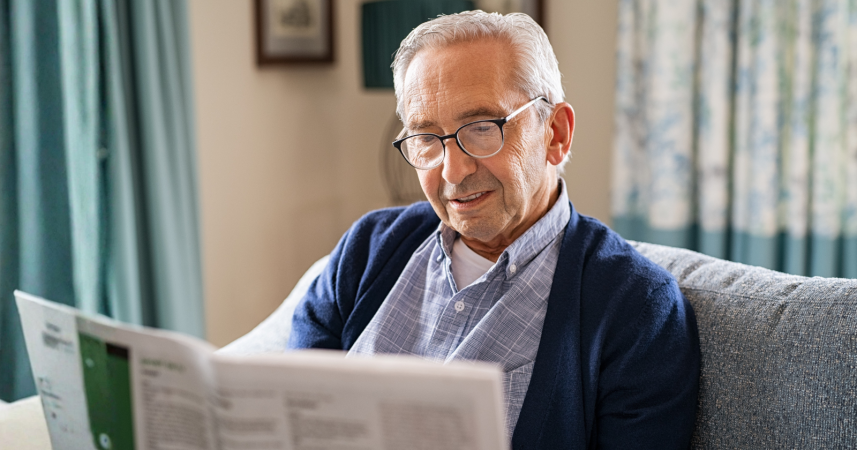
Yet, they don't understand the particular pleasure of turning actual pages, of discovering stories I wouldn't have clicked on, of completing something.
Online, everything leads to everything else in an endless rabbit hole of information.
With my morning paper, I read from front to back, consider the editorial choices of what made page one versus page twelve, and when I'm done, I'm actually done.
There's something to be said for information with edges, with a beginning and an end.
4) Shopping in actual stores
Do you know what you can't do online?
Run your fingers across fabric to know if it will itch, hold a book up to the light to see if the print is large enough for tired eyes, and have the produce manager pick out the perfect avocados for your dinner party tomorrow.
My children send me links to online stores with better prices and infinite selection, but they're missing the point entirely.
Shopping isn't just acquisition.
When I walk through stores, I'm part of something: I see neighbors, discover things I didn't know I needed, and support local businesses run by people whose children went to school with mine.
The inefficiency is a feature, and it's the difference between living in a community and just residing at an address.
5) Handwriting letters and cards
Every evening, before I write in my gratitude journal, I often pen a card or letter to someone.
"You could just send an email," my daughter suggests, watching me address envelopes with my increasingly shaky handwriting.
However, she's never known the specific joy of finding a real letter among the bills and advertisements and she doesn't understand that the time it takes to write by hand is part of the gift.
When I write a letter, I can't delete and rewrite endlessly.
I have to think before I put pen to paper.
The recipient holds something I held, sees the words formed by my hand, notices where I pressed harder because something mattered more.
In our age of instant everything, the slow deliberation of a handwritten note says "you were worth my time" in a way no email ever could.
6) Using cash for everyday purchases
The coffee shop near my home finally went cashless last month.
I haven't been back.
It's not about being difficult or resistant to change; when I pay with cash, I know exactly what I'm spending.
Those dollar bills leaving my wallet have weight, literally and figuratively.
Each transaction is a small ritual of exchange between two people.
Credit cards and payment apps make spending abstract, frictionless.
Maybe that's the point, but I remember my grandmother teaching me to budget with envelope systems, cash allocated for different purposes.
There was wisdom in that tangibility that no budgeting app quite captures.
When the money was gone, it was gone.
Simple, clear, and honest.
7) Keeping physical photo albums
"They're all on the cloud," my son assures me, but clouds have a way of evaporating.
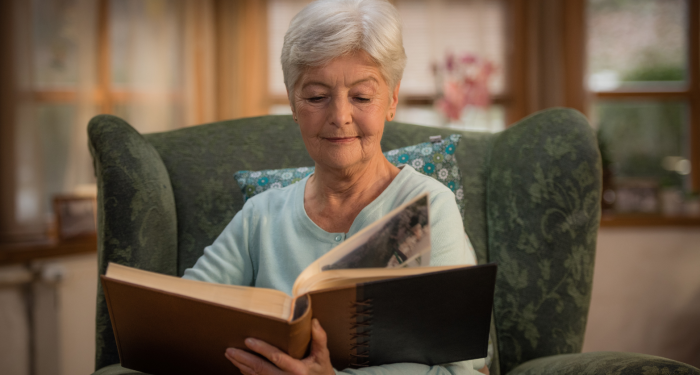
My photo albums, heavy and space-consuming as they are, tell stories that no digital slideshow matches.
The order matters, the wear on certain pages matters, and the ticket stubs and pressed flowers tucked between pages matter.
When friends visit, we don't huddle around a phone screen, swiping through thousands of unsorted images.
We sit with albums across our laps, taking our time, letting each photo trigger the next story.
The inefficiency of it all, the space they require, the time it takes to organize them, these are part of what makes them precious.
Final thoughts
Sometimes I wonder if what looks like stubbornness to our children is actually wisdom they haven't earned yet.
Yes, there are faster ways to do almost everything but faster isn't always better.
The inefficiency is where the life happens, in the space between pushing send and placing a stamp, between clicking purchase and counting bills, and between swiping right and turning a page.
We're choosing to hold onto the things that make us feel connected, grounded, and human.
In our refusal to optimize every moment, we're preserving something essential that shouldn't be lost to efficiency.