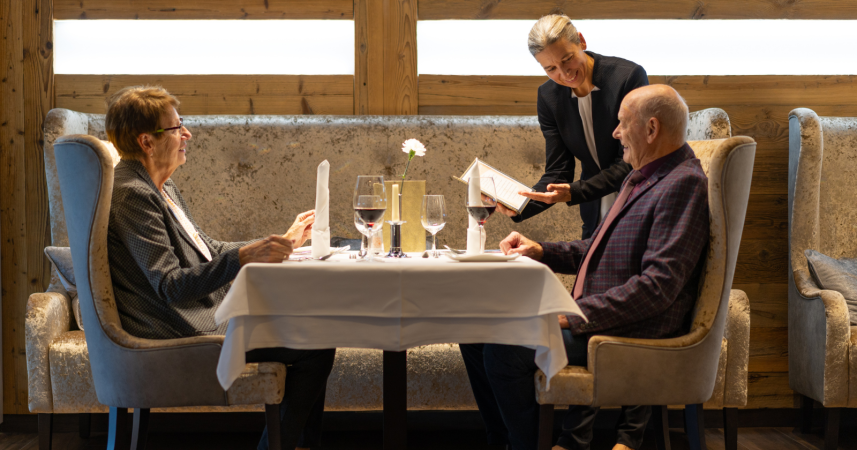
Within moments of being seated, experienced servers can predict exactly how the evening will unfold - from the printed menu request to the itemized bill inspection that's coming three courses later.
Ever wonder what servers whisper about in the kitchen?
After spending over a decade in luxury hospitality, I can tell you we notice everything the moment you walk through that door.
Working in fine-dining restaurants and boutique hotels taught me to read a table within seconds.
The way someone unfolds their napkin, how they hold the menu, even their first question to the server - it all tells a story.
And when it comes to boomers visiting a restaurant for the first time, there's a playbook they follow almost every single time.
Don't get me wrong. I'm not here to bash anyone's dining habits.
Some of these behaviors are actually pretty smart.
Others? Well, they make servers exchange knowing glances across the dining room.
Here are the seven telltale signs that servers spot immediately when boomers sit down at a new restaurant.
1) They ask for a printed menu even when there's a QR code on the table
The QR code sits right there, prominently displayed with clear instructions.
But without fail, the first thing many boomers do is flag down the server for a "real menu."
I watched this happen dozens of times during my years serving ultra-wealthy families at high-end resorts.
The restaurant had invested thousands in a beautiful digital menu system with photos and detailed descriptions.
Yet night after night, I'd hear the same request: "Can we get actual menus please?"
There's nothing inherently wrong with preferring paper.
Honestly, squinting at a phone screen while trying to decide between the salmon and the ribeye isn't exactly peak dining experience.
But servers know this request is coming before the guests even finish sitting down.
The smart restaurants? They already have printed backups ready to go.
Because if there's one thing consistent in hospitality, it's knowing your audience.
2) They immediately ask about portion sizes
"Is that enough for a meal or should I order something else with it?"
This question comes within the first 30 seconds of menu browsing, guaranteed.
Before asking about ingredients, preparation methods, or recommendations, boomers want to know if they're getting their money's worth.
During my sommelier training, I learned that wine isn't just about taste - it's about perceived value.
The same principle applies here.
Boomers grew up in an era where restaurant portions were predictable.
A pasta dish was a pasta dish.
A steak came with two sides. Simple.
Now, with small plates, tapas-style sharing, and "deconstructed" everything, they genuinely don't know if they're ordering an appetizer or an entree.
Can you blame them?
I once served a gentleman who ordered three appetizers, thinking they were full meals.
When the tiny plates arrived, the look on his face said everything.
We quickly adjusted his order, but that's exactly the confusion they're trying to avoid.
3) They ask the server's name and use it repeatedly
"What's your name, dear?"
This happens before the water hits the table.
Then for the rest of the meal, every single interaction includes that name.
"Thank you, Sarah."
"Sarah, could we get more bread?"
"Sarah, this is delicious."
From my experience remembering everyone's names and food preferences in high-end hospitality, I understand the impulse.
Using someone's name creates connection and shows respect.
It's actually a technique we were trained to use with guests.
But here's what's interesting - younger diners rarely do this anymore.
They want efficient, unobtrusive service.
Boomers want relationship-building, even if it's just for one meal.
Servers can spot this dynamic immediately.
The moment someone asks for their name upfront, they know they're in for a more traditional service experience.
More check-ins, more conversation, more attention to old-school hospitality touches.
4) They request modifications before even reading the full menu
"I can't have dairy, nothing too spicy, and does the chef cook with MSG?"
These dietary requirements come out before the menu is even opened.
Not allergies, mind you - those are important to communicate immediately.
I'm talking about preferences presented as non-negotiables.
Working in boutique hotels, I learned to identify wine regions by taste, but I could identify a boomer table by their modification requests alone.
They want to establish the parameters before they even see what's available.
The fascinating part? Many restaurants today already accommodate these preferences in their regular menu items.
Gluten-free, dairy-free, and low-sodium options are often clearly marked.
But the pre-emptive declaration happens anyway.
It's like they're preparing for battle with a menu that might not understand them.
And honestly, given how some restaurants operated twenty years ago, that defensive stance makes sense.
5) They comment on the music volume within minutes
"Is it always this loud in here?"
Set your watch to it.
If the music is anything above elevator volume, this question is coming.
And they're not wrong - restaurant acoustics have gotten objectively worse over the years.
Hard surfaces, open kitchens, and yes, louder music all contribute to dining rooms that can feel more like nightclubs.
But what makes this distinctly boomer is the immediate vocalization of discomfort.
Millennials might suffer through a meal shouting across the table.
Gen Z will just leave a one-star Yelp review later.
Boomers? They address it head-on, right away.
I've seen servers mentally categorize tables based on this alone.
Complaint about music equals longer meal, more traditional service style, probably won't want to sit near the bar or kitchen.
It's customer profiling in real-time.
6) They study the bill like it's a legal document
Every. Single. Line. Item.
The check arrives, and suddenly it's tax season.
They pull out reading glasses, examine each charge, calculate the tip on their phone calculator (never the suggested amounts), and often question at least one item.
"We only had two drinks, not three."
"What's this service charge?"
"Is the tax really that much?"
During my years serving, I learned to print detailed receipts preemptively for certain tables.
You could spot who would want that itemized breakdown from across the room.
It wasn't about mistrust - it was about understanding where their money went.
This behavior stems from decades of simpler billing.
No QR code payment systems, no automatic gratuity for large parties, no "kitchen appreciation" fees.
Just food cost plus tax plus tip.
The modern restaurant bill, with its various fees and charges, genuinely confuses them.
7) They want extensive server recommendations, but rarely follow them
Finally, here's the behavior that servers find most amusing.
Boomers will spend five full minutes asking detailed questions about the server's favorite dishes, what most people order, what the chef recommends today.
"What do you like here?"
"What's popular?"
"If you were eating here, what would you get?"
Then, almost inevitably, they order the most familiar thing on the menu.
The grilled chicken. The caesar salad. The well-done steak.
I remember spending ten minutes describing our specialty tasting menu to a couple, explaining each course with the passion my sommelier training had taught me.
They listened intently, asked thoughtful questions, then ordered chicken parmesan.
Final thoughts
After years in hospitality, I've learned that these behaviors aren't really about age - they're about comfort zones and expectations shaped by decades of different dining experiences.
Boomers remember when restaurants were simpler, service was more personal, and menus didn't require a degree in molecular gastronomy to understand.
Their dining habits reflect a desire for that familiar experience, even in unfamiliar places.
The best servers recognize these patterns not as annoyances but as roadmaps to providing better service.
That table asking for printed menus and your name?
They want traditional hospitality.
Give them that, and you'll likely have the happiest guests of your shift.
Next time you're dining out, watch for these behaviors.
You might spot them at your own table.
And honestly? There's nothing wrong with knowing what you want from a dining experience and asking for it.
The restaurant world has changed dramatically, but good service means meeting guests where they are, not where we think they should be.
Even if that means printing extra menus and turning down the music just a touch.