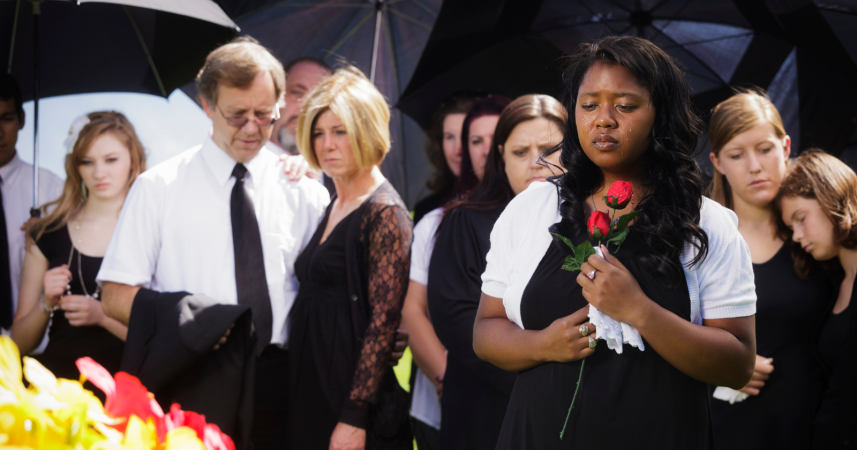
As funeral traditions evolve from formal rituals to casual farewells, a widow who's lived through profound loss reveals why the disappearing customs of physical presence, homemade casseroles, and sitting through uncomfortable moments might be leaving both generations more isolated in their grief than ever before.

Add VegOut to your Google News feed. 
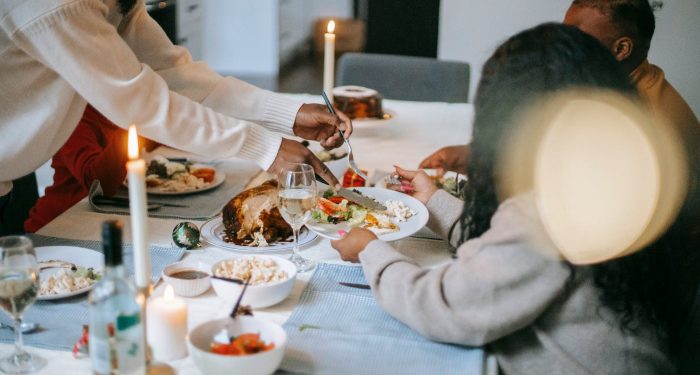
Last month, I attended two funerals in the same week. The first was for my neighbor's 82-year-old mother, where the church overflowed with people wearing their Sunday best, everyone signed a physical guest book, and we gathered afterward for ham sandwiches and potato salad in the church basement.
The second was for a colleague's 35-year-old brother, where half the attendees wore jeans, tributes poured in through a QR code linking to an online memorial, and people quietly dispersed after the service without any formal gathering.
The contrast struck me deeply. As someone who has navigated grief from multiple angles - supporting my husband through seven years of Parkinson's before losing him, and losing my sister to ovarian cancer when she was just 58 - I've witnessed how funeral traditions are shifting dramatically between generations.
What concerns me isn't the change itself, but the growing disconnect in how we process collective grief, and how this gap leaves both generations struggling in different ways.
1. Staying for the entire service versus coming and going
In my generation, arriving late or leaving early from a funeral was almost unthinkable unless you had a genuine emergency.
We understood funerals as sacred time, blocked out entirely on our calendars. You arrived before the service began, stayed through every reading and eulogy, and remained seated until the family processed out.
Younger generations treat attendance more fluidly. They might slip in after the service starts, step out to take a call, or leave before the final blessing. I've noticed this isn't necessarily about disrespect - it's a different relationship with time and presence. They seem to believe that showing up at all, even briefly, counts as support.
But what gets lost is the communal experience of sitting together through the difficult moments, the power of collective witness to someone's entire life story, not just the highlights we catch between other obligations.
2. Wearing formal black attire as a sign of respect
Remember when funeral attire was non-negotiable? Black dress, dark suit, subdued colors - these weren't fashion choices but visual expressions of mourning. When I was growing up, my mother kept a specific black dress just for funerals. It hung in the back of her closet like a uniform of grief.
Today's younger mourners often arrive in what they'd wear to brunch - colorful dresses, khakis, even sneakers. They argue that celebrating someone's life shouldn't require somber clothing, that their loved one "wouldn't want everyone in black."
While I understand the shift toward celebration of life over mourning, something profound happens when a room full of people dress deliberately for grief. It creates a visual boundary between ordinary life and this sacred moment of loss.
3. Physical presence at visitations and wakes
The evening visitation used to be as important as the funeral itself. We'd stand in receiving lines for an hour or more, taking our turn to grasp the widow's hand, to look into her eyes and offer whatever comfort we could muster. These weren't comfortable experiences - they were acts of endurance and love.
Now, younger people often skip visitations entirely, preferring to send texts, post memories on social media, or sign online guest books. "I don't know what to say," they tell me, or "It feels too awkward."
But that's exactly the point. Grief is awkward. It's uncomfortable. When you show up anyway, when you stumble through inadequate words while holding someone's hand, you're saying that their pain matters more than your discomfort.
4. Bringing homemade food to the family
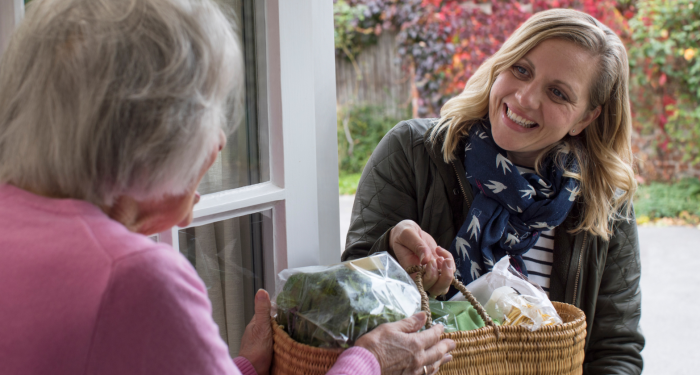
After my husband died, my freezer filled with casseroles, soups, and mysterious aluminum pans labeled with masking tape.
Each dish represented someone's time in their kitchen, thinking of me while they stirred and seasoned. The church ladies organized meal trains that lasted for weeks, ensuring I didn't have to think about cooking while navigating those early, fog-filled days of widowhood.
Younger generations tend to send gift cards, order delivery, or contribute to meal fund apps. Efficient? Yes. Convenient? Absolutely.
But there's something irreplaceable about food made by hands that love you. When everything feels uncertain, a familiar casserole offers comfort that no restaurant meal can match. It says, "I spent my time on you because you matter."
5. Participating in religious rituals even if not religious
Whether you believed or not, my generation participated. We stood for hymns, bowed our heads for prayers, recited responses when called for. It wasn't about our personal faith - it was about supporting the grieving family in the manner they found meaningful.
I watch younger attendees remain seated during prayers, check phones during hymns, or look visibly uncomfortable with religious elements. They see it as being authentic to their beliefs, but what message does this send to the grieving family whose faith might be their only anchor in the storm?
Sometimes support means temporarily setting aside our own perspectives to enter fully into someone else's sacred space.
6. Sending physical sympathy cards through the mail
My dining room table still holds the box of sympathy cards I received after my husband's death.
On difficult days, I pull them out and reread the handwritten messages - some eloquent, others simple, all precious. Each envelope that arrived in my mailbox felt like a small embrace during those isolating early days of grief.
Text messages and Facebook comments have largely replaced these physical tokens for younger mourners.
While digital condolences arrive faster, they also disappear into the endless scroll. You can't hold a text message. You can't tie a ribbon around Facebook comments and tuck them in a memory box for your children to find someday.
7. Attending funerals of people you didn't know well
We went to funerals of our coworkers' parents, our neighbors' siblings, our hairdresser's husband. We understood that sometimes you attend not for the deceased but for the living - to swell the ranks of support, to show that someone's loss ripples out into the community.
Younger people often skip funerals unless they had a direct, personal relationship with the deceased.
"I didn't really know them," they say, not understanding that funeral attendance is often about bearing witness to our interconnectedness, about showing up for the colleague who now faces Monday mornings without their mother's daily call.
Final thoughts
In my widow's support group, we often discuss how grief has become more private, more isolated, despite our hyper-connected world.
The traditional rituals my generation clings to - however outdated they might seem - created a framework for communal mourning. They forced us to be uncomfortable together, to show up physically, to mark death as distinct from ordinary life.
I'm not suggesting we return to the past wholesale. But as we move forward, we need to consider what we're losing in this transition. How do we honor individual grief while maintaining community support?
How do we create new rituals that serve the same purposes as the old ones - marking sacred time, providing structure for the bereaved, and reminding us that death, like birth, is an experience that requires the village to gather?
Perhaps the answer isn't choosing between old and new ways, but finding where they can meet. After all, grief doesn't shrink - we just grow larger around it. And that growth happens best when we're not growing alone.
What’s Your Plant-Powered Archetype?
Ever wonder what your everyday habits say about your deeper purpose—and how they ripple out to impact the planet?
This 90-second quiz reveals the plant-powered role you’re here to play, and the tiny shift that makes it even more powerful.
12 fun questions. Instant results. Surprisingly accurate.