Before smartphones made us allergic to eye contact, these everyday places buzzed with spontaneous conversations between strangers who actually looked up, shared stories, and built real communities one chat at a time.

Add VegOut to your Google News feed. 
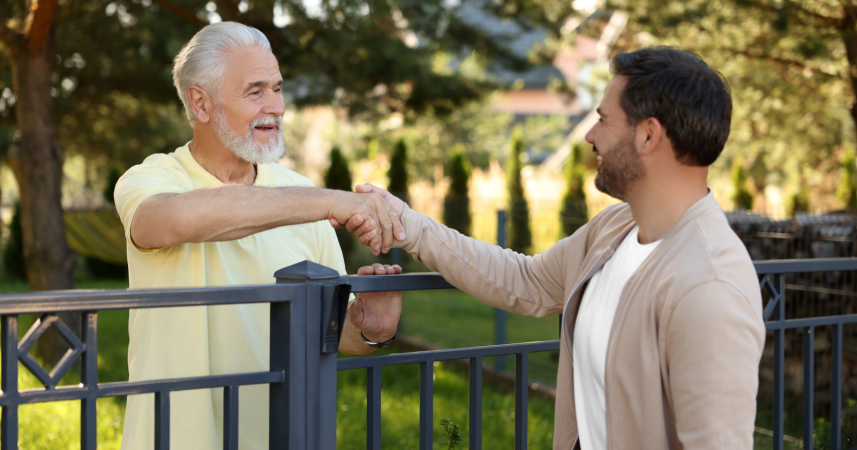
Remember when striking up a conversation with the person next to you wasn't considered weird or intrusive? There was a time when waiting rooms weren't filled with people staring at screens, when neighbors actually knew each other's names, and when a simple "How about this weather?" could lead to a twenty-minute chat about everything from garden tomatoes to grandchildren. These days, try talking to someone in an elevator and watch them clutch their phone like a life preserver.
Growing up as the youngest of four sisters in small-town Pennsylvania, I watched my father work his mail route with the dedication of someone who understood that delivering letters was just part of the job.
The real work happened in those front porch conversations, the quick check-ins with Mrs. Henderson about her hip surgery, or the five-minute debate with Mr. Chen about whether the Pirates would make the playoffs. He taught me that community wasn't just about living near people; it was about actually knowing them.
1) The front porch
Oh, the front porch. That glorious in-between space where private life met public view. Every house on our street had one, and summer evenings meant a symphony of creaking rockers and friendly hellos. You couldn't walk by without someone calling out, asking about your day or offering you a glass of lemonade.
The front porch was democracy in action, really. It didn't matter if you were the bank president or the guy who pumped gas at the Sinclair station; on the porch, everyone was equal. My neighbor and I still maintain this tradition with our Thursday morning coffee, fifteen years running. But I notice how many newer homes barely have a stoop, let alone a proper porch. We've literally designed connection out of our architecture.
2) The barbershop and beauty salon
Where else could you get a haircut, hear all the local news, and solve the world's problems in under an hour? The barbershop wasn't just about trimming sideburns; it was the unofficial town hall for regular folks. Men would wait their turn not because they couldn't come back later, but because the conversation was half the reason for being there.
The beauty salon operated on the same principle but with better magazines and longer appointments. Under those hair dryers that looked like space helmets, women shared everything from recipes to marriage advice. You learned whose kid got into college, who was getting divorced, and which church was having the best bake sale that weekend. Try getting that kind of community update at your modern quick-cut chain.
3) The grocery store
Do you remember when grocery shopping could take two hours, not because the store was huge, but because you'd run into everyone you knew? Every aisle held the potential for a reunion. You'd start in produce, comparing cantaloupe-squeezing techniques with your former teacher, and by the time you hit the checkout, you'd caught up with half the neighborhood.
The checkout line itself was prime socializing territory. No self-checkout, no rushing. The cashier knew your name, remembered that you didn't like paper bags, and asked about your sick cat. Now I watch people actively avoid eye contact in stores, earbuds firmly in place, treating human interaction like something to be optimized out of existence.
4) The doctor's waiting room
Strange as it sounds, waiting rooms used to be oddly social places. Maybe it was the shared experience of waiting, or perhaps the universal truth that everyone has a medical story to share. People compared symptoms, recommended specialists, and offered unsolicited but often helpful advice about dealing with insurance companies.
I remember waiting rooms where magazines got passed around with commentary: "There's a good casserole recipe on page 47." Now everyone has their own personal entertainment device, and the only sound is the occasional notification ping. We've gained efficiency but lost those random connections that made waiting less tedious and more human.
5) Public transportation
Buses and trains were rolling conversation lounges. Commuters developed friendships with people they'd never see outside of the 7:42 to downtown. You knew who got on at which stop, who always had the crossword puzzle, who brought the best-smelling coffee.
There was an unspoken protocol about train conversation. You started small, maybe a comment about the delay, and if the other person responded warmly, you were off to the races. By the time you reached your destination, you might have heard their whole life story or at least gotten a really good banana bread recipe.
6) The bank
Walking into a bank used to be like entering a social club where they happened to keep your money. Tellers knew your kids' names, remembered your vacation plans, and might even ask for an update on that kitchen renovation you mentioned last month. There was something reassuring about handing your deposit to someone who'd watched your savings grow over the years.
The bank lobby on Friday afternoons was particularly bustling. People cashing paychecks, businesses making deposits, everyone slightly more relaxed knowing the work week was ending. Conversations sparked naturally in those lines, and nobody seemed to mind the wait as much.
7) The local diner
Perhaps no place embodied community conversation quite like the local diner. With its counter seating that forced proximity and booth arrangements that encouraged lingering, the diner was designed for interaction. The coffee was bottomless, but so was the conversation.
Regular customers had regular seats, and woe to the newcomer who accidentally sat in Frank's spot at the counter. But once you were accepted, you were part of an informal club where everyone's business was everyone's business, and somehow that felt more supportive than invasive. The waitress didn't need to ask for your order, and other regulars would notice if you missed your usual breakfast time.
Final thoughts
These places haven't entirely disappeared, but their social function has fundamentally changed. We've traded inefficiency for isolation, random encounters for curated connections. I'm not suggesting we abandon all technology or pretend progress hasn't brought benefits. But when I started my little free library in front of my house, something magical happened. People began stopping to chat while browsing books. Neighbors I'd only waved to for years suddenly had an excuse to strike up conversations.
Maybe we can't bring back the old barbershop or the front porch culture entirely, but we can create new spaces for spontaneous connection. Because at the end of the day, those random conversations with strangers weren't just time-fillers; they were the threads that wove communities together, reminding us that we're all part of something larger than ourselves.