From that first flicker of light across the silver screen to the slow walk back to reality, these seven films didn't just entertain a generation—they became the moments when young Americans discovered who they really were beneath the popcorn and cigarette smoke.

Add VegOut to your Google News feed. 
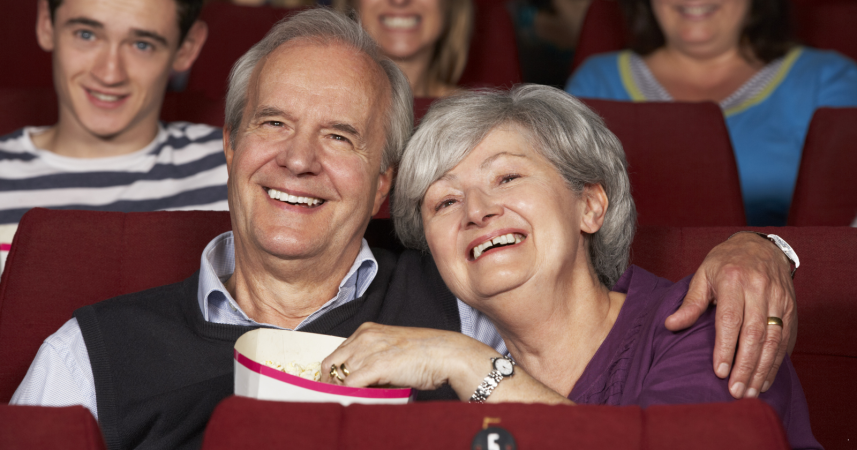
There's something about the velvet seats, the smell of buttered popcorn mixing with cigarette smoke from the lobby, and that moment when the lights dimmed that made going to the movies in the '60s and '70s feel like stepping into another world. Back then, seeing a film wasn't just entertainment squeezed between errands. It was an event, a ritual, sometimes even a revelation that stayed with you for decades.
For those of us who came of age when movies meant one screen, one showing, and no pause button, certain films became markers in our personal histories. They weren't just stories we watched; they were experiences that shaped how we saw ourselves and the world around us. Let me share seven films that still give me goosebumps when I remember walking out of those theaters, feeling like I'd been fundamentally changed.
1) The Graduate (1967)
Who among us didn't sit in that darkened theater watching Dustin Hoffman's Benjamin float in that pool, feeling like we were watching our own confusion about adulthood play out on screen? I was barely out of my teens, engaged to be married, and suddenly there was this film that dared to say what we were all thinking: the adult world we were supposed to be entering was full of hypocrisy and emptiness.
The famous seduction scene with Mrs. Robinson wasn't what stayed with me, though. It was Benjamin pounding on that church window, screaming Elaine's name, that made my heart race.
Walking out of the theater that night, I held my boyfriend's hand a little tighter, wondering if we were running toward something real or just running away from growing up. The Simon and Garfunkel soundtrack followed us everywhere that year, and "The Sound of Silence" became the anthem for every moment of doubt we felt about the paths laid out before us.
2) Easy Rider (1969)
The motorcycle engines roared across the screen, and suddenly freedom had a soundtrack. I remember the collective gasp in the theater during that final scene, the shock rippling through the audience like electricity. We walked out in silence, some of us crying, all of us shaken.
This wasn't just a movie about two guys on motorcycles. It was about the death of idealism, the price of being different, and the violence lurking beneath America's surface. My friends and I stood in the parking lot afterward for nearly an hour, arguing about what it all meant. Some saw it as a cautionary tale, others as a call to revolution.
For me, watching those landscapes roll by to "Born to Be Wild" was like seeing possibility itself stretched across the screen. It made me question everything about the conventional life I was supposed to want.
3) Love Story (1970)
"Love means never having to say you're sorry." Even now, typing those words brings back the sound of muffled sobs in that packed theater. I went with my sisters, all four of us thinking we were just going to see a romance. We left having confronted mortality in a way that felt almost too real.
By then I was married with a baby, and watching Oliver and Jennifer's story unfold made me grip the armrest until my knuckles went white. It wasn't just about young love or loss; it was about the terrifying fragility of happiness. When Jennifer got sick, every woman in that theater saw herself, her daughter, her sister.
We'd been raised on happily ever after, and here was Hollywood telling us that sometimes love stories end with actual endings. I drove home that night and stood over my baby's crib for the longest time, just listening to her breathe.
4) The Godfather (1972)
Three hours felt like minutes. When intermission came, nobody wanted to leave their seats, afraid we might miss something. The Godfather wasn't just a movie; it was an event that people dressed up for, that newspapers wrote about, that became the conversation at every dinner table.
What struck me most wasn't the violence or the glamour of the Corleone family, but the way the film made us complicit in their world. We found ourselves rooting for Michael even as he transformed into everything he'd once rejected. Walking out of the theater, I overheard a man say to his wife, "We just watched America." He wasn't wrong.
The film held up a dark mirror to the American dream, showing us how power corrupts even those with the best intentions. It made us question what we'd compromise for family, for success, for survival.
5) The Exorcist (1973)
I've never been in a movie theater so full of tension. People literally fled during some scenes, and those of us who stayed gripped each other's arms like we were on a roller coaster from hell. But beyond the shock value, beyond the spinning heads and pea soup, The Exorcist touched something deeper.
This was a film about faith and doubt released at a time when many of us were questioning everything we'd been taught to believe. Watching Father Karras struggle with his own faith while confronting absolute evil felt like watching our generation's spiritual crisis play out in the most extreme way possible. I didn't sleep well for weeks, not just because of the horror, but because the film forced me to confront questions I'd been avoiding about good, evil, and what I actually believed in.
6) Jaws (1975)
The summer of 1975, beaches across America saw a suspicious drop in swimmers, and we all knew why. Jaws didn't just scare us; it created a collective cultural experience that bonded complete strangers. In the theater, we screamed together, jumped together, and laughed nervously together during the brief moments of relief.
But Spielberg gave us more than just a monster movie. In Chief Brody, we saw ourselves: an ordinary person forced to confront an extraordinary threat, pushed far beyond his comfort zone to protect his community. That scene where Brody tells his son to give him a kiss because "I need it" hit differently for those of us with children.
We understood that vulnerability, that need for connection when facing something terrifying. The film transformed a simple beach trip into an act of courage for an entire generation.
7) Star Wars (1977)
Nothing, absolutely nothing, had prepared us for that opening shot of the Star Destroyer passing endlessly overhead. The audience erupted in applause before a single line of dialogue was spoken. We knew we were witnessing something revolutionary.
I took my teenage children to see it, thinking I was doing them a favor. Instead, I found myself as entranced as they were, rediscovering a sense of wonder I thought I'd lost somewhere between mortgages and responsibilities. Star Wars reminded us that stories could still surprise us, that imagination had no limits, and that even in our modern, cynical age, we could still believe in heroes and hope.
Walking out into the summer night, looking up at the stars felt different. My kids and I talked about that film for months, and it became one of those rare bridges between our generations.
Final thoughts
These films did more than entertain us; they gave us permission to feel deeply in public spaces, to share profound experiences with strangers, and to walk out of theaters knowing we'd been part of something bigger than ourselves.
In our current age of streaming and endless content, it's hard to explain to younger generations what it meant to wait in line for hours, to experience a film simultaneously with millions of others, to have those communal moments of gasping, laughing, and crying in the dark.
These seven films reminded us that sometimes, the most important moments in our lives happen when we're simply sitting still, letting someone else's story wash over us, and discovering pieces of ourselves we didn't know existed.
What’s Your Plant-Powered Archetype?
Ever wonder what your everyday habits say about your deeper purpose—and how they ripple out to impact the planet?
This 90-second quiz reveals the plant-powered role you’re here to play, and the tiny shift that makes it even more powerful.
12 fun questions. Instant results. Surprisingly accurate.