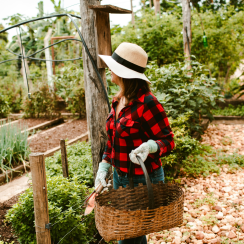
From the therapeutic rhythm of kneading bread dough to the gentle click of knitting needles, discover how these time-honored activities create the perfect balance between purposeful movement and mental tranquility that so many seek in their later years.

Add VegOut to your Google News feed. 
There's something deeply satisfying about keeping our hands occupied while letting our minds drift into that sweet spot of calm focus. You know the feeling - when you're completely absorbed in what you're doing, yet somehow your thoughts are clearer than they've been all day. As we get older, many of us have discovered that certain activities create this perfect balance, offering both the tactile satisfaction of doing something productive and the mental peace we increasingly crave.
I've noticed this especially in my own life and among friends who, like me, have crossed into what some call our "golden years." We're drawn to activities that engage our hands in rhythmic, purposeful ways while allowing our minds to settle into a meditative state. It's not about killing time or staying busy for busy's sake - it's about finding that gentle rhythm that soothes both body and soul.
1) Gardening and tending to plants
Is there anything more grounding than sinking your fingers into cool, dark soil? I've been maintaining my English cottage garden for thirty years now, and it never loses its magic. There's a particular kind of peace that comes from deadheading roses or carefully training sweet peas up their supports. Even as arthritis has made some tasks more challenging, I've adapted - using ergonomic tools, gardening in shorter sessions, taking breaks to sit on my garden bench and simply observe what I've created.
The repetitive nature of weeding, watering, and pruning creates a moving meditation. Your hands know what to do, muscle memory takes over, and suddenly you're not thinking about that doctor's appointment next week or the complicated family dynamics at the upcoming reunion. You're just present, watching earthworms do their important work, noticing how the light catches on a spider's web, feeling connected to something larger than yourself.
2) Knitting and crocheting
My mother was a seamstress who believed that creativity and practicality could coexist beautifully, and nowhere is this more evident than in the fiber arts. The rhythmic click of needles or the gentle pull of yarn through a crochet hook creates an almost hypnotic state. Many of my friends have taken up knitting in recent years, gathering in small groups where conversation flows as steadily as their stitches.
What I love about knitting is how it transforms waiting time into productive meditation. Doctor's offices, long car rides (as a passenger, of course), evenings when the house feels too quiet - these become opportunities to create something beautiful and useful while your mind sorts through the day's experiences. Plus, there's the undeniable satisfaction of gifting a handmade scarf or blanket, infused with hours of peaceful contemplation and love.
3) Bread making and baking
Several winters ago, during a particularly challenging time in my life, I started baking bread every Sunday. What began as a distraction became a ritual that anchors my week. The process of mixing, kneading, waiting, shaping, and finally pulling a golden loaf from the oven offers a complete sensory experience that demands just enough attention to quiet mental chatter without being stressful.
Kneading dough is surprisingly therapeutic - the push and fold, turn and press rhythm becomes almost dance-like. Your hands learn to read the dough's texture, knowing by feel when it's ready. And unlike our instant-gratification world, bread making teaches patience. You can't rush the rise, can't force the yeast to work faster. You surrender to the process, and in that surrender, find peace.
4) Jigsaw puzzles
Have you noticed how jigsaw puzzles have made a comeback? There's something deeply satisfying about sorting pieces by color and edge, creating small islands of completion that eventually connect into a whole picture. It's problem-solving at its most gentle - challenging enough to engage your mind but forgiving enough that you can walk away and return without losing your place.
I keep a puzzle going on my dining room table almost constantly now. Friends stop by and add a piece or two while we chat over coffee. It becomes a shared meditation, a reason to gather without the pressure of constant conversation. We work quietly, occasionally commenting on finding a particularly elusive piece, our hands busy while our minds process whatever needs processing that day.
5) Watercolor painting and sketching
Taking a watercolor class at our community center has taught me more about letting go than any self-help book ever could. Watercolor has its own will - colors bleed and blend in unexpected ways, and learning to embrace these "happy accidents" rather than fight them has been surprisingly liberating. My hands stay busy mixing colors, controlling (sort of) the brush, while my mind learns to release perfectionist tendencies.
The beauty of painting or sketching is that it forces you to really see what's in front of you. Whether you're painting the view from your window or sketching your sleeping cat, you notice details you'd normally miss. This focused observation quiets the mental noise naturally. You can't worry about tomorrow's obligations when you're trying to capture the exact shade of green in a leaf's shadow.
6) Woodworking and whittling
Many of my male friends have discovered the meditative qualities of working with wood. One neighbor spends hours in his garage workshop, creating beautiful cutting boards and small furniture pieces. The measured cutting, careful sanding, and patient finishing process demands attention but rewards with tangible results.
Even simple whittling - sitting on the porch with a pocket knife and a piece of soft wood - offers that perfect combination of busy hands and calm mind. The shavings curl away, revealing the shape hidden in the wood, while thoughts similarly pare down to their essentials. It's creation through subtraction, finding what's essential by removing what's not needed.
7) Bird watching and nature journaling
This might seem less hands-on than other activities, but bear with me. Serious bird watching involves binoculars, field guides, and often a journal for recording sightings. Your hands are constantly adjusting focus, flipping pages, sketching quick field notes. Many of us combine this with photography, adding another layer of hand-eye coordination.
I've started keeping a nature journal, documenting the birds that visit my garden feeders, sketching their markings, noting their behaviors. It's detective work of the gentlest kind. The repetitive action of observing, recording, and researching creates a satisfying routine that sharpens observation skills while calming racing thoughts. Plus, you begin to notice patterns and seasons in a way that connects you to natural rhythms larger than your daily concerns.
Final thoughts
These activities share common threads - they're repetitive without being mindless, productive without being stressful, and they create tangible results we can see, touch, or taste. They remind us that our hands still have important work to do, even as the nature of that work has changed from our younger years. More importantly, they offer a respite from the constant mental stimulation of our modern world, providing pockets of peace in days that can sometimes feel overwhelming.
The key is finding what works for you. Maybe it's none of these activities but something entirely different that gives your hands purpose and your mind rest. The important thing is recognizing the value of this special kind of engagement - not just as a way to pass time, but as a practice that nurtures both body and spirit.
In a world that often feels too fast and too loud, these simple, hands-on activities offer us a way to slow down, breathe deeply, and remember that sometimes the most profound peace comes from the simplest actions.