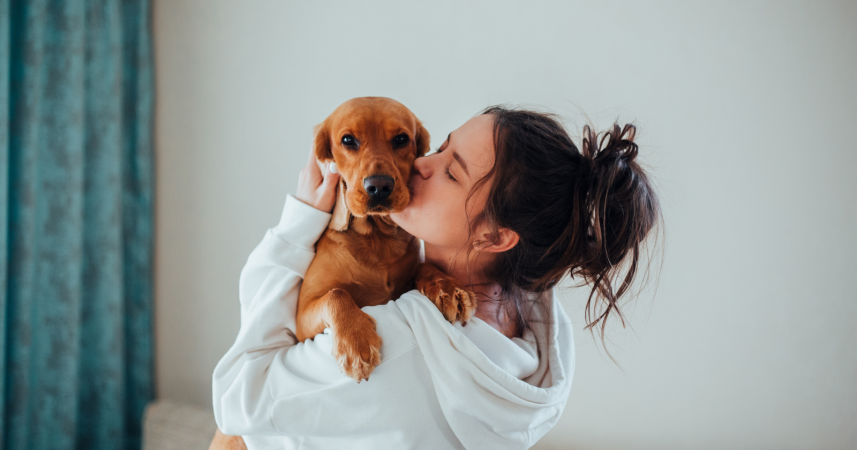
People who miss their pets on holiday often reveal deep empathy, strong bonds, and a caregiving mindset that shape how they connect with the world and those they love.
Holidays are supposed to be all sunsets and spontaneous gelato.
But if you miss your pet the minute you zip up your suitcase, you’re not weird.
You’re revealing a lot about how your mind, values, and habits work.
Here are eight traits I see again and again in people who miss their pets while they’re away.
1. Strong attachment orientation
As noted by developmental researchers, attachment refers to a "deep and enduring emotional bond that connects one person to another across time and space."
That classic definition explains why being far from your dog or cat tugs at you more than you expect.
You didn’t just adopt an animal. You formed a real attachment system that makes “separation” feel meaningful, even on a beach with perfect Wi‑Fi.
When you’re attached, distance isn’t neutral.
Your brain keeps a low‑level background process running that asks, “Are they safe? Are we still connected?”
Missing your pet is that process doing its job.
2. High empathy
Quick test. When you picture your pet at home, do you also imagine their feelings?
People who miss their pets tend to be strong empathizers. We read micro‑signals and nonverbal cues.
We remember the way our cat blinks slowly when she’s content or how our dog’s ears tilt when he’s unsure.
That sensitivity doesn’t switch off at the airport gate.
Empathy makes you better at tuning in to people too. It’s the same skill set. You notice needs early and respond.
On holiday, that talent shows up as mental “check‑ins” with your pet, even while you’re ordering an oat‑milk latte.
3. Routine sensitivity
If you’re conscientious, shared routines matter.
I notice this every time I travel. At 6:45 a.m., my body expects the leash in my right hand and the jingle of tags on hardwood.
On the road, that muscle memory has nowhere to go.
It becomes a kind of echo.
You feel it around feeding times, evening zoomies, or that weirdly specific hour your cat insists on dominating your keyboard.
Rituals create predictability.
Predictability reduces stress.
When the ritual disappears for a week, your brain flags the gap. Missing your pet is partly missing your shared rhythm.
4. Identity overlap
If your lock screen is your dog’s face or you introduce yourself as “Beans’s human,” you’ve stitched your pet into your sense of self.
I’ve noticed this most when I’m somewhere new.
Fresh city. New sounds. Different food. Without the familiar weight of a head on my knee, I feel a small identity wobble.
Your pet is a daily mirror.
They reflect back consistency.
Kindness.
Goofiness.
Being without that mirror can make a hotel room feel a touch less “you.”
This isn’t dependence. It’s coherence. You’re the kind of person who cares for another being every day.
That becomes part of how you navigate the world.
5. Social support orientation
Here’s something psychology has been saying for a while. Mid‑paragraph because it belongs right in the flow of life.
As McConnell and colleagues put it, ‘pets can serve as important sources of social support.’”
That line sums up why a pet’s absence on holiday can feel like a missing layer of comfort.
We don’t only get support from partners and friends. We also get it from the rumble of a purr or the way a dog checks back on a walk.
If your pet is part of your daily support system, being away is like traveling without your favorite jacket.
You’ll be fine. You’ll even have fun.
But you’ll also notice that something warm isn’t wrapped around your shoulders.
6. Oxytocin responsiveness
I’ve mentioned this before but the biochemistry of bonding is sneaky.
Every time your dog locks eyes with you or your cat head‑butts your chin, your brain gets a little oxytocin bump.
That “tend‑and‑befriend” hormone makes you feel safe and connected. Take a week‑long break from those micro‑moments and your baseline changes. You don’t crash. You just notice the silence where a dopamine‑and‑oxytocin duet usually lives.
This isn’t woo. It’s been measured.
As one Science paper put it, “gazing behavior from dogs, but not wolves, increased urinary oxytocin concentrations in owners.”
Translation. Your dog looks at you like you’re the North Star, and your nervous system says, “All is well.” On holiday, you miss that chemical handshake.
7. Proactive caregiving
Do you find yourself writing multi‑page pet‑sitter notes, double‑checking the plant‑based treats, and timing FaceTime calls to catch your cat between naps?
That’s not overkill. It’s conscientious caregiving.
Caregivers carry a helpful bias toward responsibility.
We think about water bowls, meds, and weather. We leave the AC a degree cooler. We bookmark the nearest 24‑hour vet for the sitter, just in case.
When you care like that, vacations are never 100% off.
A thread of your attention stays with the being you’re responsible for. Missing them is part affection, part stewardship.
On the upside, people with this trait are usually great travel buddies.
We’re the ones who remember sunscreen and snacks and who suggest heading out ten minutes early for the train.
8. Nostalgic imagination
Some people are better at mental time travel than others.
If you miss your pet on holiday, you probably have a vivid inner cinema.
Your brain replays the thump‑thump of tail against couch or the specific creak of the bedroom door your cat shoulder‑checks every morning.
You can almost feel whiskers graze your cheek or hear the collar jingle in the hall.
I get this on long flights.
I’ll look up from a book and suddenly picture the small choreography we do before bed.
One lap around the coffee table. One sigh. One final glance.
That kind of sensory‑rich memory keeps relationships alive when you’re apart, which is beautiful. It also means the ache is sharper.
Final thoughts
Missing your pet doesn’t mean you’re clingy or can’t enjoy the world.
It means you’re wired for deep bonds, you’re tuned to subtle cues, and you value care.
If that’s you, a couple of friendly tweaks make travel softer.
Set up a few micro‑rituals abroad that echo home.
A morning walk at the time you’d usually be out.
A short video call with the sitter while you sip coffee.
A quick note you send yourself with the funniest thing your pet did that week so it has somewhere to land other than your brain.
Keep your values on the itinerary. I write for VegOutMag, so I’m biased, but finding a plant‑based spot for dinner in a new city often scratches the same itch as a night‑in with a snoring bulldog. It’s a values‑aligned comfort.
Finally, give yourself permission to be both present and attached.
You can savor a cliff‑top sunset and still think, “He’d have loved this trail.” That’s not distraction. That’s being human.
And when you finally turn the key, there’s nothing like that reunion. Tail, purr, eye contact. The whole oxytocin‑powered welcome‑home sequence.
As one last reminder from the research side, that pull is normal and healthy.
The social science says so, the chemistry says so, and your routines say so. Your heart is just doing what it was built to do.
If You Were a Healing Herb, Which Would You Be?
Each herb holds a unique kind of magic — soothing, awakening, grounding, or clarifying.
This 9-question quiz reveals the healing plant that mirrors your energy right now and what it says about your natural rhythm.
✨ Instant results. Deeply insightful.