Your experience of your 70s depends less on your circumstances and more on your daily intentions—small choices about movement, connection, learning, creation, nature, and gratitude compound into profound fulfillment.
My neighbor turned 70 last year, and something remarkable happened.
She told me she'd spent months before her birthday worrying about what 70 would feel like. Whether she'd suddenly feel old and irrelevant.
But she realized that how her 70s would feel depended entirely on the choices she made every single day.
Not grand gestures or major life changes. Just small, daily decisions about how she spent her time and attention.
And watching her navigate this decade has been fascinating. She's more content and engaged than many people half her age.
The research backs this up. While we can't control everything about aging, psychology shows that certain daily choices have an outsized impact on wellbeing in your 70s and beyond.
These aren't about denying your age or trying to be someone you're not. They're about making intentional choices that create fulfillment regardless of what decade you're in.
1. Move your body every day
This might seem obvious, but the psychology behind it is more complex than just physical health.
Yes, moving your body keeps you physically functional. But it also profoundly affects your mental and emotional wellbeing.
My neighbor walks every morning. Not a vigorous workout. Just a gentle walk through the neighborhood.
She says it sets her mood for the entire day. She feels more energized, more optimistic, more capable.
Research on exercise and aging shows that regular movement, even gentle activity, is strongly associated with better mood, cognitive function, and overall life satisfaction in older adults.
But the key is daily movement. Not intense workouts three times a week. Just consistent, gentle movement every single day.
Walking. Swimming. Gentle yoga. Dancing in your living room. It doesn't matter what form it takes as long as you're moving.
My neighbor's daily walks have become sacred to her. Rain or shine, she's out there. And the difference it makes to her overall wellbeing is visible.
2. Connect with at least one person
Loneliness is one of the biggest threats to wellbeing in your 70s.
It's easy to become isolated. Friends pass away or move. Mobility might become limited. Without the structure of work, you lose built-in social interaction.
But making a daily choice to connect with someone, even briefly, makes an enormous difference.
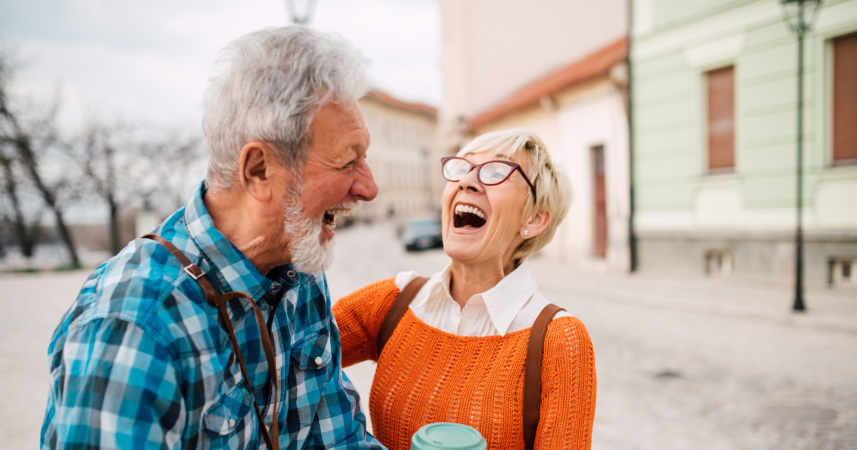
My neighbor makes a point of having at least one real conversation every day. Sometimes it's coffee with a friend. Sometimes it's a phone call with her daughter. Sometimes it's chatting with me over the fence.
The content doesn't matter as much as the connection itself.
She told me that even on days when she doesn't feel like socializing, she makes herself do it. And it always improves her mood.
The daily intention matters. It prevents the slow drift into isolation that can happen so easily.
And it doesn't need to be elaborate. A text exchange isn't enough, but a five-minute phone call counts. A brief chat at the market counts. Any genuine human connection.
3. Learn or engage with something new
Keeping your mind active isn't just about preventing cognitive decline, though that's part of it.
It's about maintaining a sense of vitality and possibility. About feeling like you're still growing rather than just maintaining.
My neighbor does this in small ways. She reads articles about topics she doesn't know much about. She tries new recipes. She learns words in different languages through an app.
Nothing major or time-consuming. Just a daily choice to engage with something new rather than retreating entirely into the familiar.
Studies on cognitive engagement in older adults show that continuing to challenge your brain with new information and skills is associated with maintained cognitive function and higher life satisfaction.
But it's also about identity. When you stop learning, you start to feel like you're just waiting out your remaining years.
When you continue learning, even in small ways, you maintain a sense of yourself as someone who's still developing, still engaged with life.
4. Create something, no matter how small
This is one I didn't expect to be so important, but my neighbor swears by it.
Every day, she creates something. Even if it's tiny.
She might arrange flowers. Write a letter. Cook a meal with care. Work on a puzzle. Tend her garden.
The specific activity doesn't matter. What matters is the act of making something, of being productive in a way that feels meaningful to her.
She says it gives her a sense of purpose. That she's still contributing, still making things rather than just consuming.
There's something psychologically powerful about creation. It reminds you that you're active in the world, not just passive.
And in your 70s, when you're not working and may have fewer demands on your time, intentionally creating something daily provides structure and satisfaction.
5. Spend time in nature
This is the one that surprised me most about my neighbor's routine.
She makes a point of being outside, really noticing nature, every single day.
Sometimes it's during her morning walk. Sometimes she sits in her garden. Sometimes she just stands at her window and watches birds.
But she's intentional about it. Not just being outside while thinking about other things, but actually paying attention to the natural world.
She says it gives her perspective. Reminds her she's part of something larger. Provides a sense of peace that nothing else quite matches.
Research on nature exposure and wellbeing consistently shows benefits for mental health and life satisfaction across all ages, but particularly for older adults.
There's something about the natural world that's grounding and restorative. It provides sensory richness that indoor environments lack.
And it's freely available. You don't need to go hiking. Just looking at trees, watching clouds, noticing seasonal changes counts.
The daily intention to connect with nature, even briefly, makes a real difference.
6. Practice gratitude for something specific
This might sound cliché, but my neighbor insists it's transformative.
Not vague gratitude. Specific gratitude for something that happened that day.
She keeps a small notebook where she writes one specific thing she was grateful for. Not "I'm grateful for my family" in abstract terms. But "I'm grateful that my grandson called and told me about his day" or "I'm grateful for the warm sunshine during my walk."
This daily practice has changed how she experiences her days. She's more attuned to positive moments because she knows she'll be choosing one to write about.
It's created a shift from focusing on what's declining or difficult to noticing what's still good.
She showed me her notebook once. Years of daily specific gratitudes. Reading through it, you see a life full of small joys and meaningful moments that might otherwise have been overlooked.
This idea reminded me of something I recently read in Rudá Iandê’s new book, “Laughing in the Face of Chaos: A Politically Incorrect Shamanic Guide for Modern Life”.
He says: "We discover that we have the power to shape our inner reality, to choose which aspects of our experience we give energy and attention to."
And he's not alone in bringing awareness to this.
The psychology of gratitude practices is well-established. But the key is making it specific and daily. General gratitude doesn't have the same impact as noticing particular moments worth appreciating.
Final thoughts
What strikes me most about these six choices is how accessible they are.
You don't need money, perfect health, or special circumstances to do any of them. They're available to almost everyone, regardless of situation.
Move your body. Connect with someone. Learn something. Create something. Notice nature. Feel grateful for something specific.
None of these take hours. You could do all six in less than an hour total each day.
But the cumulative effect of making these choices daily is profound.
My neighbor's 70s look nothing like what she feared. She's engaged, content, and genuinely enjoying this decade of her life.
Not because nothing's hard or everything's perfect. But because she's making daily choices that create fulfillment regardless of circumstances.
She told me once that she wished she'd started these practices earlier. That she wasted years of her 60s worrying about aging instead of being intentional about her daily experience.
But she's grateful she figured it out when she did. Because now she knows that how her 80s feel will depend on the same thing: the small choices she makes every single day.
You don't need to wait until your 70s to start making these choices. But if you're there now, it's not too late to begin.
Your experience of this decade depends less on your circumstances and more on your daily intentions.
Choose to move, connect, learn, create, notice nature, and practice gratitude. Do those things every day, and your 70s will feel more fulfilling than you might have imagined possible.
Just launched: Laughing in the Face of Chaos by Rudá Iandê
Exhausted from trying to hold it all together?
You show up. You smile. You say the right things. But under the surface, something’s tightening. Maybe you don’t want to “stay positive” anymore. Maybe you’re done pretending everything’s fine.
This book is your permission slip to stop performing. To understand chaos at its root and all of your emotional layers.
In Laughing in the Face of Chaos, Brazilian shaman Rudá Iandê brings over 30 years of deep, one-on-one work helping people untangle from the roles they’ve been stuck in—so they can return to something real. He exposes the quiet pressure to be good, be successful, be spiritual—and shows how freedom often lives on the other side of that pressure.
This isn’t a book about becoming your best self. It’s about becoming your real self.