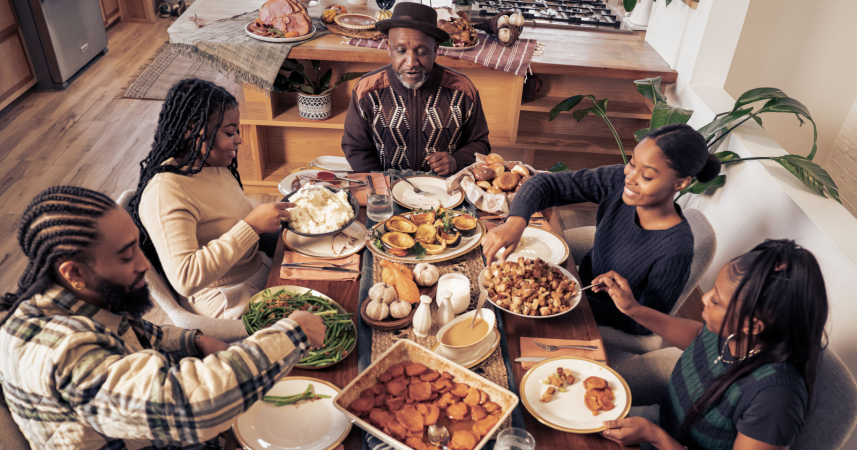
Dining rooms are more than just places to eat—they’re reflections of our upbringing.

Add VegOut to your Google News feed. 
Every household has its own style, but class shows up in the details.
The dining room is where families gather, where holiday meals happen, where birthdays are celebrated, and where life’s small dramas unfold over plates of spaghetti and mismatched glasses.
It’s also a subtle display of status—or lack thereof.
The choices made in that room, from the table to the chairs to the storage pieces shoved in the corner, are shaped by budget, practicality, and a certain kind of nostalgia.
Here are seven pieces of dining room furniture that instantly signal a lower-middle-class upbringing, whether you still have them today or just remember them from childhood photos.
1. The wobbly table with a leaf insert
The dining room table was the centerpiece of family life.
But in many lower-middle-class homes, that table wasn’t a single, solid piece of heirloom furniture.
It was a practical, expandable model with a removable leaf stored in a closet or under a bed.
Most of the year, the table was modest—just big enough for daily meals.
But on holidays or when relatives came over, that leaf was dusted off, slotted in, and suddenly the table stretched like a magic trick to fit everyone.
Of course, the seams never lined up perfectly.
There was always a slight wobble where the insert met the main table, and someone inevitably got stuck sitting over the “crack.”
It wasn’t fancy, but it was functional.
And it perfectly embodied the lower-middle-class ethos: make it work, even if it isn’t perfect.
2. The mismatched chair collection
Dining chairs were rarely part of a uniform, designer set.
More often, they were a hodgepodge of different styles gathered over time.
Maybe four chairs came with the original table.
Then a couple of extras were added later—hand-me-downs from a relative, a yard sale find, or a “temporary” folding chair that somehow became permanent.
On holidays, the situation got even more eclectic, with every spare seat in the house dragged into the dining room, from desk chairs to plastic patio furniture.
The result was a charming, if chaotic, mix that told the story of a family piecing things together over the years.
To outsiders, it looked mismatched.
To those who lived it, it felt like home.
3. The china cabinet that wasn’t really for china
Every lower-middle-class dining room seemed to have a towering china cabinet—or as some called it, “the hutch.”
But despite the name, it rarely held actual fine china.
Instead, it was a display case for a mix of practical and sentimental items: mismatched glassware, collectible figurines, dusty photo frames, and maybe a set of “good plates” that were only used once a year.
The bottom half usually doubled as storage for things like extra paper towels, board games, or that mysterious drawer full of random keys and old batteries.
The cabinet itself was often bulky, dark wood, and slightly too large for the space, giving the room a cramped, cozy feel.
It wasn’t about elegance.
It was about making use of every square inch of furniture for both display and storage.
4. The plastic-covered “special occasion” chairs
Some families had chairs so precious they had to be protected at all costs.
Enter the plastic chair cover—a lower-middle-class classic.
These covers squeaked when you sat down and stuck to the backs of your legs in the summer, but they were considered essential for keeping the furniture “nice.”
Ironically, the constant presence of plastic meant the chairs never actually felt nice to sit on.
This habit reflected a mindset of preservation: things weren’t easily replaced, so they had to be safeguarded, even if it meant sacrificing comfort.
For kids, these chairs were a source of endless fidgeting and complaints.
For adults, they were a symbol of practicality and pride.
5. The buffet table loaded with random items
A buffet table, sideboard, or “credenza” often anchored one wall of the dining room.
In theory, it was for serving food during big gatherings.
In practice, it became a catch-all for life’s overflow.
Mail piles, school permission slips, half-burned candles, a stack of takeout menus, and maybe a small bowl of loose change—everything found its way there eventually.
During parties, it would be temporarily cleared and covered with trays of appetizers or desserts.
Then, slowly but surely, the clutter would creep back.
This piece of furniture wasn’t glamorous, but it was deeply functional, reflecting the constant juggling act of lower-middle-class households.
6. The “fancy” tablecloth that lived in a drawer most of the year
In many homes, the everyday table was bare—or maybe topped with a simple vinyl cover.
But tucked away in a drawer or linen closet was the special tablecloth, reserved for holidays or important family events.
It was often white lace or embroidered fabric, sometimes inherited from a grandparent, sometimes purchased on sale at a department store.
Whenever it came out, it felt like a signal: This is a big deal.
Of course, there was always the accompanying anxiety about spills.
One wrong move with a glass of red wine and there would be sighs, blotting, and frantic scrubbing with club soda.
This ritual wasn’t just about aesthetics—it was about creating moments of ceremony in a life where everyday meals were simple and practical.
7. The TV lurking nearby
While not technically “furniture,” many lower-middle-class dining rooms included a television tucked in a corner or perched on a small stand.
Meals weren’t always formal sit-down affairs—they often involved a side of entertainment.
Dinner might be eaten while watching the evening news, a game show, or a family sitcom rerun.
For some families, this was a bonding activity.
For others, it was just background noise, filling the space where conversation might otherwise go.
The presence of a TV reflected a multitasking mentality: dining rooms weren’t just for eating—they were multipurpose hubs of family life.
The bigger picture
These pieces of furniture weren’t about design trends or social status.
They were about practicality, resourcefulness, and making the most of what you had.
Lower-middle-class families often worked hard to create a space that felt special, even if the budget was tight.
The mismatched chairs, the wobbling table, the carefully preserved tablecloth—they told a story of resilience and care.
Looking back, these rooms might not have been luxurious, but they were rich in memories.
And that’s a kind of wealth that can’t be measured in dollars or design magazines.
Closing thought
Your dining room growing up wasn’t just a place to eat—it was a reflection of your family’s priorities and realities.
If you recognize these seven pieces of furniture, you probably came from a world where nothing went to waste and everything had a purpose.
It might not have been picture-perfect, but it was deeply lived-in and loved.
And that’s something to be proud of.