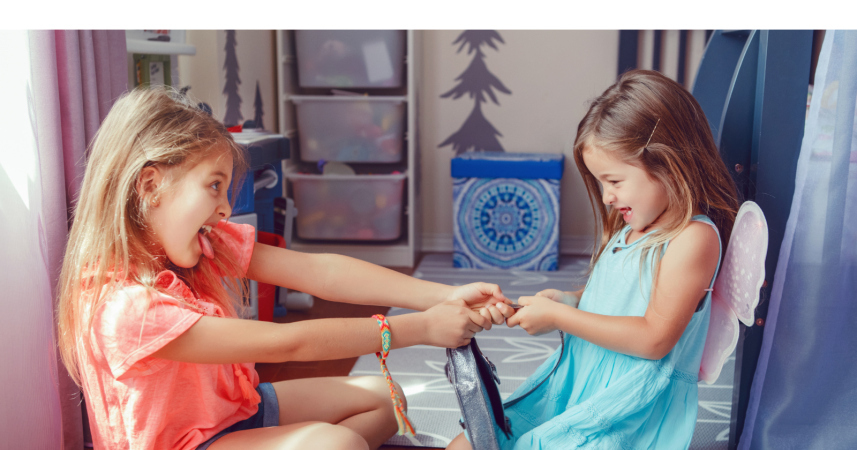
Growing up in a shared bedroom didn’t just test your patience—it secretly wired you with traits that shape how you live and love as an adult.

Add VegOut to your Google News feed. 
Ask any adult if they shared a room with a sibling growing up, and you’ll usually get one of two reactions: a nostalgic smile… or a twitch that suggests unresolved trauma involving bunk beds.
For many of us, those childhood nights of whispered secrets, turf wars, and “who moved my stuff?” weren’t just about space—they were about shaping who we’d become.
Psychologists say sharing a room in your formative years doesn’t just teach you how to coexist—it wires your brain in ways that echo well into adulthood.
Here are eight traits you probably developed if your childhood bedroom was a shared one.
1. You’re a master of negotiation
When two (or more) kids share a room, everything becomes a negotiation: who gets the top bunk, who controls the nightlight, who picks the radio station, who has more closet space.
This early exposure to bargaining means as an adult, you’re likely better at compromise and conflict resolution.
You learned quickly that digging your heels in rarely worked—and sometimes, peace was worth more than being “right.”
Those late-night deals over lamp time and drawer space were actually practice for future office politics.
And unlike kids with their own room, you had to learn early that diplomacy was survival.
2. You’re less precious about personal space
Western culture loves the idea of personal space.
But if you grew up with a sibling two feet away from you at all times, your threshold for privacy is lower than most.
As an adult, you probably don’t flinch if someone sits too close on the subway, or if your partner sprawls across the bed.
Your brain learned long ago to adapt to close quarters.
It also taught you how to carve out “mental space” even when physical space was impossible.
That ability to self-soothe in cramped conditions is something psychologists link to better adaptability in adulthood.
3. You developed stronger conflict management skills
Sharing a room means conflict is inevitable.
Someone’s always hogging the blanket, making noise past bedtime, or borrowing clothes without asking.
But unlike friends you can walk away from, siblings are permanent.
You couldn’t exactly request a transfer.
That constant proximity taught you how to cool down, make up, or find humor in petty arguments.
It also meant you couldn’t afford to burn bridges, so you learned the art of forgiveness faster than most.
In adulthood, that resilience helps you weather conflicts without letting them destroy your relationships.
4. You’re skilled at tuning things out
Ask a room-sharer what their superpower is, and many will say: the ability to fall asleep while chaos reigns.
Whether it was the sound of your sibling breathing like Darth Vader, flipping pages of a book with the subtlety of a marching band, or humming late at night, you adapted.
Psychologists call this selective attention.
You trained your brain to filter out irrelevant noise—an ability that translates into adult life, whether you’re working in a loud office or ignoring your neighbor’s questionable playlist.
It’s basically a built-in noise-canceling system.
And the bonus? You can sleep through almost anything, from crying babies to hotel hallways, without losing your mind.
5. You’re more resourceful
When you grow up dividing everything—closet space, shelf space, bathroom time—you get creative.
Room-sharers learn how to maximize limited resources, from squeezing belongings into tiny corners to inventing systems for fairness (“you get the mirror before school today, I get it tomorrow”).
As an adult, that resourcefulness shows up everywhere: in how you pack for trips, problem-solve at work, or make a one-bedroom apartment feel like home.
You learned to make do with less space—and more patience.
That skill translates into a kind of quiet confidence, knowing you can adapt no matter the constraints.
And let’s be honest: nobody can Tetris a suitcase quite like someone who once shared a dresser with their sibling.
6. You value connection over solitude
Kids who had their own rooms often grow up accustomed to solitude.
But if you grew up side by side with your sibling, connection is woven into your sense of comfort.
As an adult, you may prefer shared experiences—working in teams, living with roommates, or having your partner nearby while you sleep.
You’re used to companionship being the baseline, and solitude can feel foreign or even a little lonely.
This makes you naturally attuned to others, often noticing when someone feels left out.
And while you can still enjoy alone time, you tend to recharge best in the company of people you trust.
7. You’re less rigid about routines
When you share a room, your schedule isn’t just yours—it’s half someone else’s.
Bedtimes, wake-ups, homework time, even lights-out negotiations meant you were constantly adjusting.
This forced flexibility often carries into adulthood.
You might be better at going with the flow, tolerating disruptions, or finding humor when plans get derailed.
That flexibility also makes you a good travel companion, since you don’t panic when things go off-script.
And in relationships, it helps you handle life’s curveballs without unraveling.
8. You’re emotionally resilient
Living in a shared room means constant micro-challenges: from fights over noise to the heartbreak of your sibling telling you to “shut up” mid-confession.
But it also meant constant companionship—someone to whisper secrets to, laugh with at midnight, or lean on when you were scared.
Psychologists suggest this duality—conflict and comfort intertwined—helps build resilience.
You learn to handle tension without losing connection.
This builds a deep emotional flexibility: you can fight and still love, struggle and still stay close.
In adulthood, that means you’re often better equipped to handle messy, imperfect relationships without bailing at the first sign of trouble.
The bigger picture
Sharing a room doesn’t guarantee you’ll turn into a zen, flexible adult.
Plenty of us still hold grudges about stolen socks or who got the window side of the room.
But studies on sibling dynamics suggest these early lessons in compromise, conflict, and connection leave deep marks.
The skills you sharpened while navigating bunk-bed politics are the same ones that help you manage coworkers, roommates, and even romantic partners.
And if nothing else, you earned the right to laugh when someone complains about having to share an Airbnb bedroom for one weekend.
Because you? You trained for this your whole childhood.
And whether you realize it or not, those cramped years gave you emotional muscles that many people never had to build.
Final thoughts
If you grew up sharing a room with your sibling, psychology says you’re probably more adaptable, patient, and resilient than you realize.
The experience wasn’t always fun—it came with fights, noise, and very little privacy—but it also gave you lifelong skills.
So the next time you think back to those cramped nights and endless negotiations, remember: your adult self is stronger, more flexible, and maybe even a little funnier because of it.
Turns out, those bunk beds were character-building after all.
And even if you still have scars from “blanket wars of 1998,” at least you came out with resilience, resourcefulness, and stories worth telling.
If You Were a Healing Herb, Which Would You Be?
Each herb holds a unique kind of magic — soothing, awakening, grounding, or clarifying.
This 9-question quiz reveals the healing plant that mirrors your energy right now and what it says about your natural rhythm.
✨ Instant results. Deeply insightful.

Jordan Cooper
Jordan Cooper is a pop-culture writer and vegan-snack reviewer with roots in music blogging. Known for approachable, insightful prose, Jordan connects modern trends—from K-pop choreography to kombucha fermentation—with thoughtful food commentary. In his downtime, he enjoys photography, experimenting with fermentation recipes, and discovering new indie music playlists.
More Articles by Jordan