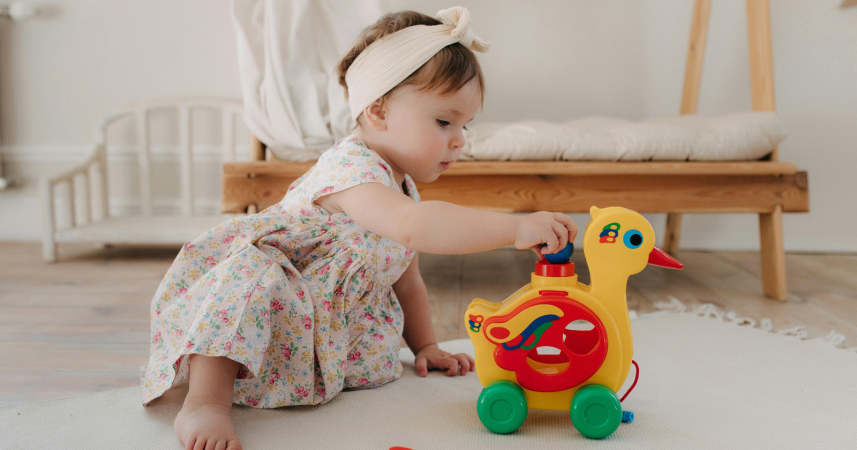
Hands-on play didn’t just shape your childhood—it shaped who you are, giving you strengths today’s digital world can’t always teach.
Childhood play shapes more than just memories—it influences how we think, connect, and navigate the world as adults.
These days, many kids grow up with tablets, gaming consoles, and apps as their primary form of entertainment.
But there was a time when play meant building with blocks, dressing up dolls, riding bikes, or inventing imaginary worlds with nothing more than action figures and cardboard boxes.
If you grew up playing with real, hands-on toys instead of screens, you likely developed certain skills and personality traits that still show up today.
According to psychology, tactile play and unstructured creativity build different neural pathways than digital play, leading to unique strengths in adulthood.
Here are eight qualities you probably display without even realizing it.
1. Stronger problem-solving skills
When you played with real toys, you were constantly creating and troubleshooting.
Whether it was figuring out how to build the tallest LEGO tower or inventing rules for a made-up game, you had to think on your feet.
Unlike digital games, where solutions are often pre-programmed, physical toys forced you to experiment and adapt.
This kind of open-ended play builds resilience and creative thinking that serves you well as an adult.
Psychologists note that this type of problem-solving fosters divergent thinking, which helps you approach challenges from multiple angles.
You don’t just follow instructions—you invent your own.
2. Patience and persistence
Digital play often offers instant rewards—a level completed, a badge earned, a new feature unlocked.
Physical toys required more patience.
Whether you were piecing together a jigsaw puzzle or constructing a model airplane, the process was slow and sometimes frustrating.
You learned to stick with tasks, even when progress felt painstaking.
This built a quiet persistence that still shows up in how you tackle long-term goals today.
You understand that worthwhile things take time and effort, and you’re less likely to give up when challenges arise.
3. A natural sense of creativity
Playing with dolls, figurines, or action figures wasn’t just fun—it was a masterclass in storytelling.
You created entire worlds in your imagination, giving characters voices, motives, and dramatic plot twists.
Unlike digital games, where the storylines are fixed, your imagination was in charge.
This freedom strengthened your creativity in ways that still benefit you today.
Even now, you probably excel at brainstorming ideas, thinking outside the box, and approaching problems with originality.
It’s not just about art or writing—it’s about having a flexible, inventive mind.
4. Stronger attention span
Growing up with real toys meant longer stretches of uninterrupted play.
You might have spent hours on the floor building, drawing, or playing board games without constant digital notifications.
This helped train your brain to focus deeply on one activity at a time.
Psychology research suggests that early experiences like these help develop sustained attention, a skill that’s increasingly rare in today’s fast-paced, screen-saturated world.
As an adult, this focus shows up in your ability to work through complex tasks without becoming easily distracted.
5. Comfort with boredom
Digital play tends to eliminate boredom with a constant stream of stimulation.
But if you grew up with physical toys, boredom was part of the experience—and you learned to embrace it.
When there wasn’t much to do, you found ways to entertain yourself.
This ability to sit with stillness and create your own fun builds self-sufficiency and inner resourcefulness.
As an adult, it means you’re less dependent on constant entertainment and more comfortable simply being.
6. Better emotional regulation
Playing with real toys often involved other kids—siblings, cousins, or friends.
Disagreements were inevitable.
Maybe someone didn’t want to play by the same rules, or a favorite toy became the center of a tug-of-war.
In those moments, you learned how to negotiate, compromise, and manage your emotions.
Psychologists call this social-emotional learning, and it’s a key skill for healthy relationships later in life.
Digital play doesn’t provide the same depth of face-to-face interaction, which means you likely gained an advantage in empathy and conflict resolution.
7. A deeper connection to the physical world
Real toys are tactile.
You could feel the texture of building blocks, smell the fresh cardboard of a new board game, or hear the click of puzzle pieces snapping together.
These sensory experiences grounded you in the physical world.
They taught you to appreciate the details of your environment and be fully present in the moment.
As an adult, this often translates to mindfulness and a stronger appreciation for tangible, real-world experiences over purely virtual ones.
8. A sense of nostalgia that fuels gratitude
The simplicity of childhood play with real toys often leaves a lasting sense of gratitude.
You learned to find joy in small things—like a well-loved teddy bear or a well-worn deck of cards.
That sense of appreciation lingers into adulthood.
It helps you savor life’s little pleasures and maintain perspective, even when modern life feels overwhelming.
This nostalgia isn’t about living in the past—it’s about carrying forward a deep understanding that happiness doesn’t always come from having more, but from making the most of what you have.
The bigger picture
Growing up with real toys shaped your mind, your relationships, and your creativity in profound ways.
While digital play has its place, there’s something irreplaceable about the open-ended, hands-on experiences of childhood past.
According to psychology, these early forms of play gave you problem-solving skills, emotional intelligence, and focus that continue to serve you today.
In a world increasingly dominated by screens, those traits make you uniquely resilient, adaptable, and grounded.