After decades of peace with wrinkles and creaky joints, what truly haunts those over 70 are the small, sharp moments when the world suddenly treats them like fragile antiques or invisible ghosts—from the "helpful" cashier who turns them into a project to the family group chat planning their future without them.

Add VegOut to your Google News feed. 
Last week at the grocery store, a young cashier cheerfully asked if I needed help getting my bags to the car. It was kindly meant, but something inside me shrank just a little. Not because I minded the offer, but because of what came next: she turned to her coworker and loudly whispered, "Can you take over? I need to help her out." Suddenly, I wasn't just a customer anymore. I was a project.
Most people think those of us over 70 spend our days worrying about wrinkles, creaky joints, or the number of candles on our birthday cake. But here's what they don't understand: we've made peace with aging itself. What keeps us up at night isn't the passage of time. It's those sharp, unexpected moments when the world suddenly treats us like we're made of glass, or worse, like we're invisible altogether.
After three decades of teaching high school English and now spending my mornings with my journal and evenings tutoring at the community center, I've learned to recognize these moments. They're not always dramatic. Sometimes they're so subtle you might miss them if you're not paying attention. But for those of us living them, they cut deep.
1. When technology becomes a test we're expected to fail
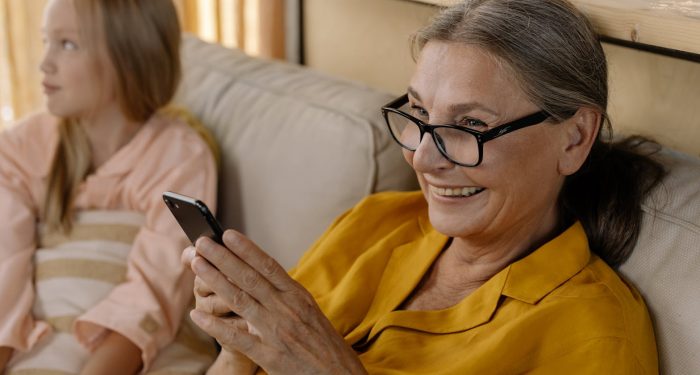
Have you ever watched someone's face change when you pull out your phone to pay for something? That slight widening of the eyes, the barely concealed surprise when you navigate an app without asking for help? Last month, I was setting up a new reading app on my tablet at the coffee shop when a twenty-something at the next table said, "Wow, good for you!" As if I'd just performed a circus trick.
The assumption that we can't handle technology isn't just insulting; it's isolating. When my grandchildren come over for our library visits, they're amazed that I can help them find audiobooks on their devices. Why should this be surprising? I adapted from card catalogs to computer systems, from overhead projectors to smart boards. We're not technology-phobic; we're just tired of being treated like every swipe and click is a small miracle when we do it.
What stings most is when people grab devices from our hands to "help" without asking. It strips away our autonomy over the smallest things, making us feel like children who can't be trusted with the grown-up tools.
2. When our stories become interruptions
Virginia Woolf once wrote, "The eyes of others our prisons; their thoughts our cages." I think about this when I notice people's eyes glaze over mid-conversation. You know the look. You're sharing something, maybe a memory triggered by the discussion, and suddenly you see it: the polite smile, the subtle glance at their phone, the barely hidden impatience.
Our stories aren't just idle chatter. They're bridges between past and present, carrying wisdom earned through decades of living. But increasingly, I notice people treating them like commercial breaks in their busy lives. At a recent family gathering, I started to share something about teaching during the integration years, a perspective relevant to our discussion about current education challenges. My nephew cut in with, "That was a different time, though." End of contribution.
The message is clear: our experiences have expiration dates. What we've learned, what we've witnessed, what we might offer, it's all filed under "outdated" before we even finish speaking.
3. When decisions about us are made without us
Nothing makes you feel more unnecessary than discovering plans have been made on your behalf, as if you've become a logistical problem to be solved rather than a person to be consulted. "We thought it would be easier for you," they say. "We didn't want to bother you."
A friend recently discovered her children had been discussing her living situation in a group chat for months. Not with her. About her. They'd researched communities, discussed finances, even scheduled tours. When she found out, she felt like she'd become a character in someone else's story rather than the author of her own.
This happens in smaller ways too. Restaurant servers who look to younger companions for our order. Doctors who direct explanations to whoever drove us to the appointment. The assumption that we've handed over the reins of our own lives, that decisions are best left to those who know better. Each time, it chips away at our sense of agency, our fundamental right to choose our own path.
4. When our presence becomes an obligation
Do you know what sound loneliness makes? It's not silence. It's the forced brightness in someone's voice when they call because they're supposed to, the dutiful weekly check-in that feels more like a task crossed off a list than a genuine connection.
There's a particular tone people use, slightly louder, slightly slower, artificially cheerful. It's the voice you'd use with someone you're visiting in a hospital. But we're not patients. We're not charity cases. We're whole people with interests, opinions, humor, and bad days just like everyone else.
The most painful part is feeling like we've become items on someone's to-do list. "Call Mom" wedged between "Pick up dry cleaning" and "Schedule oil change." When visits feel like obligations and conversations become report cards, we're not sharing life anymore. We're just being managed.
5. When our contributions are dismissed as hobbies
Every Tuesday and Thursday, I work with adults learning to read at the community center. Last week, I helped a forty-year-old man read a bedtime story to his daughter for the first time. When I mentioned this at a neighborhood gathering, someone patted my arm and said, "How nice that you have something to keep you busy."
Keep me busy. As if my work is just elaborate timefilling, like I'm doing watercolors at the senior center. The little free library I maintain isn't a cute retirement project; it's served over 200 people in our neighborhood. The gratitude journal I keep isn't just a sweet old lady habit; it's a practice that's helped me navigate grief and find meaning after loss.
When people treat our contributions as hobbies rather than valuable work, they're not just dismissing what we do. They're dismissing who we are. They're suggesting that after a certain age, nothing we do really matters anymore. It's just... nice.
Final thoughts
If you're reading this and recognize yourself in the person making these moments happen, please know: we don't need to be handled with kid gloves. We don't need louder voices or slower explanations. We don't need to be protected from life or managed through it.
What we need is to be seen as whole people, still growing, still contributing, still very much part of the conversation. Those of us over 70 have lived through enough to know that aging is just another chapter, not the epilogue. The real challenge isn't the years adding up; it's fighting to remain visible, valuable, and vital in a world that's already started writing our ending for us.
If You Were a Healing Herb, Which Would You Be?
Each herb holds a unique kind of magic — soothing, awakening, grounding, or clarifying.
This 9-question quiz reveals the healing plant that mirrors your energy right now and what it says about your natural rhythm.
✨ Instant results. Deeply insightful.

Marlene Martin
Marlene is a retired high school English teacher and longtime writer who draws on decades of lived experience to explore personal development, relationships, resilience, and finding purpose in life’s second act. When she’s not at her laptop, she’s usually in the garden at dawn, baking Sunday bread, taking watercolor classes, playing piano, or volunteering at a local women’s shelter teaching life skills.
More Articles by Marlene