Those ten minutes in the driveway aren't about avoiding your family—they're about finding the strength to be everything they need, a truth I only understood after inheriting my father's ritual along with his exhaustion.

Add VegOut to your Google News feed. 
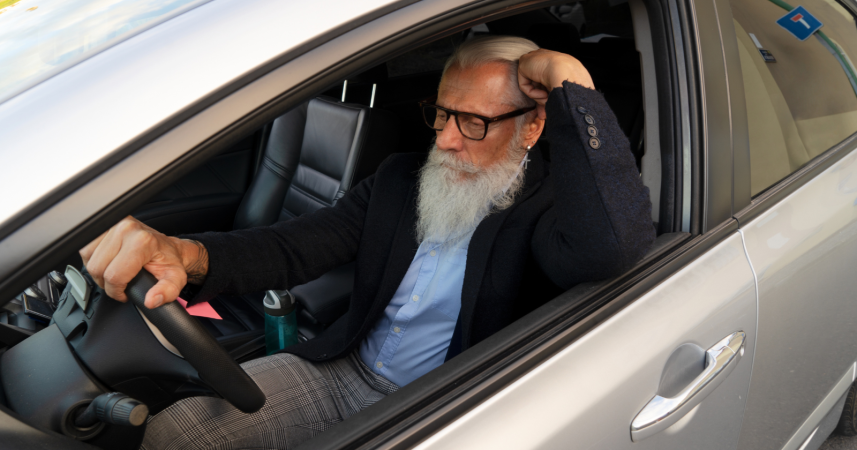
The smell of leather and old coffee fills the car, mixing with that particular scent of a day's worth of living that clings to clothes and hair. Outside, the house waits with its warm lights and the muffled sounds of life happening behind closed doors. But for these ten minutes, there's just the tick of the cooling engine and the weight of silence pressing against the windows.
I watched my father do this ritual for twenty-five years. Every evening, he'd pull into our driveway, turn off the engine, and just sit there. As a child, I'd press my nose against the living room window, wondering what radio program could possibly be so captivating that it kept him from coming inside to us. My mother would gently pull me away from the glass. "Let him be," she'd say, with a knowing look I wouldn't understand for decades.
Now at 71, having lived through single motherhood, teaching, remarriage, caregiving, and widowhood, I finally understand those ten minutes weren't about the radio at all. They were about the sacred pause between being the world's something and remembering you're also your own someone.
The inheritance we don't talk about
Last month, I watched my son sit in his car after work, just like his grandfather did. Three kids, a mortgage, a demanding job, and there he was, stealing those same ten minutes in his own driveway. The ritual passes through generations like my grandmother's china, except this inheritance doesn't come with instructions or appraisals. You just wake up one day and realize you need it.
When I became a single mother at 28, those ten minutes seemed like an impossible luxury. My first husband left me with two toddlers and a teaching career that barely covered daycare. Every second was spoken for. I'd grade papers at red lights, plan lessons while stirring dinner, fall asleep mid-sentence during bedtime stories. The exhaustion had textures I could taste, bitter and metallic, like pennies on my tongue.
I stole my moments differently then. Three minutes crying in the faculty bathroom between classes. Five minutes in the parking lot after grocery shopping, eating crackers and reading a few lines of poetry before the frozen foods started to thaw. Those weren't really the same though. They were desperate gasps for air, not the deliberate, chosen silence my father practiced.
When breathing becomes revolutionary
Have you ever noticed how we apologize for needing space? "Just give me a minute," we say, as if requiring time to exist without purpose is somehow selfish. During those fifteen years of single parenthood, I learned that you can be desperately lonely and completely overwhelmed in the same breath. The contradiction of needing space from the very people who give your life meaning.
I remember standing on my back porch after the kids finally fell asleep, just standing there in the dark, remembering I had a first name that wasn't "Mom" or "Ms. Morrison." Sometimes I'd count backwards from one hundred, slowly, just to hear my own thoughts without interruption. The guilt would creep in around number sixty. By thirty, I'd be making mental lists of tomorrow's obligations. But for those first few numbers, I was nobody's anything, and it felt like rebellion.
When I met my second husband at 43, he understood this need intuitively. He had his own rituals of temporary disappearance. Morning coffee in the garage before anyone woke up. Evening walks that mysteriously took just a bit longer than the route required. We gave each other these gifts of absence, knowing they made our presence more whole.
The different shapes of silence
Parkinson's changed everything. Those seven years of watching my husband fade taught me that sometimes love means being strong enough to let someone be weak. But it also meant my ten minutes transformed into something heavier. I'd sit in the car after doctor's appointments, after picking up prescriptions, after meeting with hospice nurses. Not listening to anything, just sitting with the weight of what waited inside.
The house smelled different then. Like illness and ending, like the peculiar staleness that comes from windows kept closed and voices kept low. Those ten minutes became my decompression chamber, the space where I could transition from the bright, normal world where people complained about traffic to the dim reality where my husband couldn't remember my name.
After he died, the silence changed flavor again. Three years a widow now, and my ten minutes happen everywhere. In my garden at dawn, deadheading roses while the world sleeps. After Sunday dinners at my daughter's house, watching her kitchen window glow while my grandchildren help with dishes. The pause between finishing a book and returning to an empty house that no longer needs to be quiet.
Teaching the pause
My 8-year-old granddaughter asked to sit in the car with me last week. "I want to practice being nothing," she said, and my heart cracked a little at her wisdom. We sat there together, windows down, listening to the cardinals and chickadees I've learned to identify by sound alone. She lasted three minutes before her legs started swinging and she asked if we could go check on the bread dough we'd left rising.
But she's learning what my father knew, what I know now, what her father is discovering in his own driveway. That stillness has value beyond productivity. That silence isn't empty but full of possibility. That being nobody's anything for ten minutes doesn't make you less of a something to someone. It makes you more.
I think about the young father I saw last week, sitting in his car in what used to be my childhood driveway. New family, new stories, same ritual. I wanted to knock on their door and tell his wife what my mother knew instinctively. Those ten minutes aren't abandonment or avoidance. They're preservation. They're the deep breath before diving back into the beautiful, exhausting chaos of being needed.
Final thoughts
At 71, I've earned my ten minutes without apology. I've been daughter, teacher, wife, mother, caregiver, widow, grandmother. I've been everyone's everything more times than I can count. But in my car, in that bubble of chosen silence, I'm just myself. Not teaching, not nurturing, not solving or supporting. Just breathing in the quiet before exhaling myself back into the world. My father never told me what he thought about during those ten minutes, but I know now. He thought about nothing and everything, about the profound act of stopping in a life that demands constant motion. The radio was never on. It never is.