There is a hunger that comes with growing older that nobody prepares you for — not for company, exactly, but for the specific sensation of being encountered by someone who has no particular stake in how you're doing, who asks not out of worry or obligation, but simply because they're curious about you.

Add VegOut to your Google News feed. 
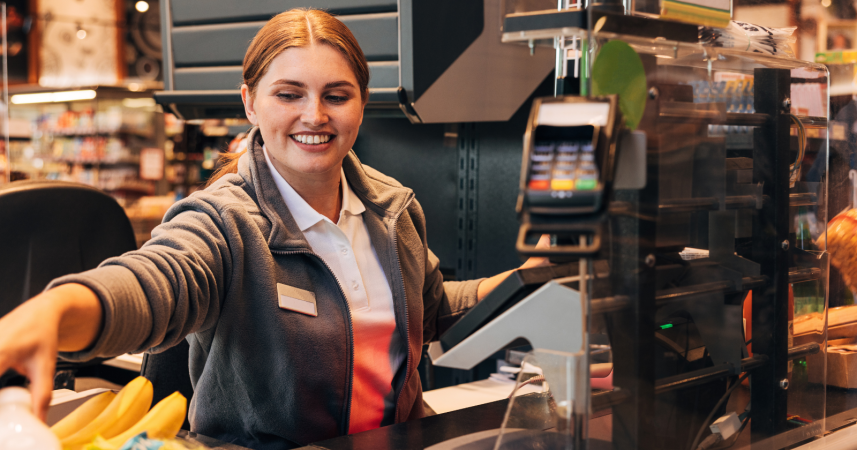
You don't know my name. I don't know yours, though I've looked at your name badge enough times that I feel I should. What I know is that you work Thursday mornings, that you have a way of pushing the conveyor belt items through without breaking eye contact, and that every week, without fail, you ask me how my week's been.
Not how are you. How has your week been. The distinction matters more than you'd think.
I've been coming to your till for almost two years now. In the beginning it was coincidence — your queue was short, the timing was right. Then it became something else. Something I've only recently allowed myself to name, because naming it requires admitting something I'd rather not admit: that ninety seconds at a supermarket checkout has become, in some weeks, the most genuinely human conversation I have.
I want to try to explain what that means, and why, and what I think it says about something larger than either of us.
When you're 70 and you live alone, the days have a shape that is mostly of your own making, which sounds like freedom and sometimes is. I have my routines. Tea at five-thirty. The garden before the heat. My gratitude journal, which I've kept since my husband died because writing down small mercies was the only way I could convince myself they were still there. I have my supper club on Wednesdays, my daughter's call on Sunday evenings, the literacy students I tutor twice a week at the community center. I am not, by any measure, an isolated woman.
But there is a difference between being seen by the people who already know you and being seen by someone who has no particular reason to look. The people who love me ask about my health. They ask whether my hip has been bothering me, whether I've heard back from the doctor, whether I'm sleeping. They ask because they love me and worry and that is its own tenderness. But somewhere in the carefulness of those questions, I have become a condition to be monitored rather than a person to be known.
You ask about my week.
It sounds so small. It isn't small at all.
The first time I noticed what you were doing — really noticed it, not just received it as pleasantry — I was standing at your till with a basket of things a person buys when they're only cooking for one. You scanned the items through and looked up and asked, and I started to say fine, thank you, the way you do, and then something in your expression stopped me. You were actually waiting for an answer. So I told you that I'd been learning to bake bread, that it was going better than expected, that the house had smelled good all week. And you said that you'd always wanted to try that but that bread made you nervous because there were too many ways it could fail.
I drove home thinking about that conversation for longer than made any sense.
What I was turning over, I think, was the shock of being treated as someone with something interesting to say. Of having a small piece of my actual life received as though it were worth receiving. In 90 seconds you had done something that takes most people considerably longer: you'd made me feel like a person rather than a category. Not an elderly woman doing her shopping. Not a widow who needed checking on. Just a woman who was learning to bake bread and wanted to tell someone that it was going well.
I choose your till now even when the queue is longer. I've stood in line for seven or eight minutes on a Thursday morning and felt completely at peace with that, because I was waiting for something I'd been looking forward to without quite realizing it. That should probably embarrass me. It doesn't anymore.
What I've been thinking about is what it costs you. Almost nothing, I imagine — you're warm in the way that some people simply are, the way my father was, the kind of person who knew the name of every family on his mail route and remembered the details of their lives from one conversation to the next. It's a gift some people carry so naturally they don't know they're giving it.
But the receiving of it, at this stage of life, is not nothing. There is a particular hunger that comes with growing older that nobody prepares you for, and it isn't for company exactly — I have company. It's for the specific sensation of being encountered by someone who has no particular stake in how you're doing. Who asks not because they're worried, or obligated, or making sure you haven't quietly fallen apart, but simply because they're interested. Because you are, to them, a person worth being curious about.
My teaching career was full of that feeling, and I didn't know until it was gone how much I'd been living on it. Thirty-two years of walking into a room where my presence meant something, where my words were waited for, where the simple fact of my showing up mattered to people who hadn't met me yet when I started. When I retired, I lost all of that in a single afternoon. The hunger took a while to identify. I kept thinking I missed the work. What I missed was being encountered.
You encounter me, on Thursday mornings, over a conveyor belt of groceries. And I know that sounds like I'm making more of a pleasantry than it deserves. But I've been an English teacher long enough to know that the most important things are often wearing the clothes of ordinary things, and that kindness at a human scale is still kindness, and that a question asked with genuine interest is an act of generosity whether or not the person asking knows it.
So this is me, knowing it on your behalf.
I won't say any of this to you on Thursday. I'll stand in the longer queue and put my basket on the belt and you'll ask how my week's been, and I'll tell you something true and small — the birdwatching, the watercolors, the bread. And you'll say something back that makes me feel, briefly and completely, like a person in the middle of a life rather than a person at the end of one.
And I'll drive home and it will stay with me, the way small warmths do when you've learned to stop taking them for granted.
Thank you. I hope someone asks you about your week too.