From disappearing at dawn until the streetlights came on to buying cigarettes for parents at age seven, these everyday boomer childhood experiences would trigger CPS calls faster than you can say "garden hose water fountain."

Add VegOut to your Google News feed. 
Sometimes I catch myself telling my grandchildren about my childhood, and I see that look in their eyes.
You know the one – equal parts fascination and disbelief, as if I'm describing life on another planet. Last week, I mentioned how I used to disappear after breakfast and not come home until the street lights flickered on, and my grandson asked, "But how did Grandma know where you were?" The simple answer? She didn't. And that was perfectly normal.
Growing up as the youngest of four sisters in small-town Pennsylvania, my childhood was filled with moments that seem almost impossible by today's standards. Not dangerous or neglectful – just wonderfully, ordinarily different. These were the rhythms of boomer childhood, the everyday experiences that shaped a generation but would likely land parents in hot water today.
1. Leaving the house at dawn with no way to be reached
Summer mornings meant wolfing down cereal and racing out the door before my mother could think of chores. No cell phone, no GPS tracker, no scheduled check-ins. We'd stuff a sandwich in our pocket if we remembered, and that was our day sorted. Our parents had absolutely no idea where we were for eight, sometimes ten hours. Were we at the creek? Building a fort in the woods? Riding bikes to the next town over? Who knew? The only rule was to be home when the street lights came on, and somehow, miraculously, we always made it.
Can you imagine telling today's parents to just let their kids vanish for an entire day? The mere suggestion would cause heart palpitations. Yet for us, this wasn't neglect – it was freedom, and it taught us to navigate the world on our own terms.
2. Walking to school alone from kindergarten
At five years old, I walked the six blocks to school by myself. Well, technically with my sisters at first, but they quickly ditched me for their friends. So there I was, lunch box swinging, taking my sweet time to examine every interesting rock and bug along the way. No adult supervision, no organized walking groups, just kids making their way to school like tiny commuters.
We knew which dogs to avoid, which neighbor would give you a cookie if you looked sad, and exactly how late you could leave the house and still make it before the bell. These walks weren't just transportation; they were our first lessons in independence and time management.
3. Drinking from the garden hose
When you were thirsty during a game of tag, you didn't run inside for a filtered water bottle. You found the nearest hose, turned it on, let it run for a few seconds to get the hot water out, and drank deeply. That metallic, rubbery taste was the flavor of summer. We shared that hose with every kid in the neighborhood, no questions asked about germs or sanitization.
My father, the mailman who knew everyone in town, used to joke that the garden hose was the neighborhood water fountain. Looking back, I'm amazed we all survived, but somehow that communal hose never seemed to make anyone sick. Maybe we were just tougher, or maybe we were just lucky.
4. Riding in cars without seatbelts or car seats
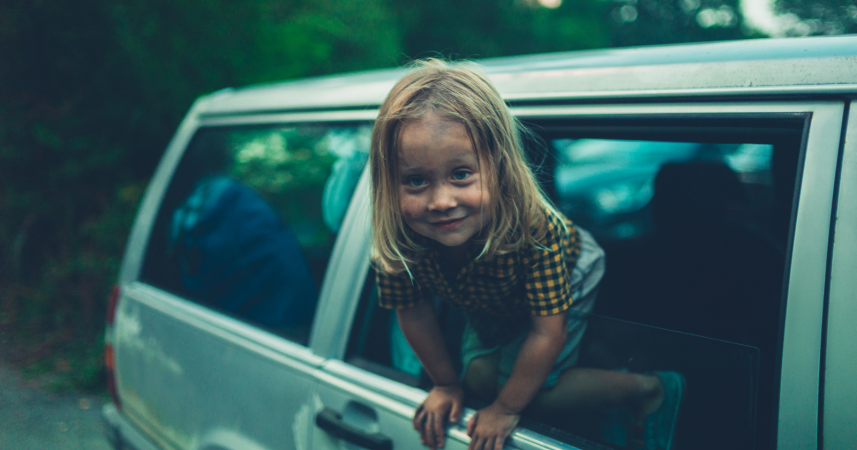
Picture this: six kids piled in the back of a station wagon, no seatbelts, sometimes not even sitting on actual seats. The lucky ones got to lie down in the "way back," watching the sky through the rear window. Babies sat on their mother's lap in the front seat. When Dad hit the brakes, his arm would shoot out across whoever was in the passenger seat – the original airbag.
Road trips meant kids sprawled across the back seat, coloring books scattered everywhere, fighting over who had crossed the invisible middle line. We thought seatbelts were just those annoying things that got hot in the summer. How we survived all those years of automotive chaos remains one of life's great mysteries.
5. Playing on "dangerous" playground equipment
The playgrounds of our youth were basically attractive death traps. Metal slides that could give you third-degree burns in summer, seesaws that could launch you into orbit if your partner jumped off suddenly, and those spinning merry-go-rounds that we'd push faster and faster until someone inevitably flew off. Don't even get me started on the monkey bars that seemed to be specifically designed to break wrists.
Everything was built over concrete or packed dirt. No rubber mulch, no safety inspections, no height restrictions. We learned about physics the hard way – through scraped knees and bruised egos. And somehow, we kept going back for more.
6. Getting disciplined by other adults
If Mrs. Henderson down the street caught you picking her flowers, she didn't call your parents – she marched right over and told you off herself. And when you got home, you'd get in trouble again because somehow your mother already knew. The whole neighborhood was in on raising every kid.
Teachers could discipline you without fear of lawsuits. The principal's office was genuinely terrifying. Other parents could send you home if you misbehaved at their house. It really did take a village, and that village had full authority to keep you in line.
7. Having access to things that would horrify today's parents
Chemistry sets with real chemicals, wood-burning kits that were basically just extremely hot metal pens, and lawn darts that were essentially guided missiles. We had BB guns by age ten and pocket knives even younger. The assumption was that we'd figure out how to use these things safely through trial and error – hopefully more trial than error.
My mother, ever the practical seamstress, taught us to use her sewing machine when we were barely tall enough to reach the pedal. Real needles, powerful motor, no safety guards. The thinking seemed to be that kids were capable of learning to handle dangerous things if you taught them respect for those dangers.
8. Handling money and running errands solo
By age seven, I was regularly sent to the corner store with a note and some cash to buy cigarettes for my parents. "Tell Mr. Johnson they're for your father," my mother would say, and off I'd go. We were trusted with real money for real errands. Lost the change? That was on you to explain.
We'd ride our bikes to the store to buy candy with our allowance, no adult in sight. We learned to count change, budget our money, and deal with store clerks all on our own. These little responsibilities taught us life skills that no amount of supervised activities could replicate.
9. Experiencing genuine boredom
"I'm bored" was met with "Go find something to do" or the dreaded "I'll find something for you to do" (which usually meant chores). There was no screen to hand us, no scheduled activity to rush to. Boredom was a vast, empty space we had to fill ourselves.
And fill it we did. We invented games, built things, took things apart, explored, created entire worlds in our backyards. Boredom wasn't something to be fixed; it was the launching pad for imagination. Those long, empty afternoons taught us to be resourceful, creative, and self-entertaining.
Final thoughts
I'm not suggesting we were better off or that today's kids are somehow lacking. Every generation faces its own challenges and finds its own way. But when I share these stories with younger parents, I see something in their eyes beyond shock – maybe it's a tiny bit of envy for that kind of simplicity and freedom.
These ordinary moments from our boomer childhoods shaped us in ways we're still discovering. They taught us resilience, independence, and how to navigate an unstructured world. While I wouldn't want my grandchildren drinking from garden hoses or riding without car seats, I do sometimes wish they could experience that particular brand of freedom we took for granted – the kind where the world was your playground and adventure was always just outside the door.