While the world races toward complete automation, many older adults quietly maintain their manual verification rituals—from reconciling bank statements by hand to keeping paper maps in the car—not out of stubbornness, but from hard-earned wisdom about when technology fails.

Add VegOut to your Google News feed. 
Last week at the grocery store, I watched a woman about my age pull out a worn checkbook register from her purse. As she carefully recorded her debit card purchase, the young cashier looked on with genuine curiosity, as if witnessing an archaeological discovery. It struck me then how many of us from older generations still cling to manual methods in a world that's racing toward complete automation.
There's something deeply human about wanting to verify things with our own eyes and hands. While younger folks might trust their banking app to track every penny, or let their GPS guide them without question, many of us who remember life before smartphones approach automation with a healthy dose of skepticism. Is it stubbornness? Perhaps a little. But I'd argue it's also wisdom earned through experience.
1. Bank balances and monthly statements
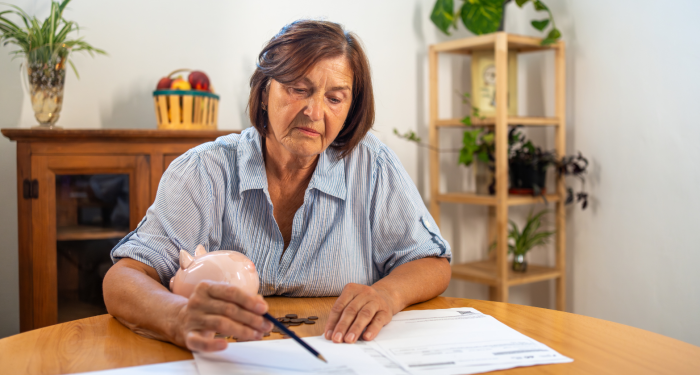
Every first Saturday of the month, you'll find me at my kitchen table with a cup of coffee, my bank statement, and a calculator. Yes, I know my bank has an app. My granddaughter helped me download it during one of her visits, and I do check it occasionally. But there's something about physically reconciling my accounts that gives me peace of mind.
I learned the hard way about the importance of this ritual. Years ago, when I was raising my two children alone on a teacher's salary, a bank error went unnoticed for three months because I'd gotten lazy about checking. That $200 discrepancy nearly caused a check to bounce for my son's school field trip. Since then, I've never fully trusted automation to catch every mistake. Banks are run by humans, after all, and humans program the computers. Errors happen.
2. Physical maps before trusting GPS
Have you ever had your GPS confidently direct you to turn into a cornfield? I have, more than once. While I do use GPS now, I always check a physical map first to understand where I'm actually going. There's something about seeing the bigger picture, the relationship between towns and highways, that a small screen just can't capture.
My father, who spent 30 years as a mailman, could navigate our entire county with his eyes closed. He taught me to always know where I am in relation to major landmarks. "Technology can fail," he'd say, "but north is always north." I keep a road atlas in my car, and I'm not embarrassed about it. When my phone died on a trip to visit my sister last year, that atlas got me there just fine.
3. Reading medication labels every single time
The pharmacy sends me text alerts about my prescriptions, and they have all my medications on file with automatic refill reminders. But I still read every label, every time, checking the dosage and instructions against what my doctor told me.
As we age, our medication lists tend to grow longer, and the interactions become more complex. A friend of mine once received the wrong dosage of her heart medication because of a computer error at the pharmacy. She caught it only because she noticed the pills looked different. That automatic refill system nearly sent her to the hospital. When it comes to what we put in our bodies, a few extra seconds of manual checking seems like time well spent.
4. Handwritten shopping lists and meal planning
My refrigerator door is covered in handwritten lists: groceries needed, meals for the week, items to pick up at the farmer's market. Could I use one of those fancy apps my neighbor raves about? Sure. But there's something about physically writing "tomatoes" that helps me remember to actually buy them.
I find that when I write things down by hand, I'm more intentional about my choices. I think about what's in season, what's on sale, what I already have in the pantry. The physical act of crossing items off gives me a small sense of accomplishment that tapping a screen simply doesn't provide. Plus, paper doesn't run out of battery in the middle of the produce aisle.
5. Checking the weather through multiple sources
Every morning, I look out my window first. Then I check the thermometer on my back porch. Only then do I look at the weather app on my phone, and I usually cross-reference it with the local news. Why all the fuss? Because I've been caught in too many "0% chance of rain" downpours to trust a single source.
Weather prediction has certainly improved since I was young, but it's still far from perfect. Looking at the actual sky, feeling the humidity in the air, noticing how the leaves are moving - these observations often tell me more than any algorithm can. My joints, which ache before a storm, are still more reliable than most weather apps.
6. Manually reviewing bills before auto-pay
Auto-pay is convenient, I'll give you that. But I still review every bill before it's paid, even though most of them are set up for automatic payment. Last month, I caught a $45 error on my cable bill this way. The month before, I noticed my water bill had doubled, alerting me to a leak before it became a disaster.
Growing up in a time when every penny counted taught me to be vigilant about where my money goes. Those automatic payments can lull us into complacency, letting errors and rate increases slip by unnoticed. Five minutes of manual review each month has saved me hundreds of dollars over the years.
7. Double-checking calendar appointments
My digital calendar syncs across all my devices, sends me reminders, and even tells me when to leave for appointments based on traffic. But I still keep a paper calendar on my kitchen wall where I write everything down. Why? Because I've shown up to canceled appointments that were never updated in the system, and I've missed important events because of notification settings I didn't understand.
There's also something about physically writing an appointment that helps cement it in my memory. When I write "Coffee with Helen - Thursday 9 AM" in my kitchen calendar, I'm more likely to remember it's happening, even without the reminder. The physical calendar also serves as a conversation piece when friends visit, often reminding us of upcoming events we're both attending.
8. Proofreading anything important before sending
Autocorrect and spell-check are wonderful inventions, but they're not infallible. As a former English teacher, perhaps I'm more sensitive to this than most, but I still print out important emails and letters to proofread them before sending. There's something about seeing words on paper that makes errors jump out in a way they don't on a screen.
Just last week, autocorrect nearly had me sending an email to my doctor about my "medication for high blood pessure" instead of pressure. Spell-check didn't catch it because "pessure" was autocorrected to "pressure" in one instance but not another. These tools are helpful, but they're no substitute for human attention to detail.
Final thoughts
In my previous post about embracing change in our later years, I mentioned that adaptation doesn't mean abandoning everything we know. These manual checks we perform aren't necessarily about rejecting progress. They're about maintaining control and understanding in a rapidly changing world. They're about the satisfaction of being actively engaged with our daily lives rather than passive recipients of automated services.
Perhaps someday I'll trust automation more fully. But for now, I'll keep my checkbook register, my paper maps, and my handwritten lists. They're not just tools; they're connections to a way of life that valued careful attention and personal responsibility. And in a world that sometimes feels like it's spinning too fast, these manual touches help me stay grounded.