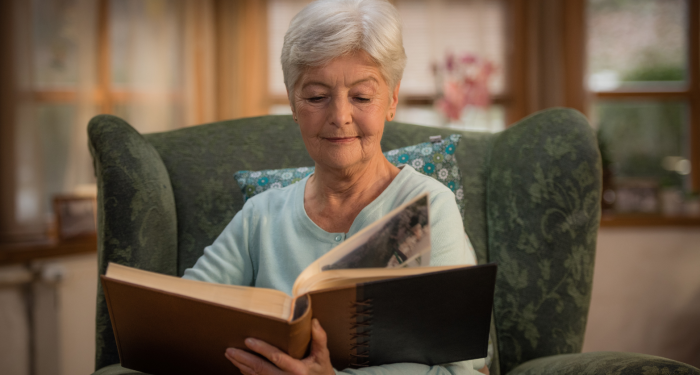
After decades of watching people without smartphones to distract them, boomers developed an uncanny ability to spot character traits in seconds—from how someone treats a grocery clerk to whether their smile tightens when you share good news—that no personality test could ever capture.

Add VegOut to your Google News feed. 
You know that moment when you're sitting in a doctor's waiting room and you can tell exactly which person is going to let the door slam behind them?
Or when you're at a coffee shop and instantly know who's going to leave their table a mess?
After six decades of watching people, these little signals become as clear as neon signs. My generation didn't grow up with Myers-Briggs or Enneagram tests. We had something else: years of uninterrupted observation, no phones to distract us, and the kind of pattern recognition that only comes from watching the same human dramas play out over and over again.
1. How they treat people who can't do anything for them
Watch someone interact with a grocery store clerk or a waiter having a rough day. The truly decent ones don't perform kindness; they simply are kind. I once watched a man at the DMV spend five minutes helping an elderly woman understand the forms while everyone else huffed and looked at their watches. That same man later became my dentist, and I wasn't surprised to find he ran the gentlest practice in town. People who are genuinely good to those who can't advance their careers or social status? That's character you can't fake, not even for thirty seconds.
2. Whether their stories change depending on the audience
After decades of faculty meetings and parent conferences, I developed an ear for this one. Some people tell the same story the same way whether they're talking to the janitor or the superintendent. Others shift their narrative like chameleons, always casting themselves as the hero or victim depending on what serves them best. The consistent storytellers? Those are the ones whose word you can trust when it really matters.
3. How they hold their body when no one's supposedly watching
People think body language is about crossed arms and firm handshakes, but the real tells are subtler. Notice how someone sits when they think they're invisible. Are their shoulders perpetually hunched like they're bracing for impact? Do they take up space naturally or apologetically? My grandmother, who survived the Depression, never lost her straight spine and lifted chin, even at ninety. She taught me that true confidence isn't loud; it's simply present, even in repose.
4. The speed at which they fill silence
Can they sit with quiet, or do they rush to fill every pause with words? The compulsive talkers often fear what might surface in the silence. But the ones who can let a moment breathe? They're usually comfortable with themselves. During my years teaching, the students who could tolerate quiet reading time without fidgeting were almost always the ones who'd come talk to me about the deep stuff after class. They'd already made friends with their own thoughts.
5. Whether their concern has an expiration date
Here's something that takes no time to spot but reveals everything: When someone asks "How are you?" do they pause for the answer? Or are they already walking away? The people who stop, who actually wait for your response with their whole body turned toward you, those are the ones who'll show up with soup when you're sick. They're the ones who remember you mentioned your cat was ill three weeks ago and actually follow up.
6. How they react when proven wrong
Give me thirty seconds of watching someone receive correction, and I'll tell you if they're worth knowing deeply. Do they dig in their heels, deflect, or blame? Or do they pause, consider, maybe even say "I hadn't thought of it that way"? The principal who tried to push me out early in my career couldn't admit a single mistake. Meanwhile, my father, a mailman who knew everyone in town, would cheerfully tell anyone who'd listen about the time he delivered mail to the wrong street for a whole month. Guess which one people trusted?
7. The way they notice or ignore the vulnerable
Watch what happens when someone encounters a person struggling with a door, a parent juggling too many things, or someone who's clearly lost. Do they see them? Really see them? Or do they develop sudden tunnel vision? The people who notice the struggling, who hold doors without being asked, who offer directions to the obviously confused tourist, these are the ones who'll notice when you're not okay, even when you're trying to hide it.
8. Whether their happiness depends on comparison
This one's perhaps the most telling of all. Can they celebrate someone else's promotion without immediately mentioning their own achievements? Do they genuinely light up at others' good fortune, or does their smile tighten just a bit around the edges? After fifteen years as a single mother, I learned to spot the difference between people who could be happy for my small victories and those who needed to immediately counter with their own. The former became lifelong friends; the latter remained acquaintances.
Final thoughts
These aren't things you can learn from a textbook or a weekend seminar. They're patterns you absorb after years of paying attention during PTA meetings, neighborhood barbecues, and countless ordinary interactions. My generation had the luxury of boredom, of watching people without the distraction of devices, of developing what you might call analog wisdom. We learned to read the whole person, not just their LinkedIn profile or their carefully curated social media presence. This kind of radar doesn't make us better than anyone else, but it does make us pretty good at knowing who to trust with our hearts, our secrets, and our Saturday night plans. And really, isn't that the kind of personality test that actually matters?
If You Were a Healing Herb, Which Would You Be?
Each herb holds a unique kind of magic — soothing, awakening, grounding, or clarifying.
This 9-question quiz reveals the healing plant that mirrors your energy right now and what it says about your natural rhythm.
✨ Instant results. Deeply insightful.

Marlene Martin
Marlene is a retired high school English teacher and longtime writer who draws on decades of lived experience to explore personal development, relationships, resilience, and finding purpose in life’s second act. When she’s not at her laptop, she’s usually in the garden at dawn, baking Sunday bread, taking watercolor classes, playing piano, or volunteering at a local women’s shelter teaching life skills.
More Articles by Marlene