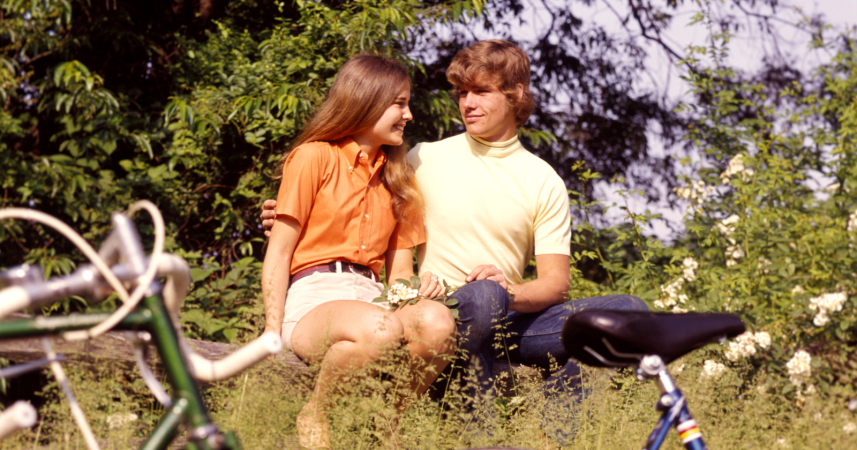
These eight tracks don't just trigger nostalgia - they resurrect the exact person boomers were in that sweet spot between leaving their parents' house and becoming parents themselves, when their biggest worry was which highway to take, not which college fund to invest in.

Add VegOut to your Google News feed. 
Music has this uncanny ability to transport us through time.
You know what I'm talking about. A song comes on, and suddenly you're not in your car or kitchen anymore. You're somewhere else entirely, living in a moment that technically ended decades ago.
For boomers, certain songs don't just bring back memories. They resurrect entire identities - the people they were before mortgages, kids, and career ladders became the rhythm of daily life.
I've been thinking about this lately, especially after digging through my old vinyl collection from my music blogging days. While I was documenting the indie scene in LA back in the 2000s, I met countless boomers who'd light up when talking about the music of their youth. The pattern was always the same: these songs weren't just nostalgic. They were portals to freedom.
Here are eight tracks that still make boomers close their eyes and remember who they were when everything was still possible.
1. "Born to Be Wild" by Steppenwolf
Is there a more perfect anthem for pre-responsibility life than this?
Released in 1968, this song basically invented the idea of hitting the open road with no particular destination in mind. For boomers, it represents that brief window between leaving their parents' house and creating their own family obligations.
The genius of "Born to Be Wild" is how it captures pure possibility. No GPS, no cell phone, no one expecting you home for dinner. Just you, maybe a motorcycle, and the horizon.
I've mentioned before that understanding our past helps us make better decisions in the present. This song reminds boomers of when their biggest decision was which highway to take.
2. "Mrs. Robinson" by Simon and Garfunkel
Here's the thing about "Mrs. Robinson" - it's actually about watching youth slip away.
But for boomers, this 1968 hit represents being on the young side of that equation. They were the ones Mrs. Robinson was envying, not the other way around. They had what she'd lost.
The irony? Many boomers are now older than Mrs. Robinson was supposed to be in the song. But when it plays, they're 20 again, full of judgment about the older generation's compromises, swearing they'll never end up that way.
We all make those promises to our younger selves, don't we?
3. "Light My Fire" by The Doors
Seven minutes of pure rebellion disguised as a love song.
When Jim Morrison sang about lighting fires in 1967, he wasn't talking about settling down. This was about intensity, about feeling everything at maximum volume before life turned the dial down.
The extended organ solo in the middle? That's where boomers got lost in smoky rooms, making decisions their future selves would either cherish or carefully omit from stories told to their kids.
A friend once told me this song reminds him of staying up until dawn, talking about changing the world. Now he goes to bed at 10 PM and his biggest rebellion is choosing oat milk for his coffee.
4. "White Rabbit" by Jefferson Airplane
Grace Slick's voice on this 1967 track didn't just suggest exploring consciousness. It demanded it.
For boomers, "White Rabbit" represents intellectual and spiritual curiosity without consequences. Back then, questioning everything was a full-time job. Now, they've got actual full-time jobs and questioning too much just leads to anxiety about retirement funds.
The Alice in Wonderland references hit different when you realize many boomers feel like they followed the white rabbit of adulthood and ended up somewhere they never expected.
But when this song plays? They're back at the rabbit hole's entrance, when falling down it seemed like an adventure rather than a mistake.
5. "Fortunate Son" by Creedence Clearwater Revival
Nothing captures youthful rage against the system quite like John Fogerty's growl on this 1969 anthem.
Boomers played this song when they believed they could fight injustice and win. Before they realized that sometimes you become the system you once raged against, or at least learn to work within it because you've got bills to pay.
The drums still make them want to protest something. Anything. But now their protests are more likely to be about HOA regulations than war.
Do they still feel like the underdog when this plays? Absolutely. Even if they're now managing the people they once would have called "the man."
6. "Somebody to Love" by Jefferson Airplane
Before dating apps, before compatibility algorithms, before "it's complicated" became a relationship status, there was just this simple need expressed in 1967.
This song reminds boomers of when finding somebody to love felt urgent and electric, not practical and negotiated. When love was about revolution, not about finding someone with a good credit score and similar retirement goals.
The rawness in Grace Slick's voice captures that desperation for connection that gets smoothed over by decades of actual relationships, with all their beautiful complications and mundane realities.
7. "All Along the Watchtower" by Jimi Hendrix
Yes, Bob Dylan wrote it. But Hendrix's 1968 version is what boomers hear in their heads.
That guitar isn't just playing notes. It's tearing down walls. For three minutes, boomers aren't worried about property taxes or their kids' college funds. They're back to believing that music can actually change things, that art matters more than equity.
The song's apocalyptic imagery feels different when you're young. Back then, the end of the world seemed romantic, poetic. Now they know what real endings look like - layoffs, divorces, diagnoses. The fantasy was better.
8. "For What It's Worth" by Buffalo Springfield
"Stop, hey, what's that sound?" In 1967, it was the sound of change. Now it's probably their knee.
But seriously, this song crystallizes that moment when boomers felt like active participants in history. Every gathering mattered. Every protest counted. Every choice felt monumentally important.
The paranoia in the lyrics ("everybody look what's going down") made sense when you were young and convinced the establishment was out to get you. Now many boomers ARE the establishment, and the paranoia has shifted to whether their kids will ever move out.
Wrapping up
These songs aren't just nostalgia trips. They're reminders of who boomers were when they had the luxury of being idealistic, when they could afford to be irresponsible because responsibility hadn't chosen them yet.
We all have our own soundtrack to freedom. Mine involves a lot of obscure indie bands from the 2000s that nobody's heard of (occupational hazard of being a former music blogger). But the principle remains the same.
These songs matter because they remind us that we weren't always who we are now. We were other people first, people who didn't know how the story would turn out.
And maybe that's the real gift of music. Not that it lets us escape our current lives, but that it proves we've lived multiple lives already.
The boomers singing along to "Born to Be Wild" in their minivans aren't delusional. They're multilayered. The wild one is still in there, just with better insurance and a lot more to lose.
What’s Your Plant-Powered Archetype?
Ever wonder what your everyday habits say about your deeper purpose—and how they ripple out to impact the planet?
This 90-second quiz reveals the plant-powered role you’re here to play, and the tiny shift that makes it even more powerful.
12 fun questions. Instant results. Surprisingly accurate.